Amol B
Where does the average come from?
For decades the quoted figure was 250–300 words a minute, a number with no clear source. In 2019 Marc Brysbaert (Ghent University) pooled 190 studies covering nearly 18,000 participants and arrived at 238 words a minute for silent reading of non-fiction in English, with fiction slightly faster at about 260. Reading aloud averages 183. The range across normal adult readers runs from roughly 175 to 300, which is wide, but far narrower than the claims of speed-reading courses.
How do you convert words a minute to pages an hour?
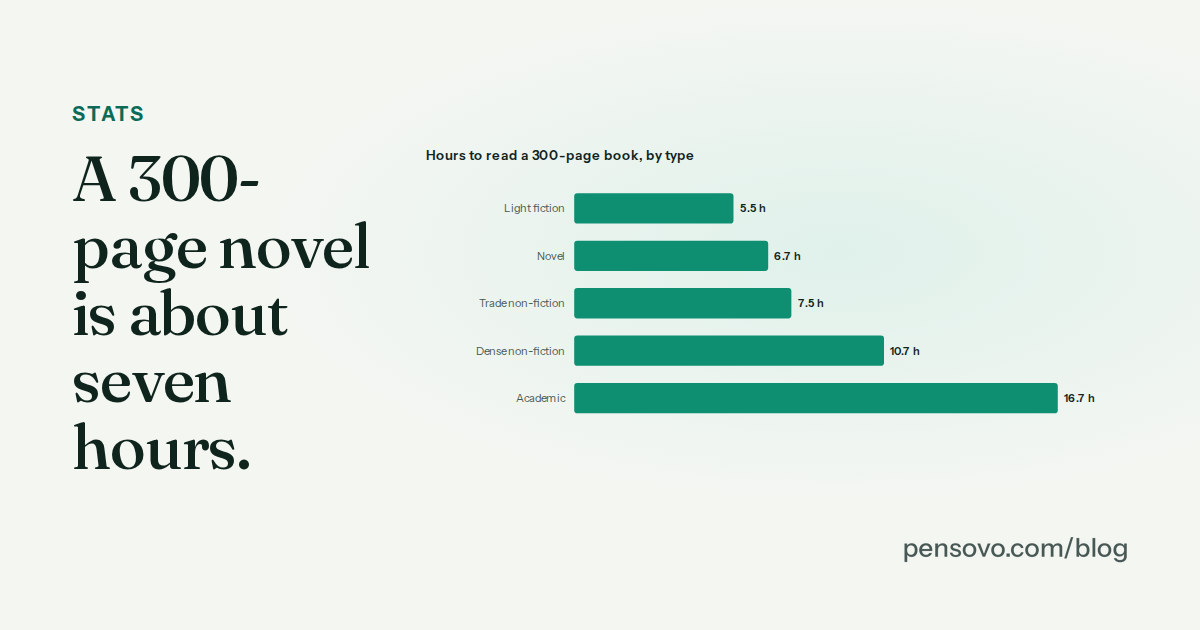
Multiply by sixty and divide by the words on a page. At 238 words a minute and 275 words a page, that is 52 pages an hour. Real pages vary a lot:
| Format | Words per page (typical) | Pages an hour at 238 wpm |
|---|---|---|
| Mass-market paperback, small type | 300–350 | 41–48 |
| Trade paperback novel | 250–300 | 48–57 |
| Hardback non-fiction | 300–400 | 36–48 |
| Academic or technical | 400–500, plus re-reading | 15–25 |
| Large-print or young adult | 150–220 | 65–95 |
This is why "pages an hour" is a rough unit and "minutes a day" is a better one for goals. Twenty-five pages of a dense hardback and twenty-five of a thriller are not the same evening.
Is 50 pages an hour fast?
For a novel, slightly above average. For dense non-fiction, fast. A hundred pages an hour of ordinary prose is speed reading, and the research on speed reading is consistent: past about 400 words a minute, comprehension falls sharply, and the claims of 1,000 words a minute with full understanding do not survive testing (Rayner and colleagues, 2016). You can learn to skim well; you cannot learn to read a novel at three times the normal pace and still have read it.
How to measure your own reading speed in five minutes
Does reading speed matter?
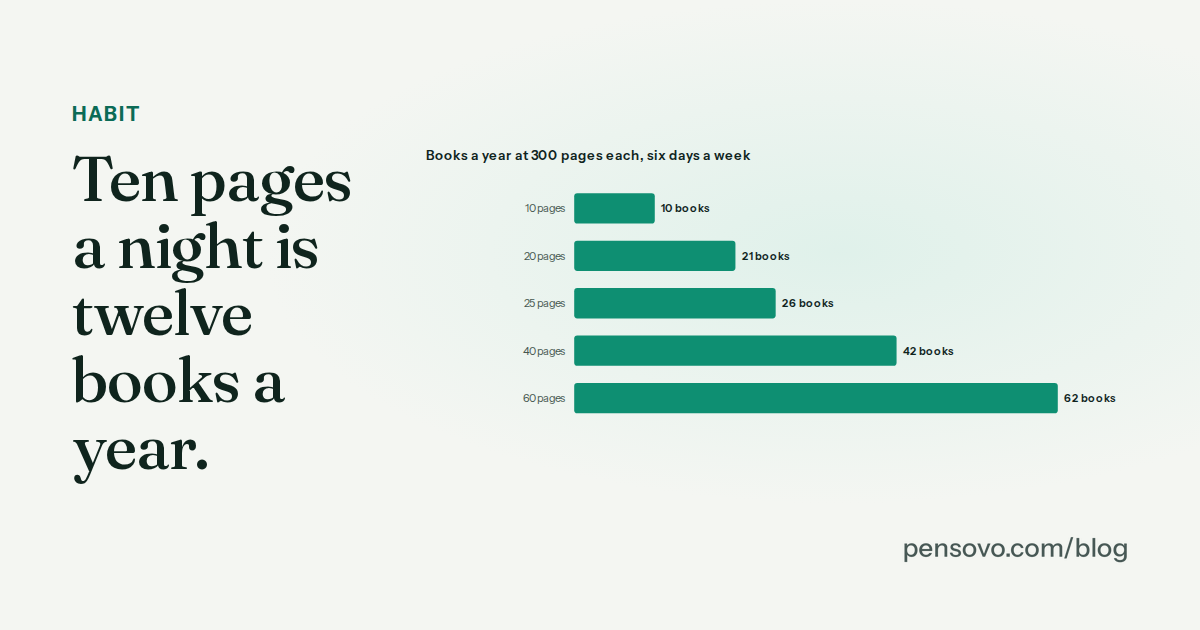
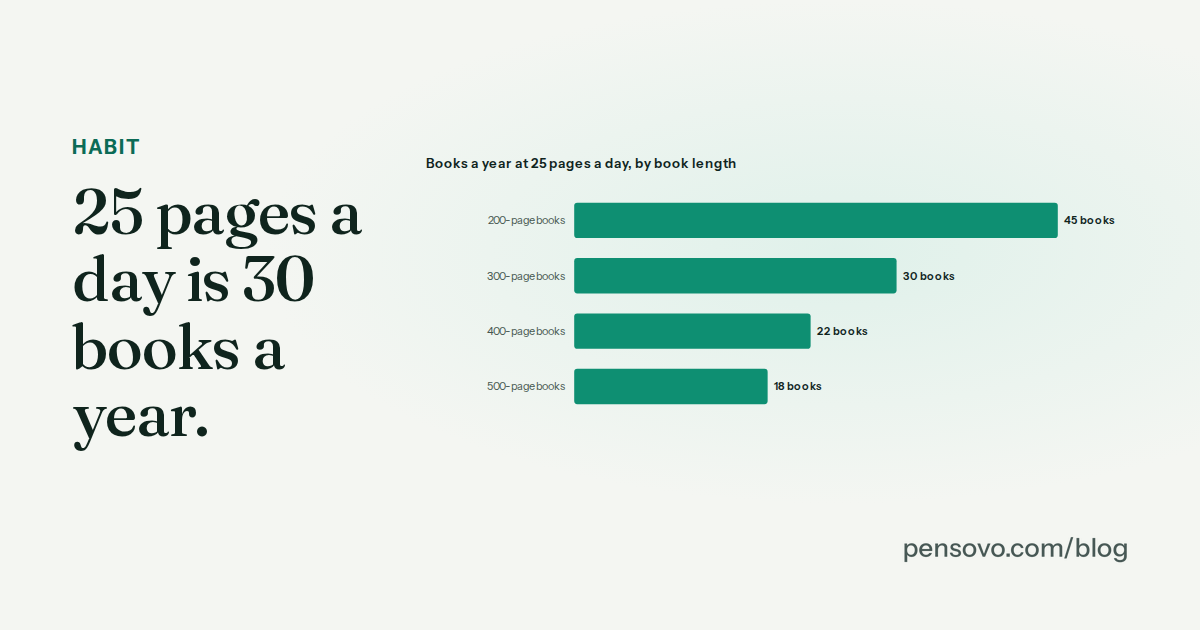
Less than reading time. A reader at 40 pages an hour who reads thirty minutes a day finishes about 24 books a year; a reader at 60 pages an hour who reads ten minutes a day finishes eight. The lever is the daily minutes, and the daily minutes depend on a habit, not a technique. Know your speed so your goals are honest, then stop thinking about it.
Common questions
How many pages can the average person read in an hour?
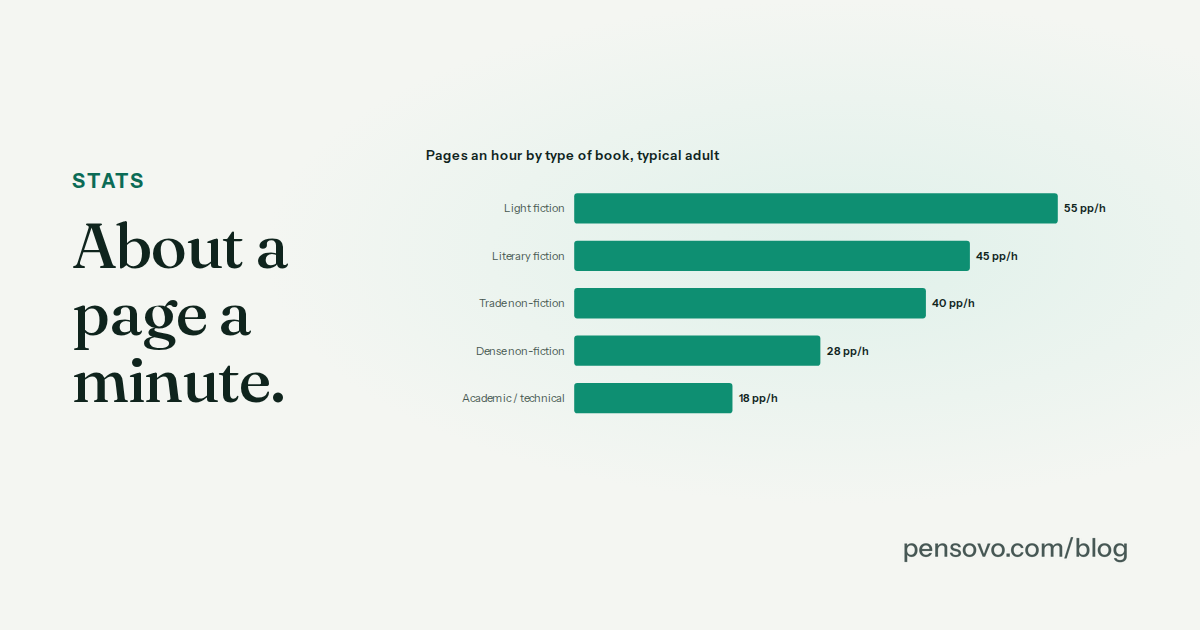
About 40–50 pages of a novel, 20–30 of dense non-fiction, and 15–20 of academic text, based on roughly 238 words a minute and typical words per page.
How many pages is 30 minutes of reading?
Roughly 20–25 pages of a novel for a typical adult; 10–15 of dense non-fiction.
Is 200 pages an hour possible?
Only by skimming. Comprehension falls sharply past about 400 words a minute, and 200 pages an hour is around 900. You can skim at that speed; you cannot read a novel at it.
How long does it take to read 100 pages?
About two hours for a novel, three to four for dense non-fiction. The reading-time calculator on this site does the arithmetic for any book.
Does reading speed improve with practice?
Somewhat, mainly through vocabulary and familiarity with a genre. Regular readers of a subject read it faster. Speed-reading techniques mostly trade comprehension for pace.
What is a good reading speed for adults?
Anything in the 175–300 words-a-minute range is normal. Comprehension matters more than pace; if you remember the book, your speed was right.