Amol B
Where does the 25-pages-a-day rule come from?
Farnam Street popularised it a decade ago as the antidote to "I don't have time to read": pick a small number, do it every day, and let the arithmetic do the rest. It has stuck because it is the rare productivity rule that is honest about effort. Twenty-five pages is not a stretch; the stretch is doing it on the 200th day.
What does 25 pages a day add up to?
| Schedule | Pages a year | 300-page books | Minutes a day |
|---|---|---|---|
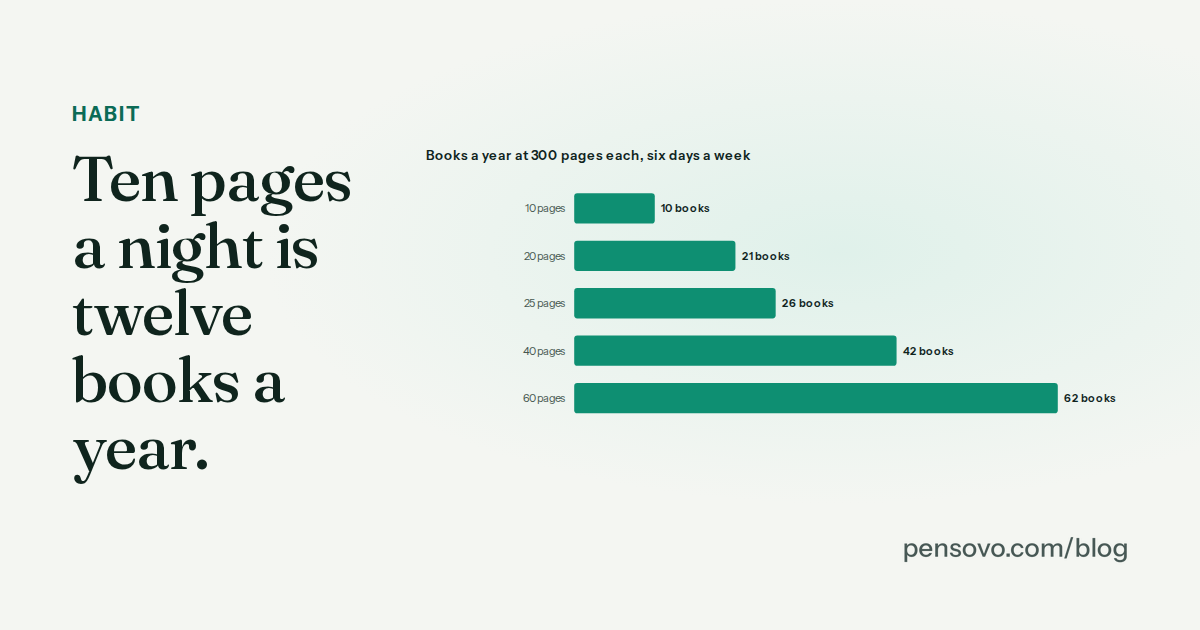
| 7 days a week | 9,125 | about 30 | 25–35 |
| 6 days a week | 7,800 | about 26 | 25–35 |
| 5 days a week | 6,500 | about 22 | 25–35 |
| Weekdays only, 50 pages | 13,000 | about 43 | 50–70 |
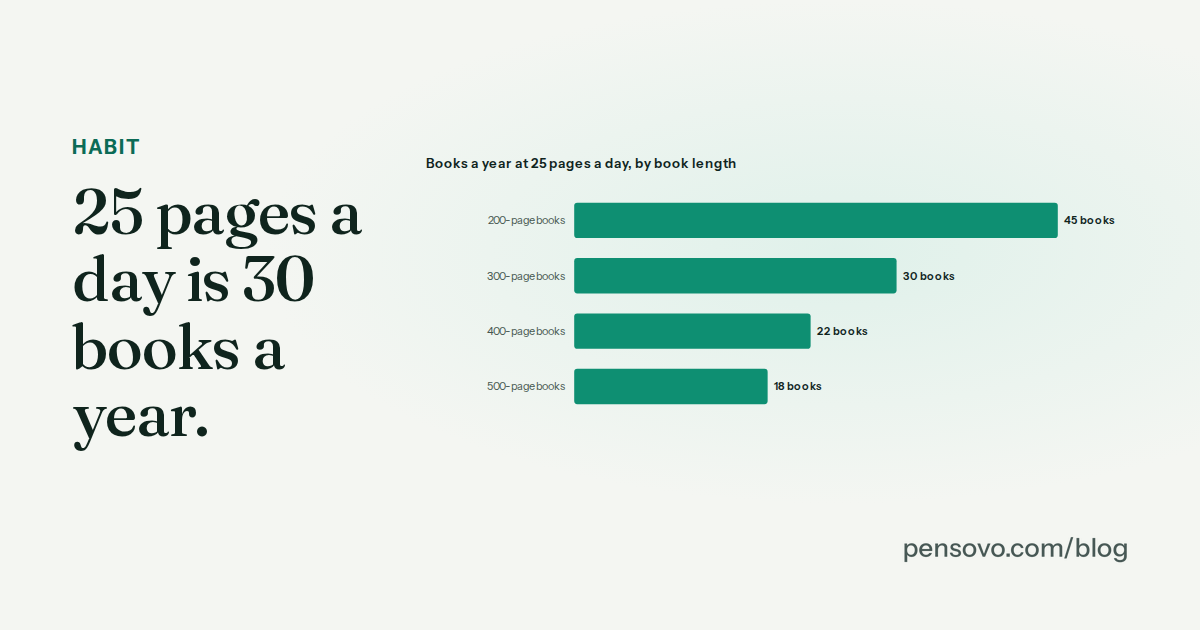
The books-a-year figure moves with book length far more than with reading speed. At 25 pages a day you finish a 250-page novel in ten days and a 600-page biography in twenty-four; a year of one kind is nearly double a year of the other.
How long does it take to read 25 pages?
About half an hour. The most reliable estimate of adult silent reading speed is 238 words a minute (Brysbaert, 2019, a meta-analysis of 190 studies); a paperback page carries 250–300 words, so a page a minute is a fair rule. Dense non-fiction can halve that — 25 pages of a philosophy text is an hour, not thirty minutes, which is why the rule is easier to keep with a novel on the go alongside the demanding book.
The one catch: it has to be a floor
Most people who quote the rule quietly convert 25 pages into "the amount I read", and on the night they have twelve minutes they read nothing rather than a version that feels like cheating. Two skips become a lapsed habit. The fix is to have two numbers: ten pages is the floor that counts the day, 25 is the target you hit most nights. Over a year the floor alone is 3,650 pages — a dozen books from a habit that was never allowed to break.
How do you make 25 pages a day automatic?
- Attach it to something that already happens. First coffee, the commute, the moment the dishwasher goes on. Two anchors are better than one.
- Keep the book where the anchor is. On the pillow, in the bag, next to the kettle. Most missed nights are the book being in the wrong room.
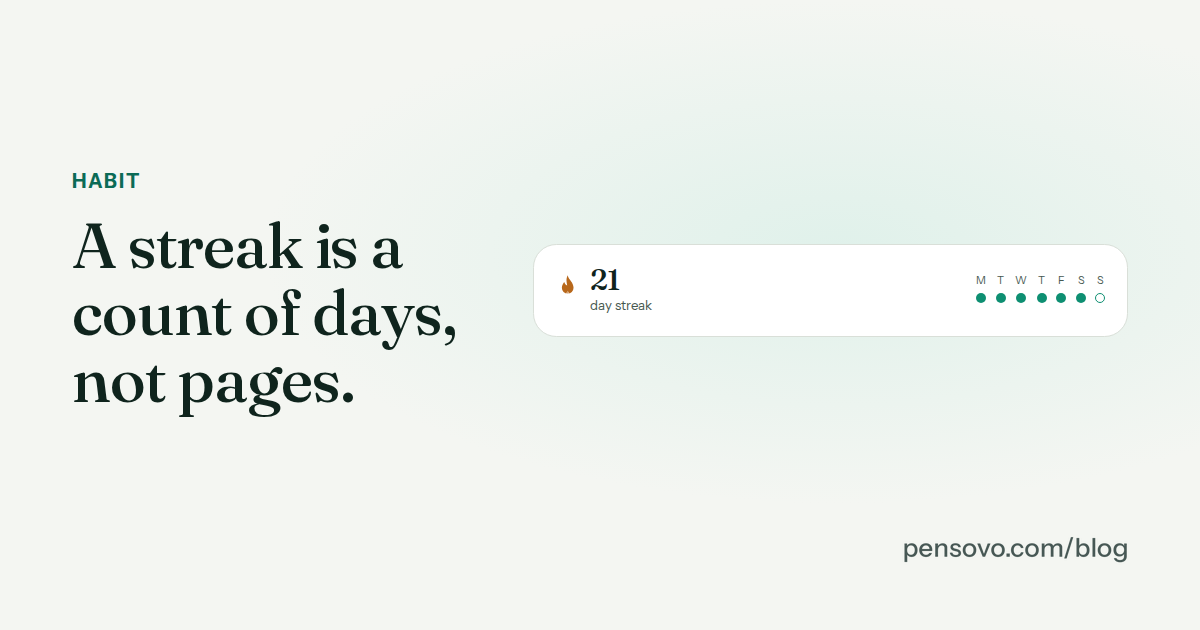
- Log the page the moment you stop. Two taps. A streak of days is what turns 25 pages from a decision into a routine; research on habit formation puts the median at 66 days before it feels automatic.
- Never miss twice. One missed day is life. The day after is the most important reading day of the month, and it is fine if it is ten pages.
Is 25 pages a day enough?
For thirty books a year, yes, which is more than roughly 85% of adults read. For a habit, ten would have been enough. If you want to read more than thirty, read more often rather than faster: a second anchor of ten minutes adds another ten pages a day and another dozen books a year without changing anything about how you read.
Common questions
How many books is 25 pages a day?
About thirty 300-page books a year if you read every day, or about twenty-six on six days a week. Shorter books push the number toward forty-five; long ones toward eighteen.
How long does 25 pages take?
Around half an hour for a novel or general non-fiction, based on roughly a page a minute. Dense or technical books take about twice as long.
Is 25 pages a day a lot?
No, and that is the point. It is about the length of a TV episode, and it produces more books a year than most adults read.
What if I miss a day?
Read tomorrow, even ten pages. One missed day is life; two in a row is the start of a lapse. If your tracker has streak saves, use one and move on.
Should I count pages or minutes?
Pages if you mostly read print; minutes if you mix in audiobooks or dense books. The habit is the same either way: a small daily minimum, logged the same night.
Where did the 25 pages a day idea come from?
It was popularised by the Farnam Street blog as a way of turning 'read more' into a daily number small enough to keep.