Amol B
Why do reading habits fail?
For one reason dressed up as several: the minimum is too big. "Read every night" quietly means "read for forty-five minutes every night", and the first night you have twelve minutes you skip it rather than do a version that feels like cheating. Two skips become a lapsed habit; the book goes back on the shelf with a bookmark at page 140.
The second reason is that books are the wrong unit. If your goal is thirty books this year, nothing you do tonight visibly moves it. A day-based goal moves every night, which is why streaks work for languages and exercise and, when done well, for reading.
How long does it take to form a reading habit?
Longer than the 21 days everyone quotes. The most-cited study (Lally, van Jaarsveld, Potts and Wardle, 2010, University College London) followed people forming a daily habit and found a median of 66 days before it felt automatic, with a range from 18 to 254. Plan for three months. The first month is effort, the second is routine, the third is when missing a day feels wrong. Missing a single day, the same study found, did not materially harm the process — which is the research basis for the "never miss twice" rule.
What is the smallest reading habit that still counts?
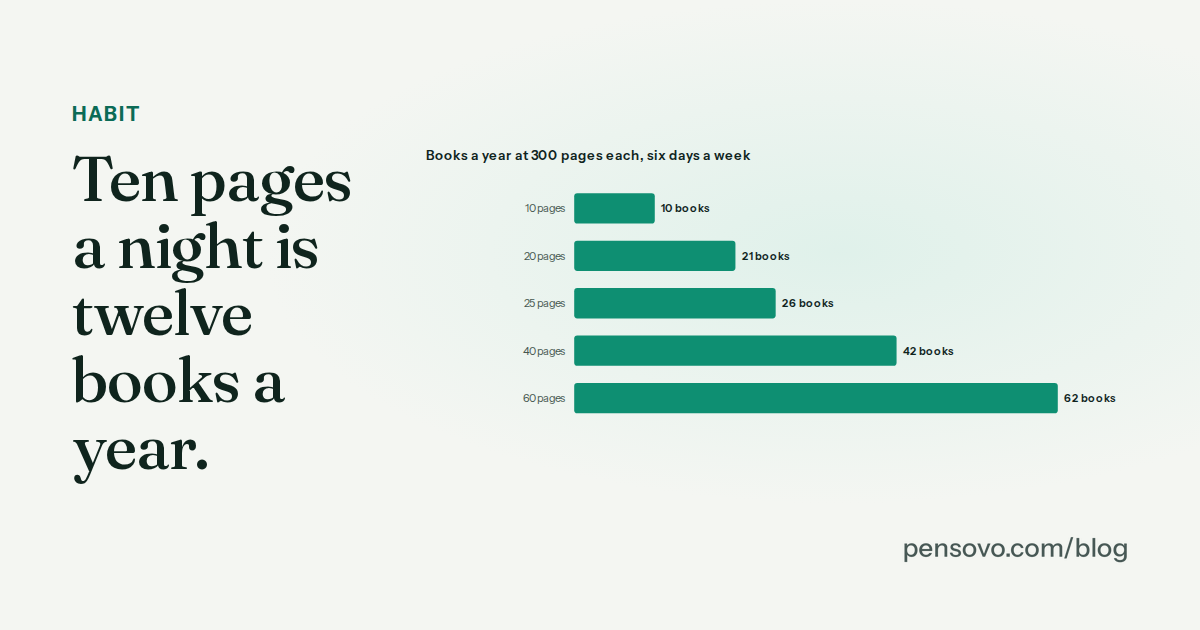
Ten pages or ten minutes, whichever comes first. Ten pages of a paperback is 2,500–3,000 words and takes 8–12 minutes for most adults. Over a year, ten pages a night is 3,650 pages — roughly twelve 300-page books — from a habit most people can keep in a hotel bed after a fourteen-hour day. The minimum is a floor, not a target. Most nights you will read past it. The point is that on the bad night, the version that counts is still available.
When should I read? Picking an anchor
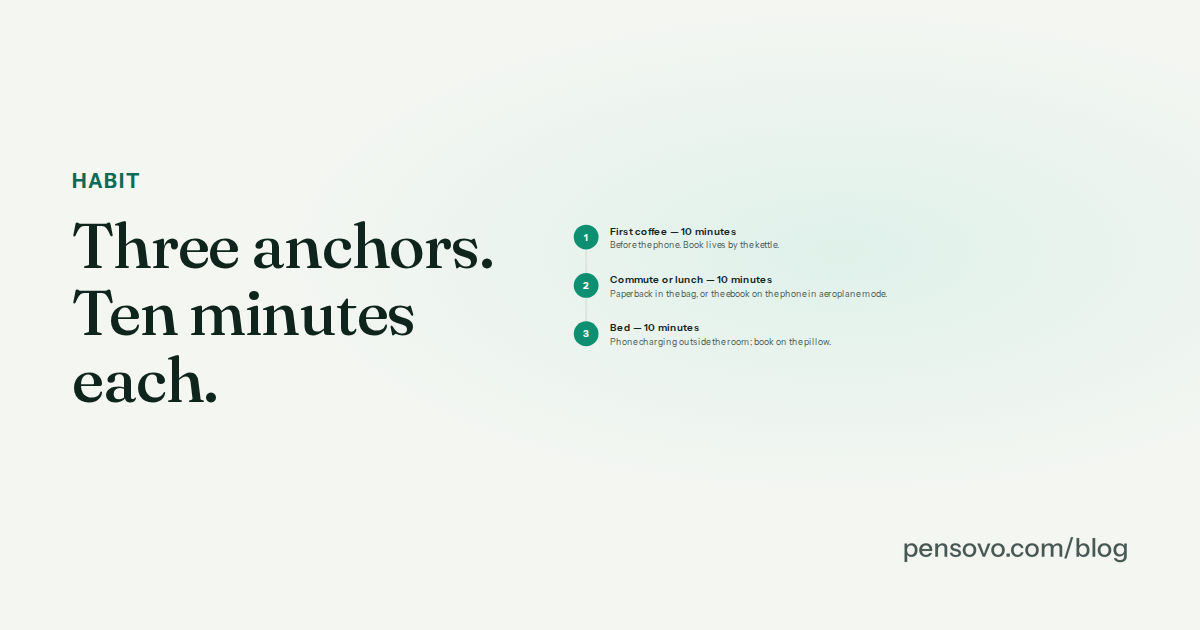
Attach reading to something that already happens at a fixed time, so you never have to decide. Two anchors are better than one, because the bad week usually kills one of them.
| Anchor | Why it works | Watch out for |
|---|---|---|
| First coffee or tea | Nobody else wants you yet; the phone is not yet interesting | Weekends drift; keep the anchor, move the time |
| Commute | Fixed length, nothing better to do | Audiobook days count; log them |
| Lunch, alone | A natural boundary at both ends | The book has to be in the bag |
| After the dishwasher goes on | Marks the end of the evening's jobs | The sofa and a screen; put the book on the sofa first |
| In bed, before the phone | The classic; also improves sleep | The phone is the competitor; charge it outside the room |
How do I track reading without it becoming a chore?
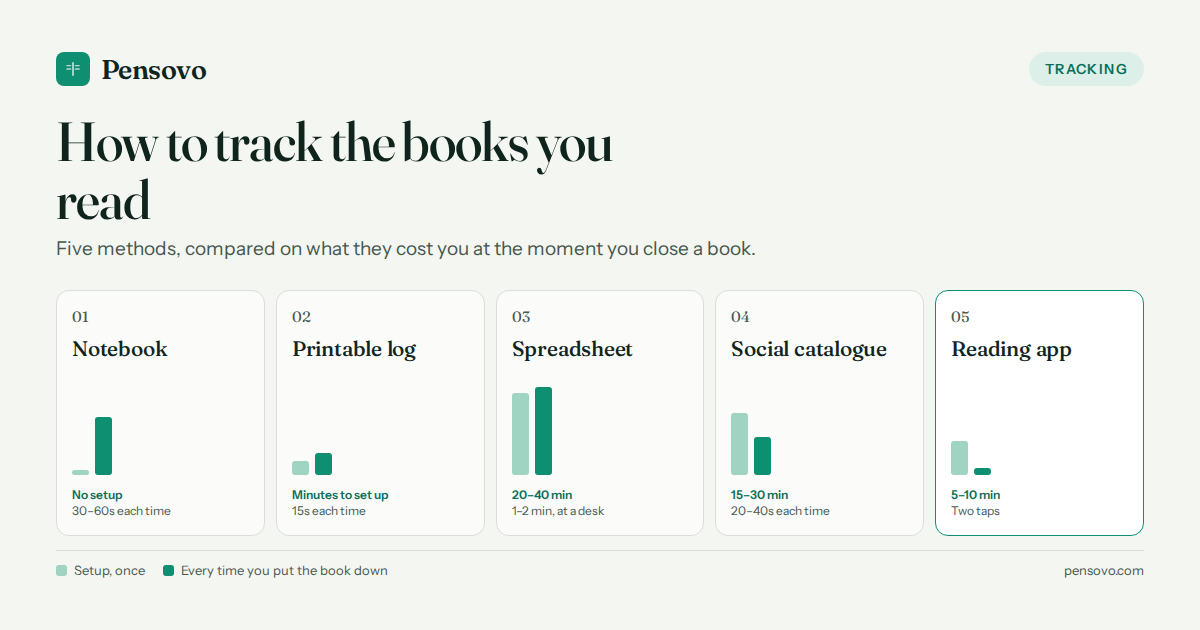
Log the page you stopped on, the same night, in under ten seconds. If logging takes longer — opening a spreadsheet, finding the book, typing a note — you will stop logging weeks before you stop reading, and lose the one signal that tells you the habit is holding. A paper calendar with a cross per day, a notes app with one line a night, or a tracker app with a two-tap log all work; pick the one closest to where you read. Whatever you choose, track days, not books. Books finished is the outcome; days read is the behaviour, and you can only act on the behaviour.
What should I do when I miss a day?
Decide this before it happens, because on the night itself you will decide badly. The rule that works for most people is never miss twice. One missed day is life. Two in a row is the start of a lapse. So the day after a miss is the most important reading day of the month, and it is fine if it is the ten-page minimum.
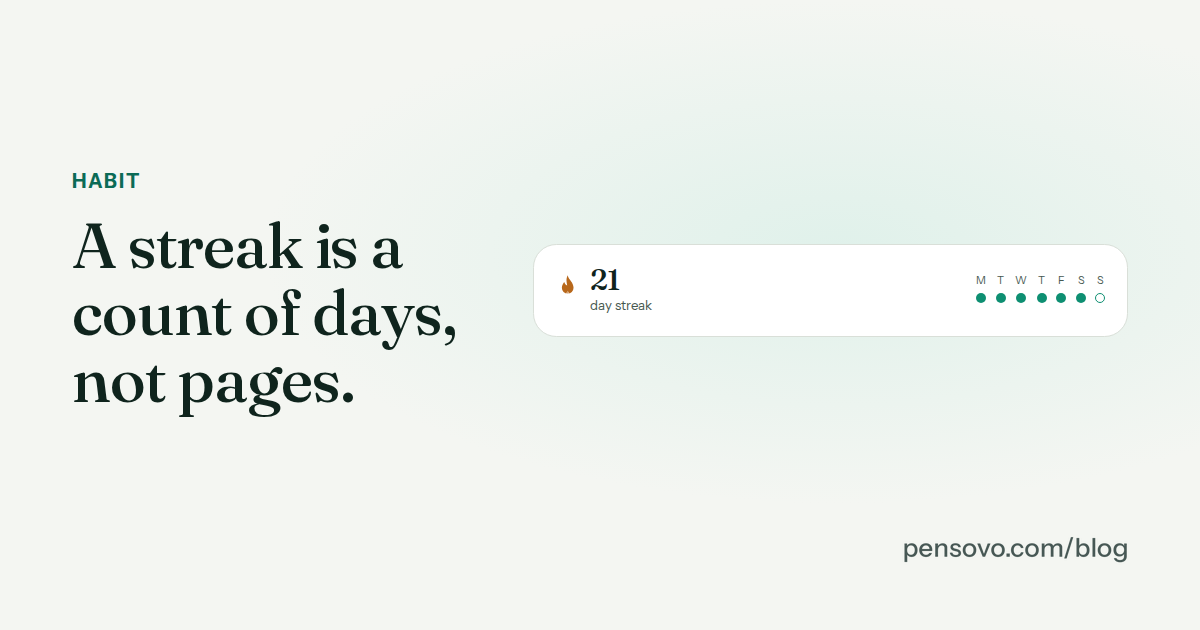
If you use a streak, find out what happens when you miss. A streak that resets to zero after one bad day teaches you that it is fragile and not worth protecting — exactly the opposite of what you want. Prefer a system with a limited number of saves for missed days, or one that counts days-per-week. A streak you can protect five times a month will survive a year; one you cannot protect will not survive a cold.
How many books should I aim for?
Fewer than you think, at first. The median American adult who reads finished two books last year; the top 19% of readers account for 82% of all books read. If you are rebuilding a habit, aim for twelve a year — one a month — which ten pages a night delivers with room to spare. Better still, do not set the goal in books for the first ninety days. Set it in days: five days a week. When that holds for three months, you will know how many books it produces and can set an honest number.
What about audiobooks and ebooks?
They count. A day you listened to forty minutes of a book is a reading day. Log it the same way. The habit is "spend time with a book", not "look at paper", and the people who are strictest about this tend to read least.
What if I don't enjoy the book?
Stop. Finishing books you dislike is the fastest way to stop reading altogether. Mark it as stopped, note the page and why, and start something else the same night. The habit is the reading, not the book.
Common questions
Is it better to read a little every day or a lot at weekends?
A little every day, for habit formation. Weekend-only reading finishes books but never becomes automatic, because the cue arrives twice a week. Protect the daily minimum first.
How long does it take to build a reading habit?
A median of about 66 days for a daily behaviour to feel automatic, according to the most-cited study, with wide variation. Plan for three months.
Should I read more than one book at a time?
If it keeps you reading, yes. Many people keep one demanding book and one easy one so the tired night always has an option.
Do reading streaks actually work?
For most people, yes — if the streak can be protected. They fail when one missed day wipes out months and the reader concludes the system is punishing.
How do I read more without reading faster?
Read more often. Ten minutes at three anchors is thirty minutes a day, roughly a book a fortnight. Speed-reading trades comprehension for pages.
What if I miss several days?
Read ten pages tonight. The habit is not gone; the streak may be, and the streak is a tool, not the habit. Restart the count and stop looking at the old number.