Amol B
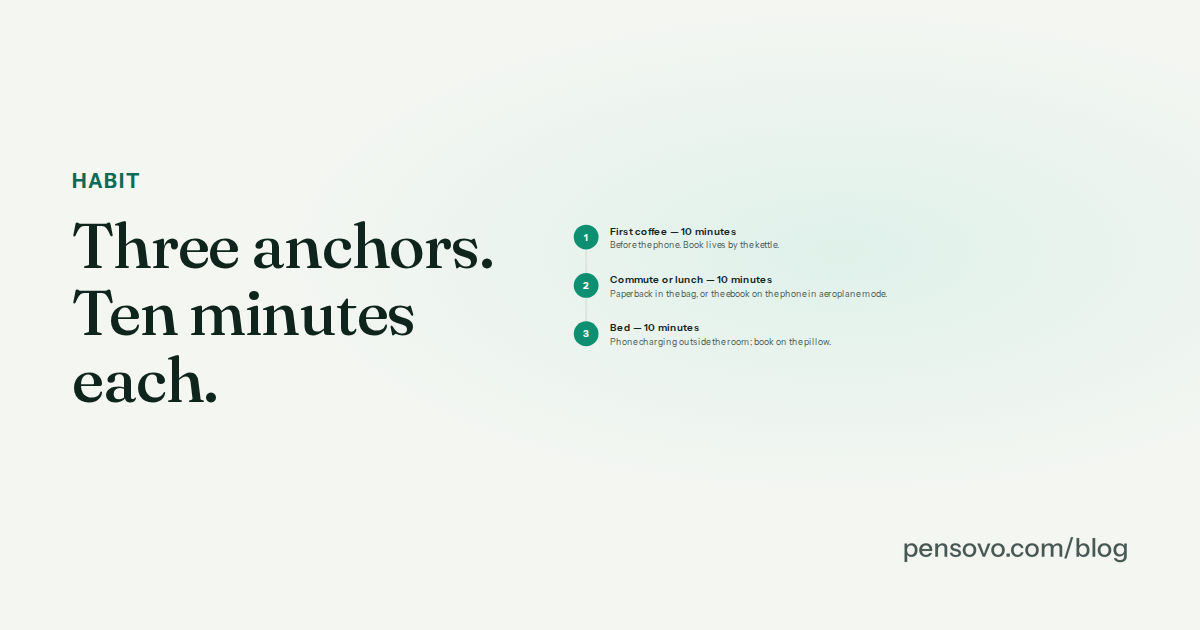
Where does the time actually go?
Not into a wall of obligations; into pieces. Waiting for the kettle. The commute. The queue. The twenty minutes after the children are down and before you can face anything. The half hour in bed with the phone. Most of these are ten minutes long and most are spent on a screen by default, not by choice. A reading habit for a busy life is not carved out of the day; it is assembled from these pieces, with a book placed where each piece happens.
Three anchors that work for most people
| Anchor | Why it works | What goes wrong | Fix |
|---|---|---|---|
| First coffee | Nobody wants you yet; the phone is not interesting yet | The phone gets picked up first | Book by the kettle; phone charges elsewhere overnight |
| Commute or lunch | Fixed length, nothing better to do | Book at home | A paperback that lives in the bag, or an ebook on the phone in aeroplane mode |
| Bed | The classic; it also improves sleep | Scrolling | Phone charges outside the room; book on the pillow at 8pm |
| Kitchen or laundry | Hands busy, ears free | Silence by default | Audiobook; log the minutes |
Start with one. Two anchors are better than one because the bad week usually kills one of them; three is a habit that survives almost anything.
The book has to be there
The single most common reason a reading slot is missed is not tiredness or willpower. It is that the book is in another room. Keep a copy where each anchor happens: one by the kettle, one in the bag, one on the pillow. They can be three different books — a light one for the commute, the demanding one for the morning. The phone is always there, which is why it wins by default.
What about the phone hour?
Estimates of daily smartphone use for adults run well past an hour, and the ten minutes before sleep are the most reliably wasted of the day. You do not need to reclaim the hour; ten minutes of it is a reading habit. Two moves make it easier: charge the phone outside the bedroom, and if you read on the phone, put it in aeroplane mode for the session so the tab you nearly opened does not load.
Make the floor tiny
On the worst week, one anchor survives and ten minutes is all it gets. That is fine; it counts. A reading habit dies when the floor is set at an hour and the day only has twelve minutes, so the twelve are skipped. Set the floor at ten minutes or ten pages, log it, and let the good days take care of themselves.
Is it a time problem or an attention problem?
Often the second wearing the first's clothes. If you have a free evening and still do not read, the guide to focusing while reading is the one you want: twenty-minute blocks, the phone in another room, and an easier book. If you genuinely have twelve minutes, this page is the one — and twelve minutes is plenty.
Common questions
How do I read more when I have no time?
Find three ten-minute slots that already exist — first coffee, commute or lunch, bed — and put a book physically in each place. Thirty minutes a day is about two dozen books a year.
Is ten minutes of reading a day worth it?
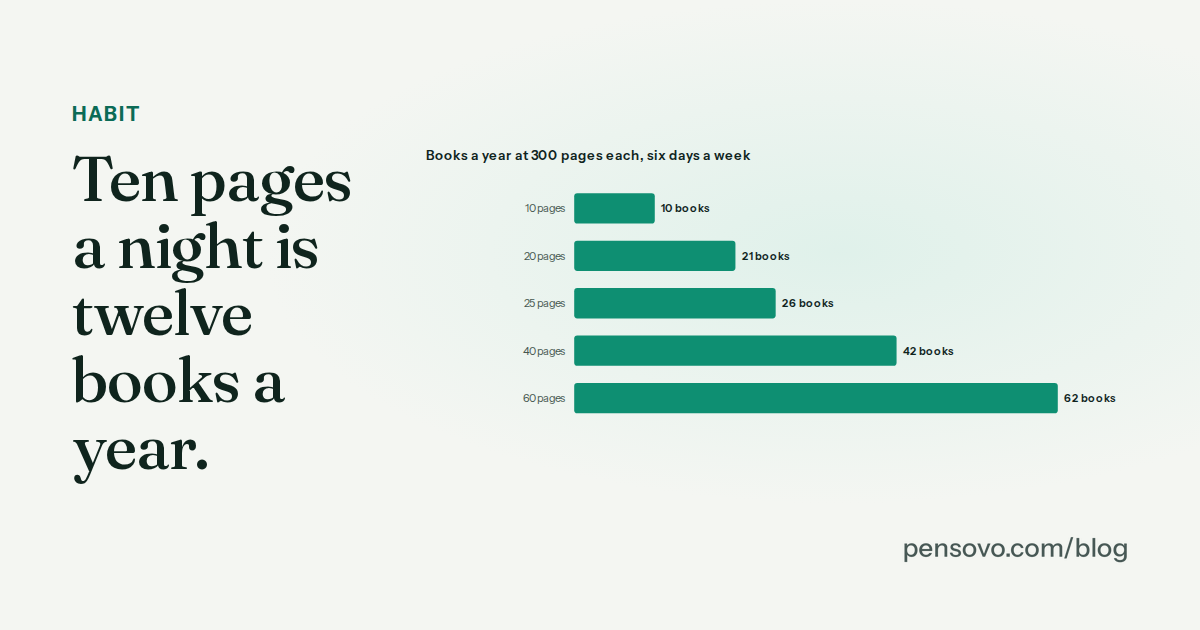
Yes. Ten minutes is about ten pages, or 3,650 pages a year — a dozen books — from a slot small enough to survive any week. It is also what keeps the habit alive on the bad days.
When is the best time of day to read?
Whenever something already happens that you can attach it to. Mornings suit demanding books; bed suits novels; the commute suits whatever is in the bag.
Do audiobooks count as making time to read?
Yes. The kitchen, the laundry and the walk are reading time when your ears are free. Log the minutes.
How do I stop scrolling and read instead?
Charge the phone outside the bedroom and put the book on the pillow before evening. If you read on the phone, use aeroplane mode for the session.
What if I miss a few days?
Read tomorrow, ten minutes, whichever anchor is easiest. One missed day is life; the habit dies only when two become a week.