Amol B
Why can't I focus when I read?
Four causes account for almost all of it, and they have different fixes.
- The phone. Even face down and silent, a phone within reach costs attention; a 2017 study (Ward and colleagues, University of Texas) found people performed measurably worse on attention tasks with their phone on the desk than in another room, even switched off. Reading is an attention task.
- The wrong book for the moment. A dense book at the end of a long day is a fight you will lose. This is not the book's fault or yours; it is scheduling.
- Tiredness. Reading in bed after an hour of scrolling produces pages your eyes crossed and your mind did not.
- Nothing to do with the attention. Passive reading lets the mind wander because nothing is asking it a question. A pencil, a note, or a question you are reading to answer gives it a job.
Six fixes that work
1. Read in twenty-minute blocks
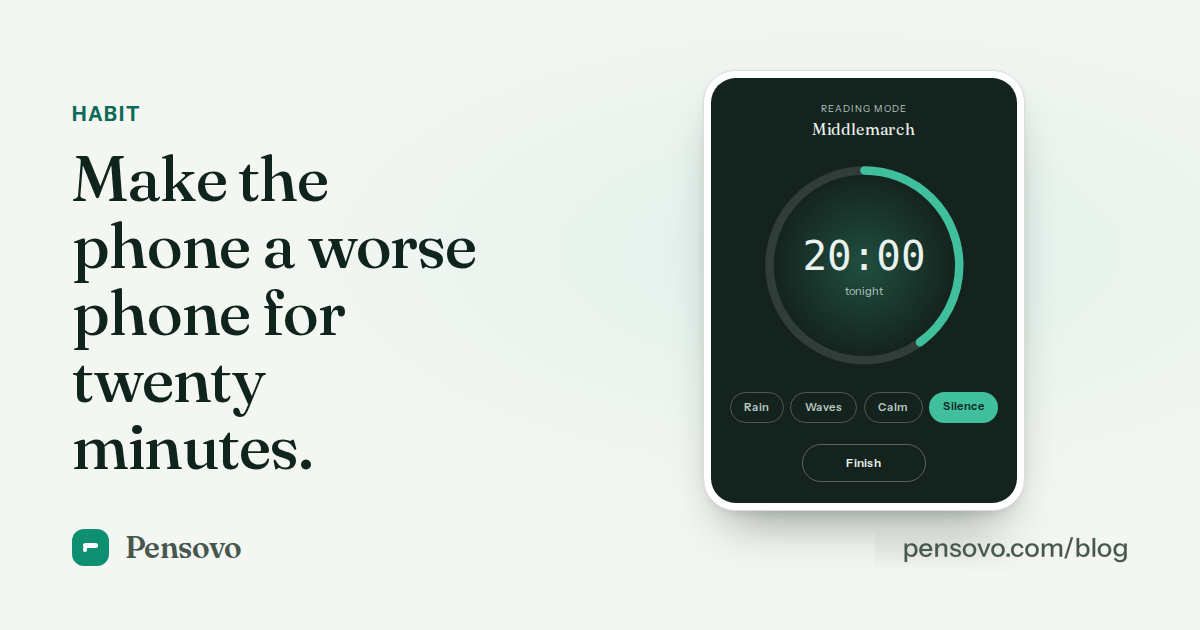
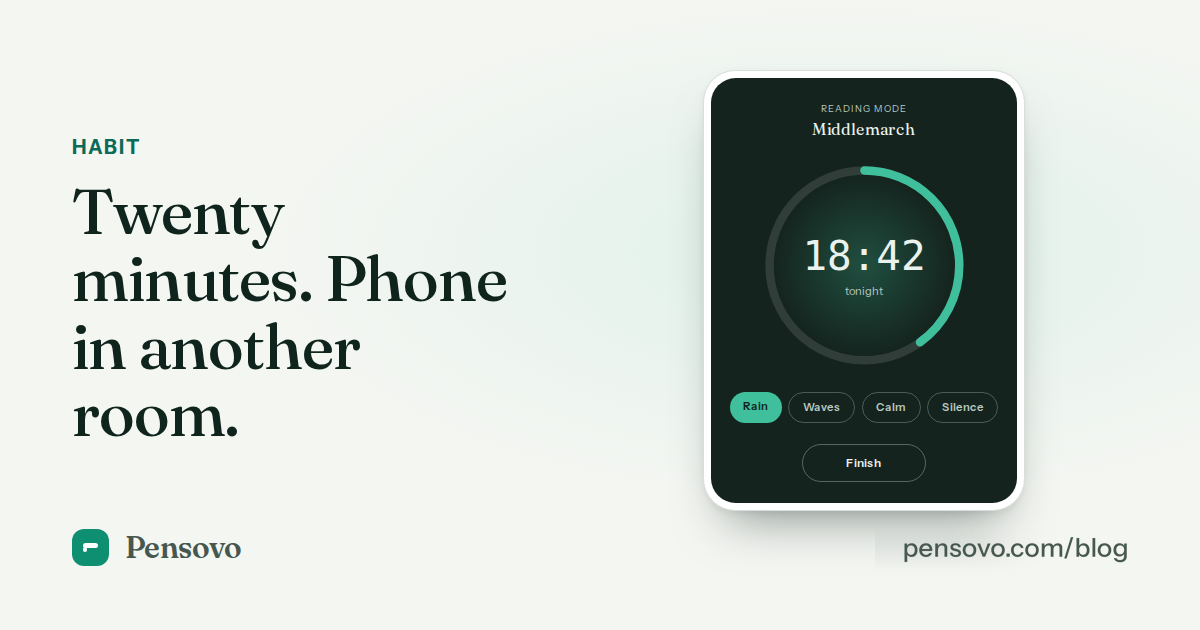
Set a timer, read until it ends, stop or go again. Twenty minutes is long enough to get absorbed — most readers report the first five minutes are the hard part — and short enough that starting is not a negotiation. Three blocks is an hour, and each one is a fresh start for attention that has drifted.
2. Put the phone in another room
Not silent, not face down, not in a drawer beside you: another room. The difference between "in reach" and "out of reach" is most of the effect. If you read on your phone, see the guide to reading on a phone without getting distracted; the short version is aeroplane mode and a reading app that shows one thing.
3. Change the book, not yourself
If you have reread the same paragraph three times, the book is wrong for this moment. Keep a second, easier book going for tired nights and give the demanding one the good hours. Nothing about this is a failure of discipline.
4. Read with a pencil
Or a sticky tab, or the intention to write one line when you stop. Attention needs a task; "find the sentence worth keeping" is one. On a book you cannot mark, photograph the page you would have underlined.
5. Add a sound bed
Rain, a café, waves, brown noise. Ambient sound works for many people by masking the room's small noises, which are what pull a wandering mind away. Silence works for others. Try both for a week each.
6. Fix the time
The same slot each day, attached to something that already happens — coffee, commute, the dishwasher going on. A fixed slot removes the daily decision, and decisions are what attention is spent on before you open the book.
How long should I read in one sitting?
As long as attention lasts, in blocks of twenty. Most adults find 40–60 minutes of a novel comfortable and 20–30 minutes of dense non-fiction is plenty. The block structure matters more than the total: two twenty-minute blocks with a stretch between them beat forty minutes of fading attention.
What about ADHD?
Everything above applies with the volume turned up: shorter blocks (ten minutes is fine), audiobooks alongside the text, a fidget in the other hand, and much more tolerance for abandoning a book that is not holding you. Readers with ADHD often do better with two or three books going than with one, and with a timer than with a page goal. Specialist advice — from ADDitude or a clinician — will go further than a general article can.
Common questions
Why do I keep rereading the same paragraph?
Because attention has left the page — usually the phone, tiredness, or a book that is wrong for the moment. Once is normal. Three times means switch to an easier book or stop for tonight.
How do I stop zoning out while reading?
Give attention a job: read with a pencil, a question, or the intention to write one line when you stop. Read in twenty-minute blocks and put the phone in another room.
Does music help you focus while reading?
Music with lyrics usually hurts; ambient sound — rain, café noise, brown noise — helps many people by masking the room. Try silence and a sound bed for a week each.
How long should I read in one sitting?
Blocks of twenty minutes, for as long as attention lasts. Two blocks with a break beat one long fading session.
Is it better to read in the morning or at night?
Whichever you will actually do, but give the demanding book the hours when your attention is fresh. Bedtime suits novels and rereads.
Can a reading timer really help focus?
Yes. It makes the decision once ('twenty minutes') so you are not renegotiating every paragraph, and it turns stopping into a planned event rather than a failure.