Amol B
What is a reading slump?
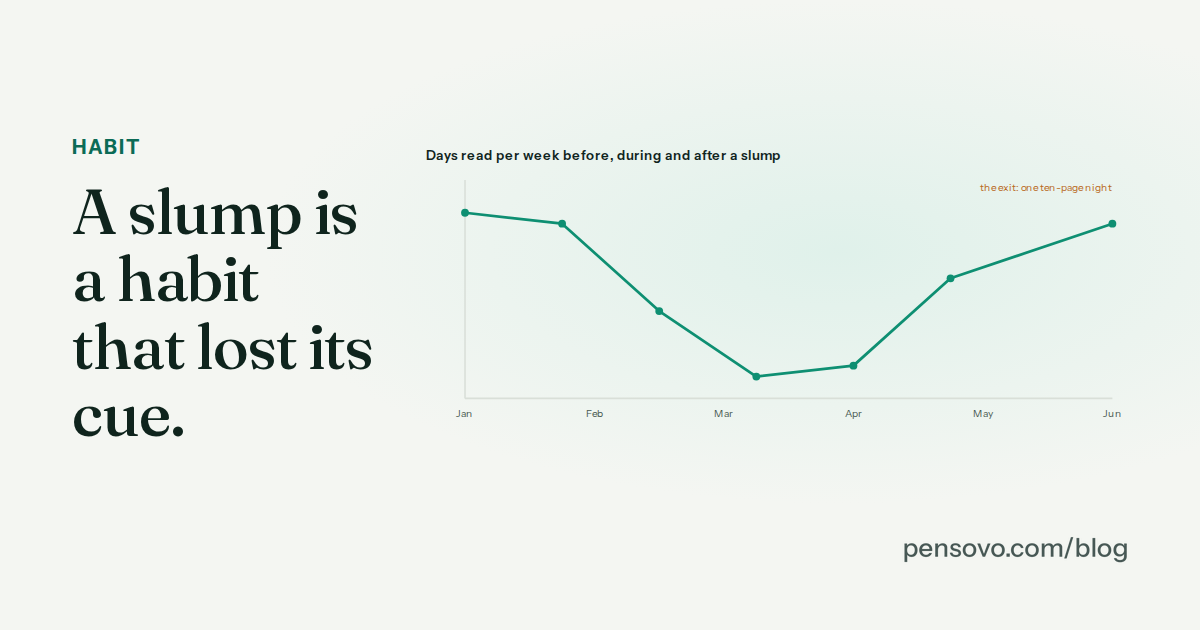
A period, usually two weeks to a few months, when reading stops without a decision to stop. You still think of yourself as a reader; you still buy books; you just do not open them. It is distinct from being too busy to read — people in a slump often have time and spend it elsewhere — and distinct from losing interest in books altogether, which is rare and usually temporary.
What causes a reading slump?
- The wrong book at the wrong time. A demanding novel in a hard month, or a book you feel you should finish. Guilt attaches to the book, then to reading.
- A broken routine. Travel, a new job, a baby, a move. The reading slot disappears and nothing re-creates it.
- A hangover from a great book. The next book is not as good, so you read nothing.
- The phone got there first. Bed used to be for reading; now it is for scrolling. This is the most common cause and the least admitted.
Five ways out, from least to most effort
1. Abandon the book
Most slumps have a specific book at the bottom of them. Put it down, record where you stopped and one line on why, and stop pretending you will resume. Finishing books you dislike is the fastest route to reading nothing at all.
2. Pick a short, easy, guaranteed book
Under 250 pages, by an author you already trust, or a reread of something you loved. The job of this book is to be finished in a week and remind you what finishing feels like.
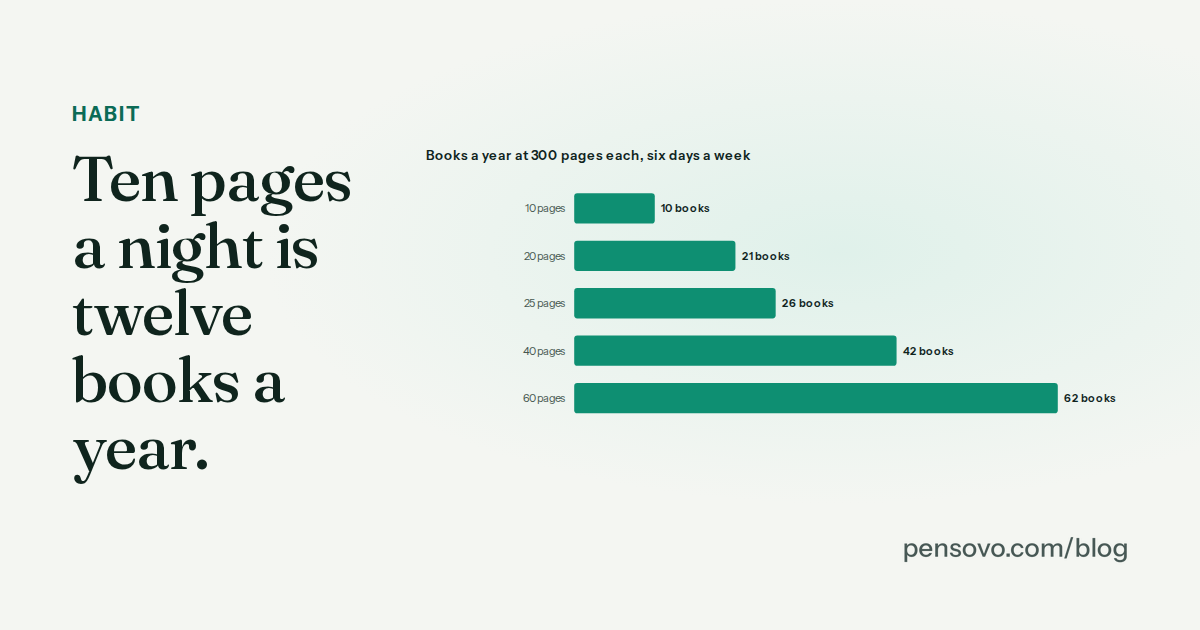
3. Shrink the minimum to ten minutes
Not a chapter, not thirty pages. Ten minutes, tonight, before the phone. Set a timer if it helps; a session timer with rain in the background is oddly effective at making ten minutes feel like a decision already made.
4. Change the format
If print is not working, an audiobook on a walk or a commute is a reading day. If the Kindle is not working, a paperback is. Format switches break the association between "reading" and the place where it stalled.
5. Rebuild the slot
Attach the ten minutes to something that already happens every day: the first coffee, the commute, the dishwasher going on. Two anchors are better than one. This is the step that prevents the next slump rather than ending this one.
How do you restart a reading streak after a slump?
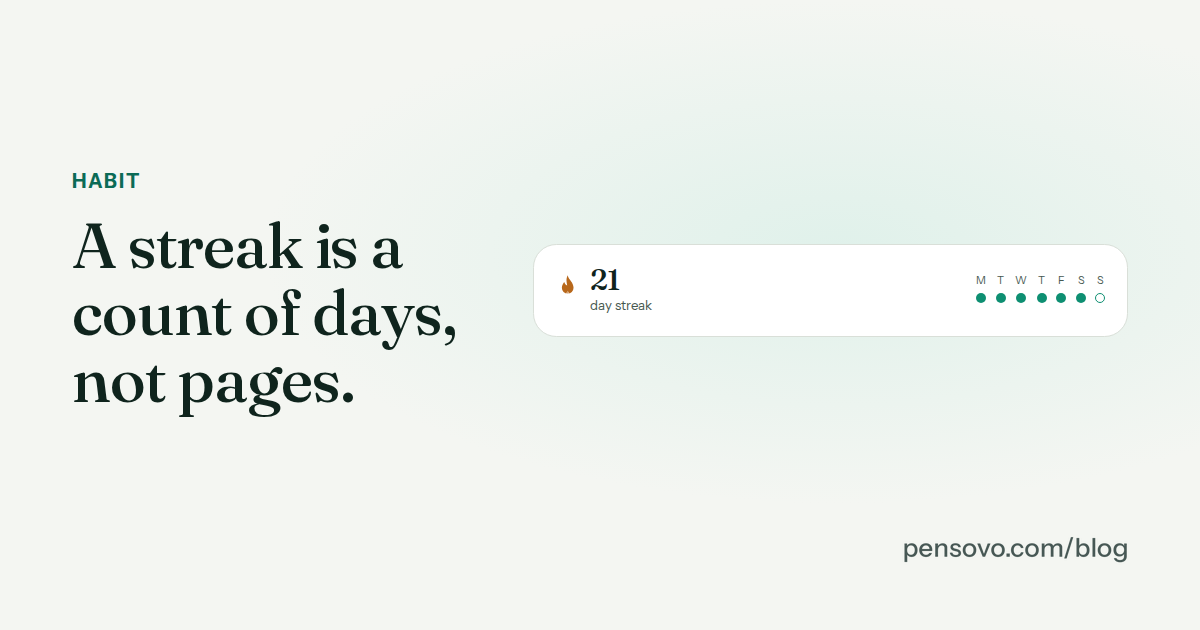
By logging one night. The streak does not care that it is a new streak; the calendar does not care that March is empty. If you use a tracker with streak saves, spend them on the last day or two of the gap and move on; if you do not, start at one and stop looking at the old number. The temptation to "wait until Monday to start properly" is the slump talking.
How do you avoid the next one?
Keep a short list of easy books for bad months, so the choice is made before the slump. Log days rather than books, so a slow month still shows progress. And notice the early signal: three days in a row with no log is not a slump yet, but it is the moment to read ten pages of something easy.
Common questions
How long does a reading slump last?
Most end within a month once something small restarts the habit; some last a season. The length depends far more on when you read ten easy pages than on anything about the books.
What should I read to get out of a slump?
Something short, easy and guaranteed: under 250 pages, an author you already trust, or a reread of a favourite. Its job is to be finished in a week.
Is it okay to stop reading a book halfway?
Yes. Record the page and one line on why, and move on. A book you resent is the most common cause of a slump.
Do audiobooks help with a reading slump?
Often. They break the association between reading and the place where it stalled, and a forty-minute commute becomes a reading day.
Why can't I focus when I read anymore?
Usually the phone, tiredness, or a book that demands more than the moment allows. Try ten minutes with the phone in another room and an easier book before assuming it is you.
Should I set a reading goal during a slump?
Set a daily one, not a yearly one: ten minutes tonight. Yearly goals make a slump feel like falling behind, which deepens it.