Amol B
What does a reading streak actually measure?
Consecutive days with a logged reading session. Not pages, not books, not minutes — days. A streak of 30 means you read on thirty days in a row, whether that was thirty pages a night or two.
That is a deliberately crude measure, and the crudeness is the point. A page count rewards fast readers and long evenings; a day count rewards the only thing that actually builds a habit, which is turning up. Research on habit formation (Lally and colleagues, University College London, 2010) found daily behaviours took a median of 66 days to feel automatic. A streak is a way of making those 66 days visible.
Why do most reading streaks break?
Three reasons, in order of how often they happen.
- The minimum was too high. "Read every night" quietly means "read for forty-five minutes every night", and the first night you have twelve minutes you skip it rather than do a version that feels like cheating.
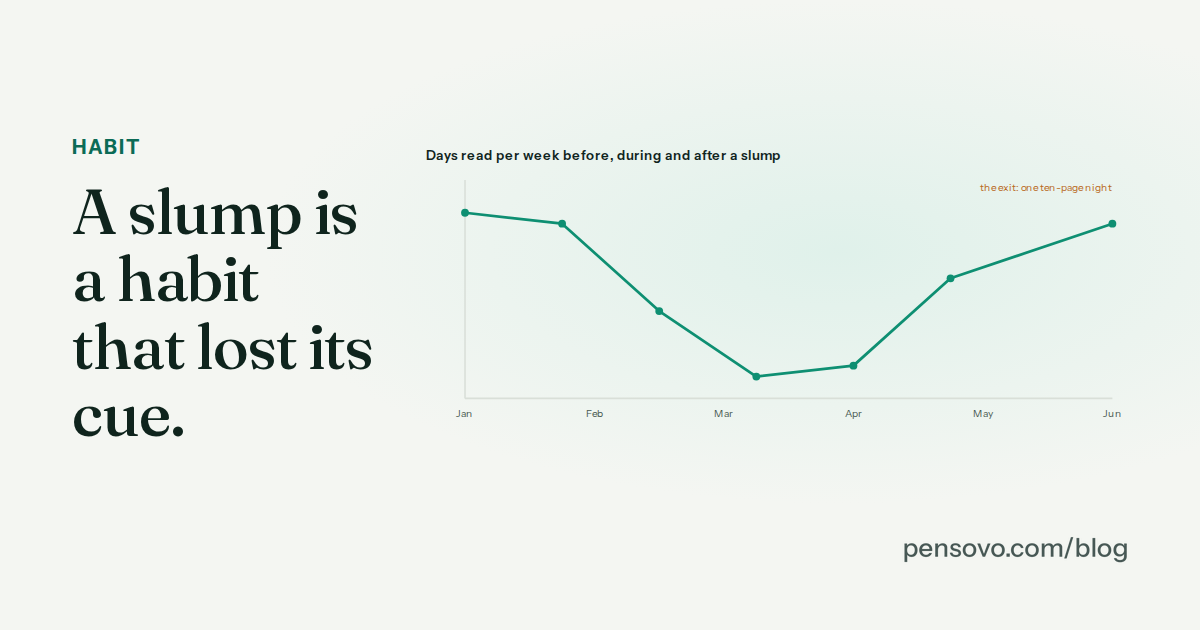
- One missed day reset everything. A streak that goes from 140 to 0 because of a flight teaches you that the streak is fragile and not worth protecting, which is precisely the opposite of what it was for. Readers who lose a long streak this way usually stop tracking within a fortnight.
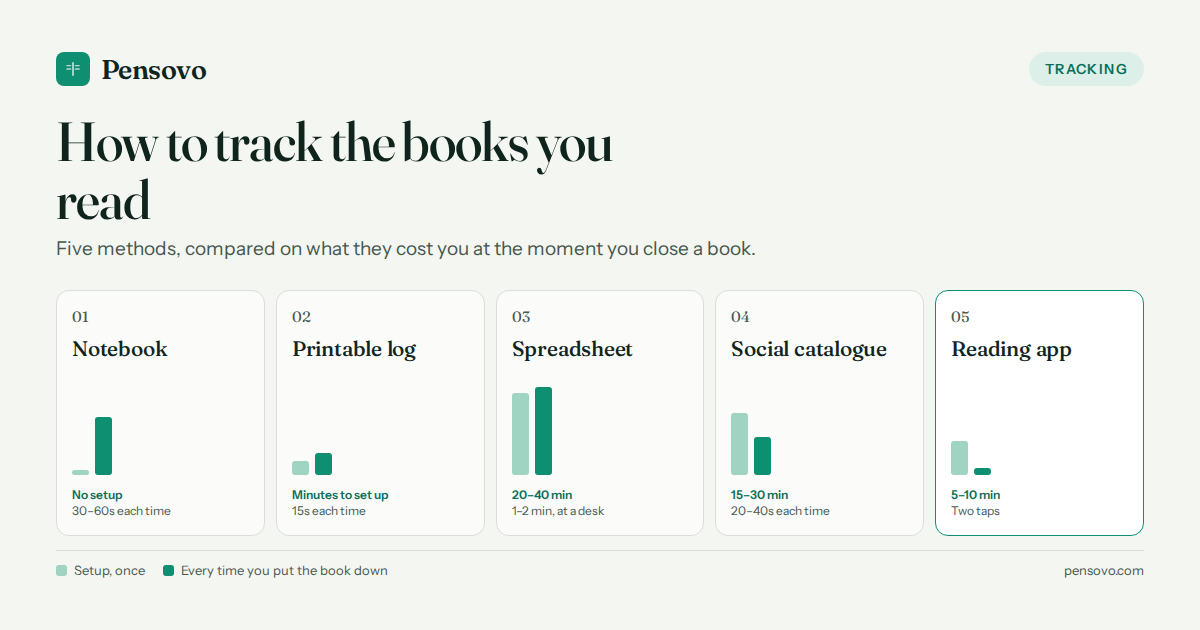
- Logging was separate from reading. If the log lives in a spreadsheet you open at a desk, the reading happens at 11pm in bed and the logging happens never.
How do you keep a reading streak going?
Set the minimum where you can meet it on your worst day
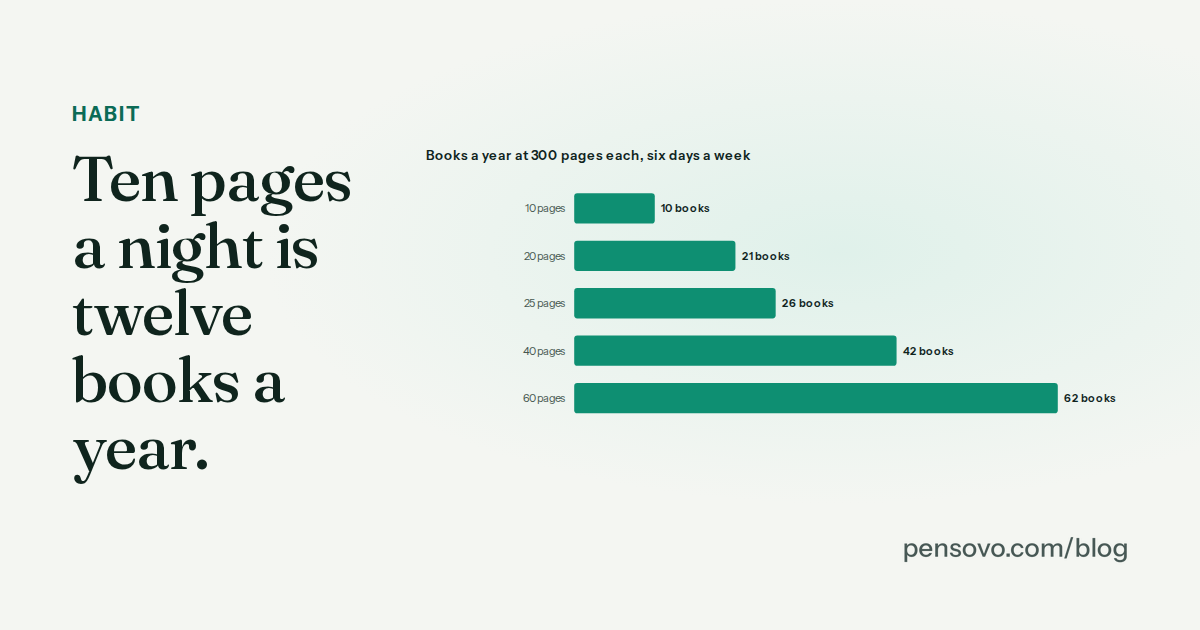
Ten pages or ten minutes, whichever comes first. Ten pages of a paperback is 2,500–3,000 words and takes most adults 8–12 minutes. Over a year that floor alone is about 3,650 pages — twelve 300-page books — from a habit you can keep in a hotel bed after a fourteen-hour day. Most nights you will read past it. The point is that on the bad night, the version that counts is still available.
Attach it to something that already happens
First coffee, the commute, the moment the dishwasher goes on, in bed before the phone. Two anchors are better than one, because the bad week usually kills one of them.
Log at the moment you close the book
Two taps, the page number, done. If logging takes longer than ten seconds you will stop logging before you stop reading, and the streak will die of paperwork rather than of not reading.
Decide the missed-day rule before you miss
On the night itself you will decide badly. The rule that works for most people is never miss twice: one missed day is life, two in a row is the start of a lapse. So the day after a miss is the most important reading day of the month, and it is fine if it is the ten-page minimum.
Consecutive days or days per week — which streak design is better?
Three designs are common, and they behave very differently on the bad week.
| Design | How it counts | What one missed day costs | Who it suits |
|---|---|---|---|
| Strict consecutive | Resets to zero on any gap | Everything | Nobody, for long. Fine for a 30-day challenge |
| Consecutive with saves | Resets unless you spend a save (typically a few a month) | One save | Most readers; the Duolingo model |
| Days per week | Counts weeks where you hit N of 7 days | Nothing, if the week still reaches N | People with irregular schedules; less daily pull |
Consecutive-with-saves keeps the daily pull of a streak while removing the catastrophic failure. Days-per-week is kinder but weaker as a nudge, because tonight never quite matters. If your tracker only offers strict consecutive counting, treat the streak as a monthly challenge and expect to restart it.
Do reading streaks actually work?
For most people, yes — provided the streak can be protected. The mechanism is the same one behind exercise and language streaks: a visible daily cue plus a small, immediate reward. The failure mode is also the same: a fragile streak becomes a source of guilt, and guilt is a worse motivator than a filled-in dot.
Two honest caveats. A streak measures showing up, not enjoyment, and it is possible to read ten grudging pages a night for a year and remember none of it — pair the streak with a one-line note when you finish a book. And a streak should never make you finish a book you dislike; stop the book, keep the streak, start something else the same night.
What counts as a reading day?
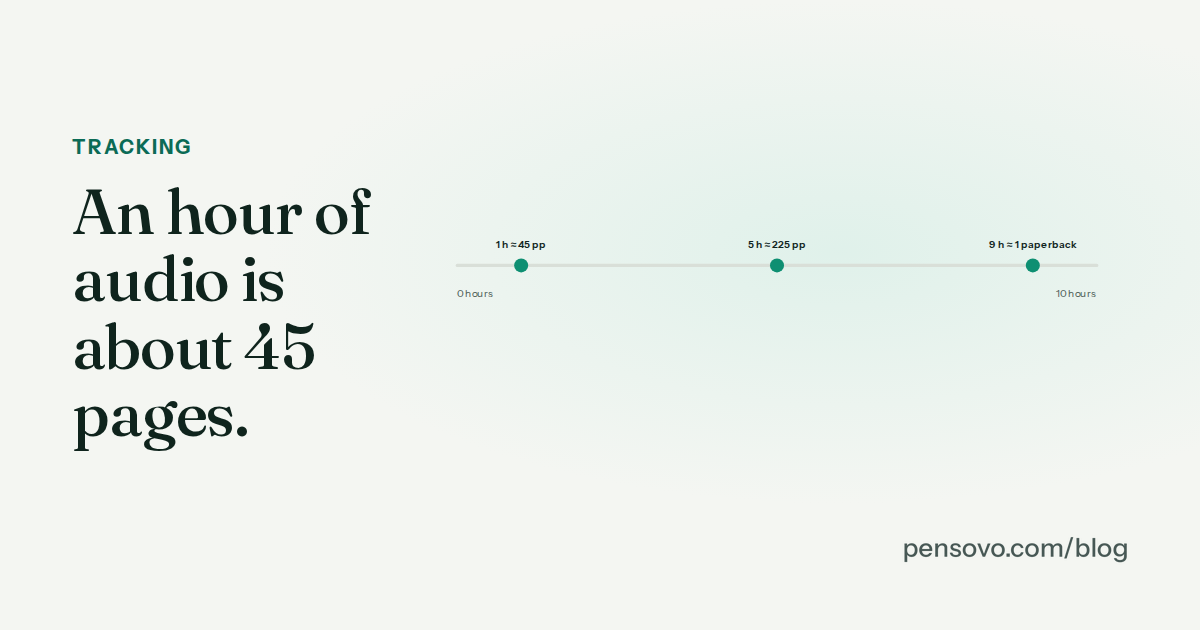
Anything with a book in it. A page of a paperback, a chapter on Kindle, forty minutes of an audiobook on the commute, a reading session where you sat with the book and lost track of the page. The habit is "spend time with a book", not "look at paper", and the people strictest about this tend to read least.
Common questions
What is a reading streak?
The number of consecutive days on which you logged any reading. It is a habit measure, not a volume measure: ten pages counts the same as a hundred.
How long should I read to keep a streak?
Set the minimum at ten pages or ten minutes. It is a floor, not a target — most days you will read past it, but on the worst day the version that counts is still achievable.
What happens if I miss a day?
It depends on the design. Strict streaks reset to zero; streaks with saves let you spend one to fill the gap; days-per-week streaks ignore a single miss. Whatever the design, apply the rule "never miss twice".
Do audiobooks count toward a reading streak?
Yes. A day with a book in your ears is a reading day. Log the minutes or the chapter instead of a page.
Are streaks bad for reading?
They can be, if a broken streak becomes guilt or pushes you to finish books you dislike. Keep the bar low, protect the streak with saves, and stop bad books without ceremony.
What is a good reading streak?
Seven days proves the slot exists in your day; thirty proves the habit; a hundred is rare and worth a small celebration. Past a year the number stops mattering and the habit has replaced it.