Amol B
What is the difference between StoryGraph and Goodreads?
Goodreads, founded in 2007 and owned by Amazon since 2013, is a social network with a book database attached: shelves, ratings, reviews, friends, a feed, groups, giveaways and the annual Reading Challenge. StoryGraph, launched in 2019 by Nadia Odunayo and still independent, is a reading tracker built around data: it asks how a book made you feel and how fast it moved, and gives you charts about your own reading in return. The social features exist but are deliberately light.
Feature by feature
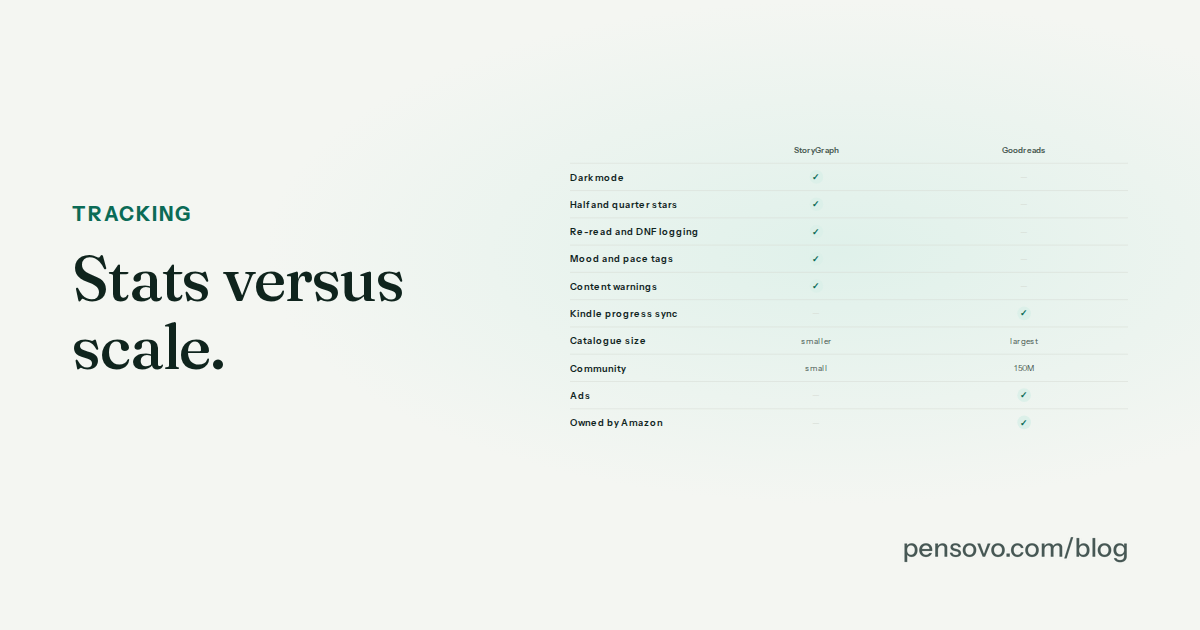
| StoryGraph | Goodreads | |
|---|---|---|
| Price | Free; Plus $4.99/mo or $49.99/yr, 30-day trial | Free, with ads |
| Platforms | iOS, Android, web (web-first) | iOS, Android, web |
| Ratings | Half and quarter stars | Whole stars |
| Re-reads and DNF | Yes, both | Workarounds only |
| Mood, pace, content warnings | Yes — its signature | No |
| Stats | Detailed charts; more in Plus | Basic year summary |
| Dark mode | Yes | No |
| Catalogue | Good; gaps for older and regional editions | The largest anywhere |
| Community | 5M sign-ups; buddy reads, light following | 150M members; reviews, groups, feed |
| E-reader sync | Kobo (since June 2026) | Kindle |
| Import | From Goodreads CSV, cleanly | From CSV |
| Ads / ownership | None; independent | Ads; Amazon |
Where StoryGraph wins
The tracker itself. Everything readers have asked Goodreads for since 2013 — half-stars, dark mode, rereads, DNF, a way to say a book was tense and slow rather than three stars — StoryGraph shipped years ago. Its statistics are the best in the category: moods over time, pace, page counts, genres, the shape of your year. Content warnings, crowd-sourced and filterable, are a feature no rival matches. And the company's independence is, for many readers, the point.
Where Goodreads wins
Scale, and one integration. The catalogue has an edition of almost everything ever printed; if you read older, translated or self-published books you will find them on Goodreads and sometimes not elsewhere. The community is thirty times larger, which means more reviews of the obscure book you just finished and a better chance your friends are already there. And if you read on a Kindle, Goodreads updates your progress automatically, which nothing else does.
What changed in 2025 and 2026?
Goodreads shipped its first visual redesign in twenty years in August 2025 — new logo, palette, seasonal challenge badges, Amazon want-to-read sync. Under the surface the app is the same: still no dark mode, still whole stars. StoryGraph added favourites (September 2025), review likes (February 2026), Kobo sync (June 2026) and user blocking (August 2026), and won an App Store award in 2025. The trajectory is the story: one app is iterating monthly, the other repainted.
The honest weaknesses
StoryGraph's app is slower than its website and some users find the design cold; there is no barcode scanner on iOS since the iOS 18 break, no Android widget, and the social features are thin enough that people looking for a Letterboxd-style profile leave disappointed. Goodreads' weaknesses are the ones above, plus the feed and the ads. Neither is a habit tracker in the streak-and-calendar sense; both are libraries first.
How do you switch from Goodreads to StoryGraph?
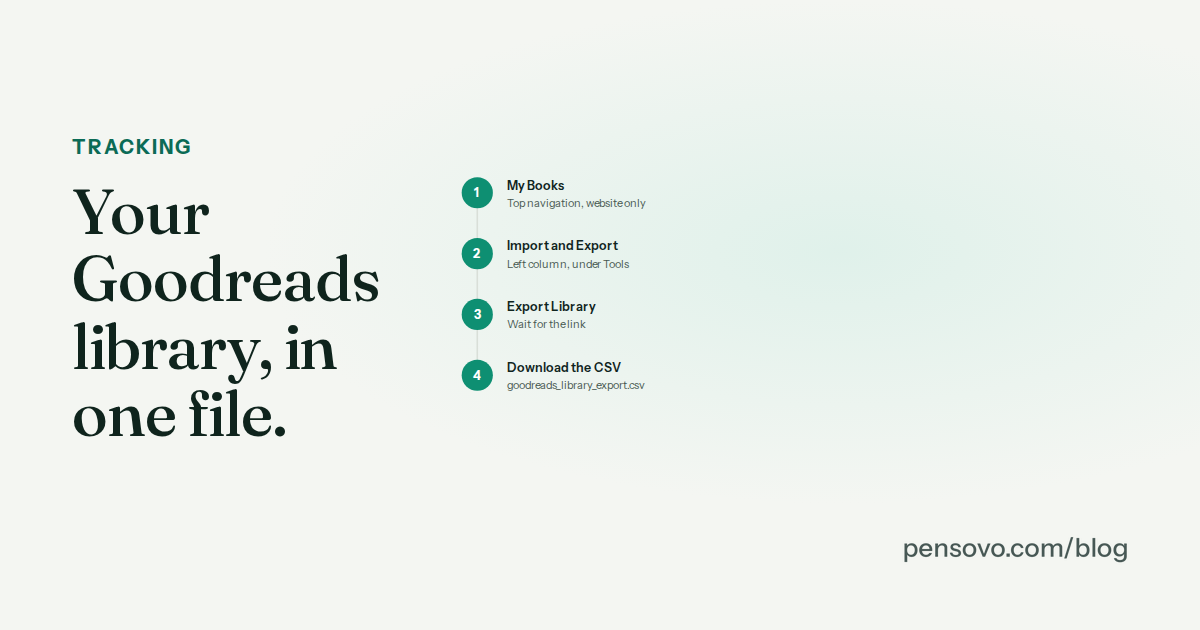
Export your library from the Goodreads website (My Books → Import and Export → Export Library), then in StoryGraph choose Import from Goodreads and upload the CSV. Shelves map automatically — read, currently reading, to-read — and ratings carry across; custom shelves become tags. Allow a few minutes for a large library and expect to fix a handful of books without ISBNs. Your reviews come over as text.
Who should pick neither?
Readers who want a daily habit tracker rather than a library: a streak, a calendar of days read, two-tap logging, notes on paper books, and no social layer. That is a different category — Pensovo, Bookmory and Book Tracker live there — and many people run one of those alongside StoryGraph or Goodreads, using the private tracker for the nightly log and the bigger app for the record and the reviews.
Common questions
Is StoryGraph better than Goodreads?
As a tracker, yes: half-stars, rereads, DNF, mood tags, stats, dark mode, no ads. As a network and catalogue, Goodreads is far larger. Choose by which you use more.
Is StoryGraph free?
Yes. Tracking, tags, imports and core stats are free. StoryGraph Plus, at $4.99 a month or $49.99 a year, adds deeper statistics and extras, with a 30-day trial.
Is StoryGraph owned by Amazon?
No. It is an independent company founded in 2019 and has taken no venture funding. Goodreads has been owned by Amazon since 2013.
Can I import my Goodreads library into StoryGraph?
Yes. Export the CSV from the Goodreads website and use StoryGraph's Goodreads import. Shelves, ratings and dates read carry across; custom shelves become tags.
Does StoryGraph sync with Kindle?
No — only Goodreads does. StoryGraph added Kobo sync in June 2026.
Can I use both StoryGraph and Goodreads?
Yes, and many readers do: Goodreads for friends and reviews, StoryGraph for stats and the record. Import once, then log new books in both or in whichever you prefer.