Amol B
Why not just write in the book?
Because it is not yours, or because it is yours and you love it, or because you will lend it, or because you are reading a library copy with someone else's pencil already in the margins. Annotating in the margins is a fine habit and the subject of a separate guide; this one is for every book where a pencil is not an option.
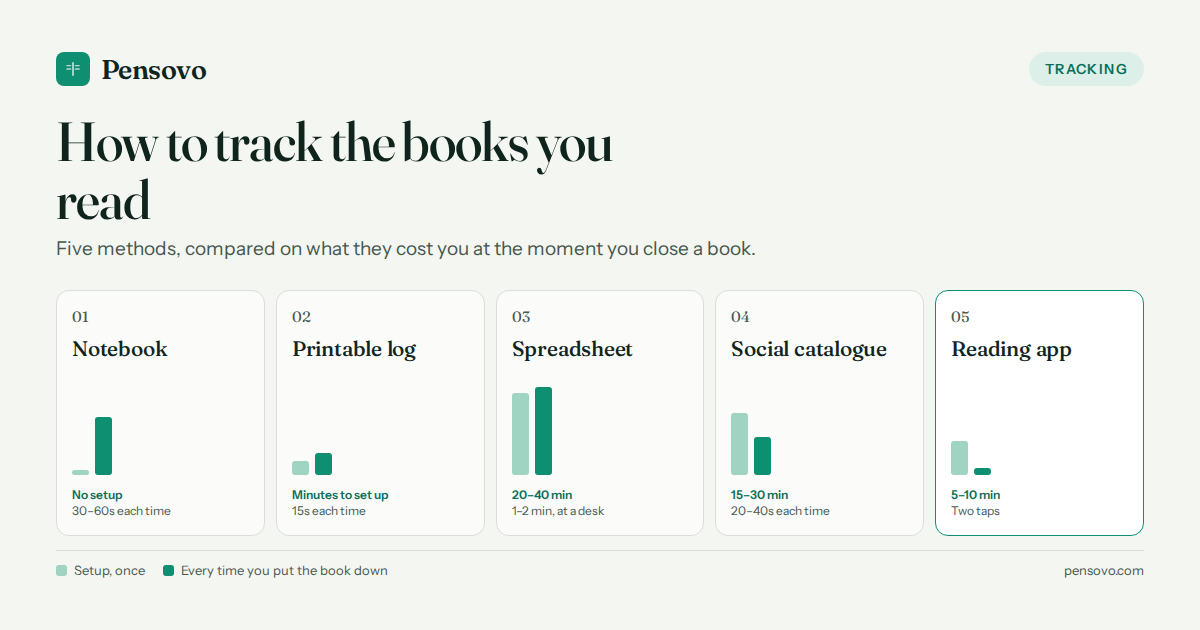
Five methods, compared
| Method | Speed at the page | What you keep | Can you find it later? | Best for |
|---|---|---|---|---|
| Sticky tabs | 2 seconds | A location | Only by flipping through | Passages to return to before you give the book back |
| Index card in the book | 10 seconds | Page number and a few words | If you keep the card | Non-fiction; building a list of arguments |
| Notebook | 1–2 minutes | Full thoughts, quotes copied by hand | By date, if you keep it | Readers who enjoy the writing itself |
| Notes app | 30–60 seconds | Typed quotes and thoughts | Searchable | Anyone; typing quotes is the friction |
| Photograph the page | 5 seconds | The passage as text, anchored to book and page | Searchable, by book and page | Paper books, borrowed books, dense non-fiction |
How do you take notes from a library book?
Tabs while you read, then photograph or copy the tabbed passages before the book goes back. The failure mode is returning a book with twenty tabs in it and no record of why; set aside ten minutes on the last day to turn the tabs into notes. If you photograph pages as you go, there is nothing to do on the last day.
How do you take notes on a book you do not own without typing everything?
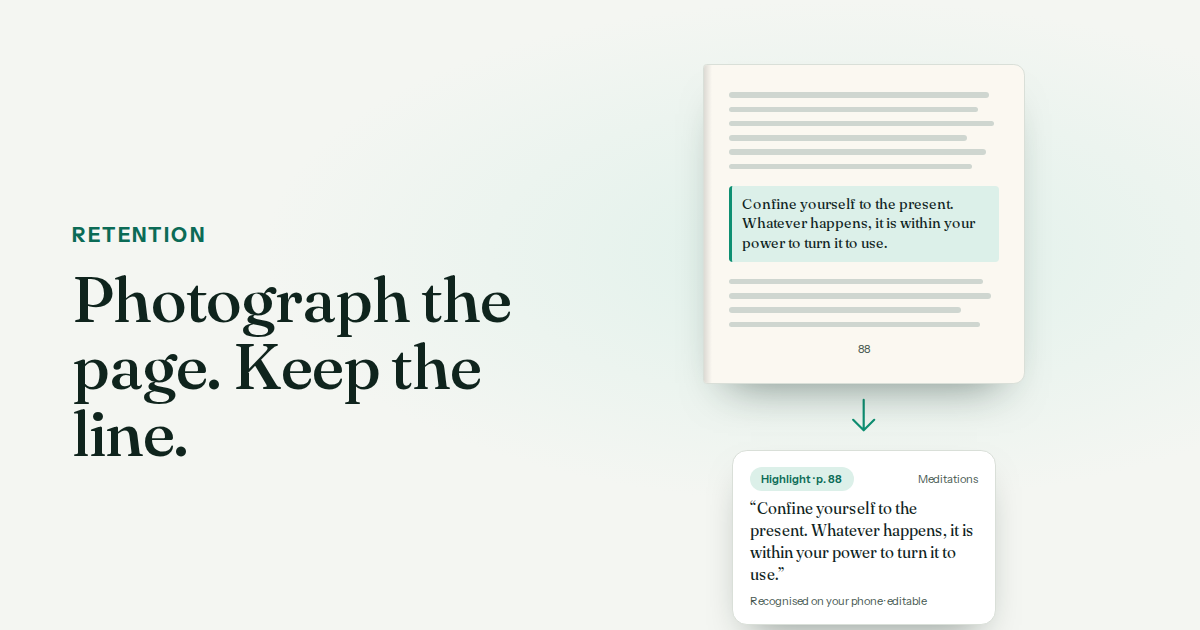
Photograph the page. On-device text recognition has quietly become good enough that a photo of a paperback page comes back as clean text in a second or two, on the phone, without a connection. The passage is attached to the book and the page, you trim it to the sentences you want, and it is searchable later. This is the method that finally makes note-taking on paper books as easy as on a Kindle.
What should a book note contain?
Three things, in order of importance: the page number, the passage or the idea, and one line on why it mattered to you. The third is the one people skip and the one that ages best — a quote without your reaction is a quote you will not understand in a year.
How do you keep the notes for one book together?
Pick one home per book and put everything there. If you use tabs, transcribe them into that home before the book leaves your hands. If you use a notes app or a tracker, attach the note to the book, not to a date. The goal is that in two years you open the book's entry and see every passage you kept, in page order.
Common questions
How do I annotate a library book?
Use removable sticky tabs while you read, then photograph or copy the tabbed passages before you return it. Never use ink or highlighter on a library copy.
Is it okay to write in books?
Your own, yes, if you want to; it is a legitimate way to read. This guide is for the books where you cannot — borrowed, library, or ones you want to keep clean.
What is the fastest way to save a quote from a paper book?
Photograph the page with an app that recognises the text on the phone and attaches the passage to the book and page. It takes about five seconds and is searchable afterwards.
Should I take notes on fiction?
Lightly. A line when you finish and the two or three passages that struck you. Heavy note-taking on a novel usually kills the reading.
What is a commonplace book?
A personal collection of passages copied from your reading, kept in one notebook or app. Photographing pages into a tracker is the digital version — searchable, with the source and page attached.
Do I need to write the page number down?
Always. A note without a page is a quote you cannot check, cite or find again.