Amol B
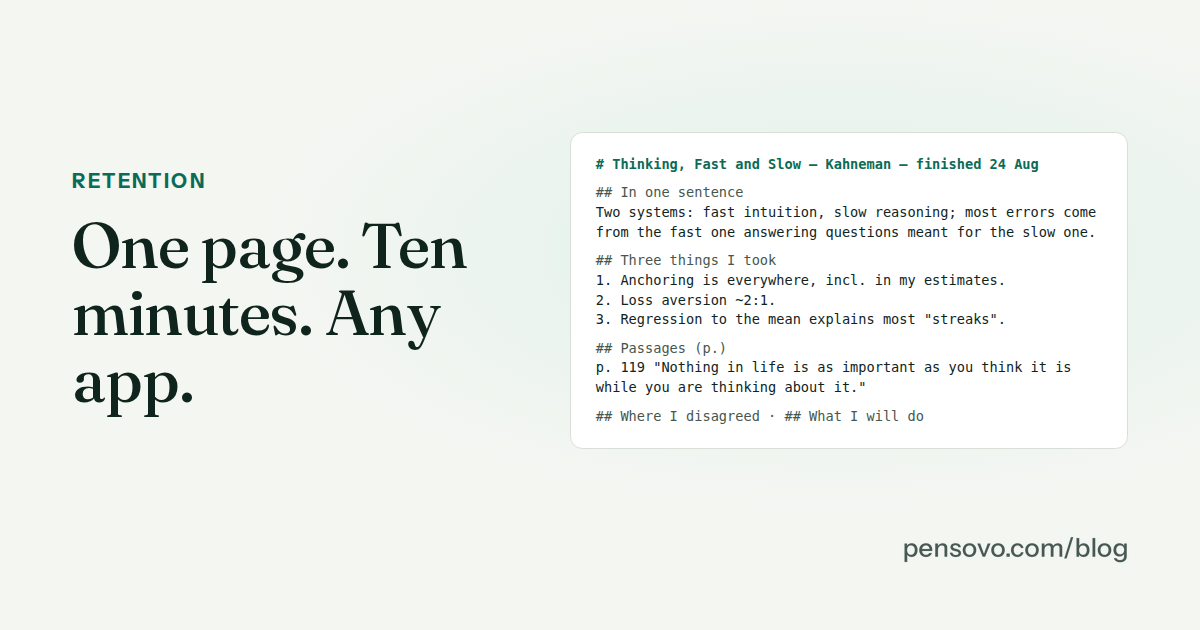
The template
# Title — Author — finished [date]

## In one sentence
What the book argues (non-fiction) or what it is about (fiction). One sentence.

## Three things I took
1.
2.
3.

## Passages worth keeping (with page numbers)
p. __  "…"
p. __  "…"

## Where I disagreed, or was not convinced
-

## What I will do because of it
(For fiction: who I would give it to, and what I would say.)

## Reread?  yes / no / in [year]
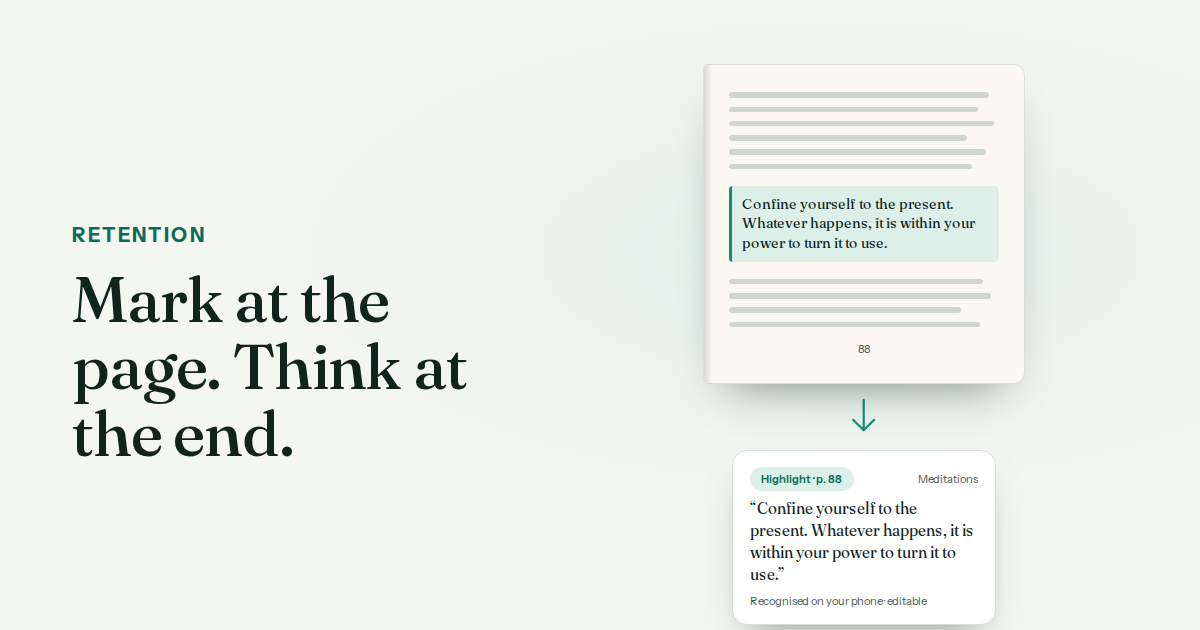
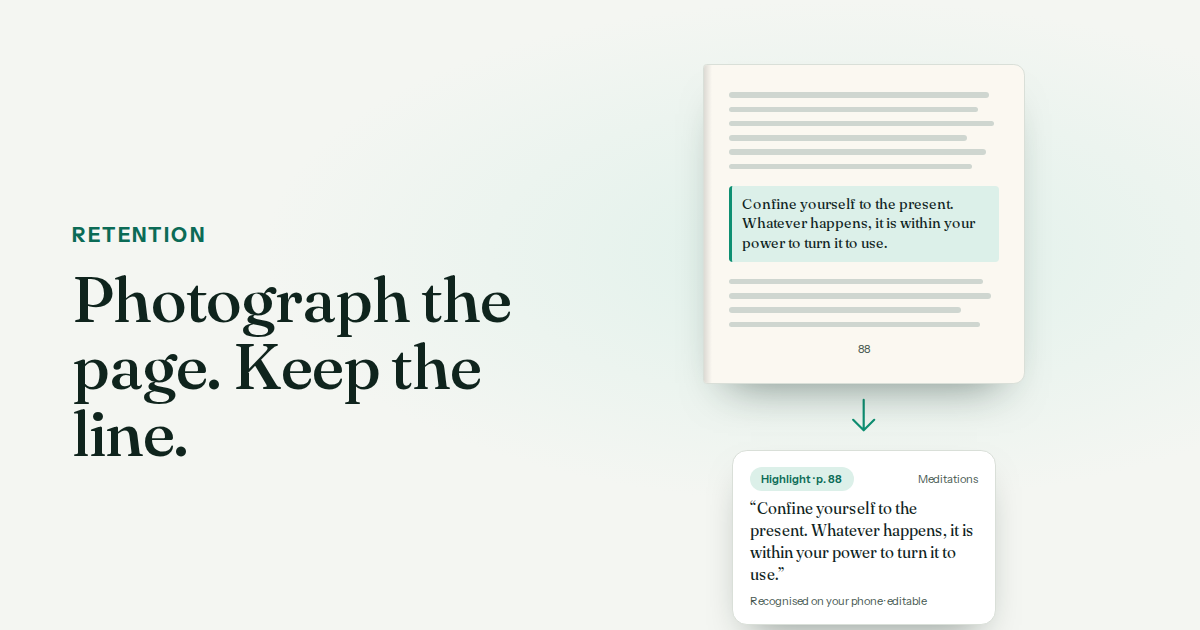
Copy it into a note per book. Fill the passages section while reading — from highlights, or from photographing the page — and the rest in the ten minutes after you finish.
Why these five sections?
| Section | What it does | How long |
|---|---|---|
| In one sentence | Forces compression — the single strongest act of understanding | 2 minutes, often the hardest |
| Three things I took | Three is what memory holds; ten is a summary you will not reread | 3 minutes |
| Passages, with pages | The book's own words, findable later | Done while reading |
| Where I disagreed | Thinking happens at the point of disagreement; without it the notes are dictation | 2 minutes |
| What I will do | Turns reading into a change, or admits it is entertainment — both fine | 1 minute |
How to fill it in ten minutes
Does this work for fiction?
With two swaps. "In one sentence" becomes what the book is about — not the plot, the thing underneath it. "What I will do" becomes who you would give it to and the sentence you would say handing it over. The passages and the disagreements stay; disagreeing with a novel ("the ending is unearned") is as useful as disagreeing with an argument.
Where should the notes live?
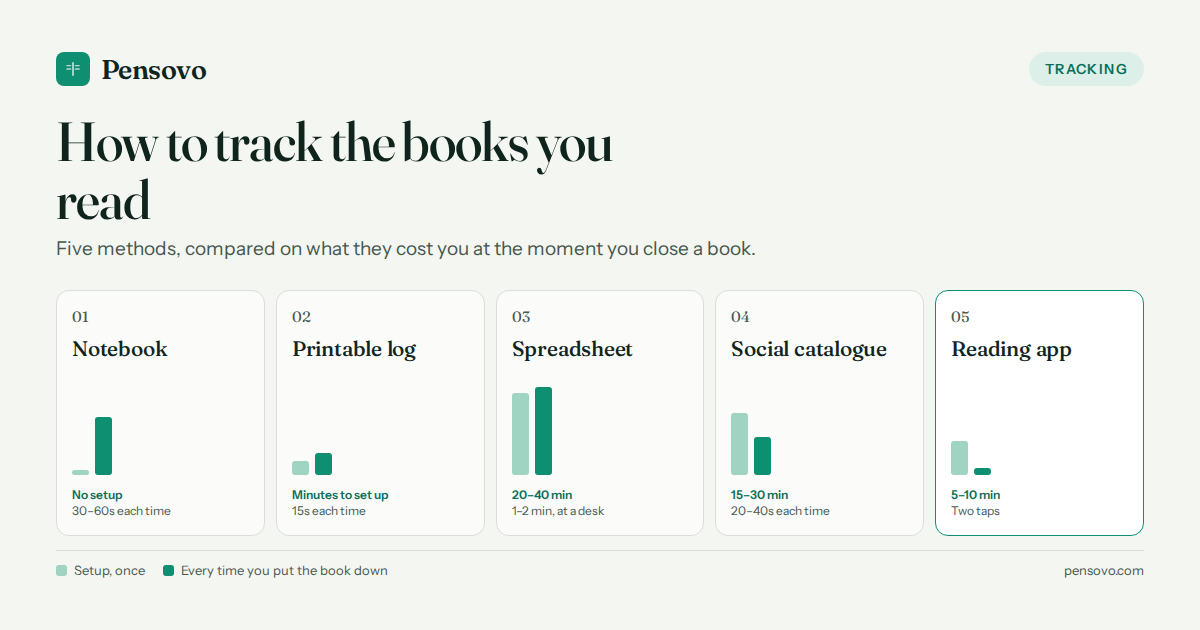
Wherever you will find them from the book's name in two years. A tracker with notes attached to the book is the simplest; a Notion or Obsidian page per book is the most flexible; a plain text file per book in a folder is the most durable. The template is plain text precisely so that this choice does not matter and can change.
What about the notes I take while reading?
Keep them small — the passages section of this template and a word or two in the margin. Heavy note-taking during a book kills the reading; the template's other four sections are written at the end, when you know what mattered. The separate guide to taking book notes without killing the reading covers the during-the-book habit.
Common questions
How do you take notes on a book?
Capture passages with page numbers while reading, then within a day of finishing write the book in one sentence, three takeaways, where you disagreed and what you will do. One page, ten minutes.
What should book notes include?
The book in one sentence, three things you took, passages with page numbers, points of disagreement, and an action or a recommendation. A reread decision if you like.
Is there a book notes template for Notion?
This one — it is plain text with headings, so paste it into a Notion page per book. It works identically in Obsidian, Apple Notes or a tracker.
How long should book notes be?
One page. Three takeaways, a handful of passages, a few lines of disagreement. Longer notes are summaries you will not reread.
Should I take notes on fiction?
Yes, lightly: what it is about, the passages that stopped you, one disagreement, who to give it to. Skip the argument and the action.
When should I write book notes — during or after?
Passages during; everything else within a day of finishing, when you know what mattered. Heavy note-taking during a book kills the reading.