Amol B
What is a commonplace book?
A notebook in which a reader copies passages worth keeping — quotations, arguments, lines of verse, a recipe, a joke — usually with the source and often with a note. Erasmus recommended them in 1512; John Locke published a method for indexing them in 1706; Thomas Jefferson, Virginia Woolf and Ronald Reagan all kept one. The point was never the copying. It was that choosing what to copy is a form of attention, and rereading the collection is a form of memory.
Why go digital?
| Paper commonplace book | Digital commonplace book | |
|---|---|---|
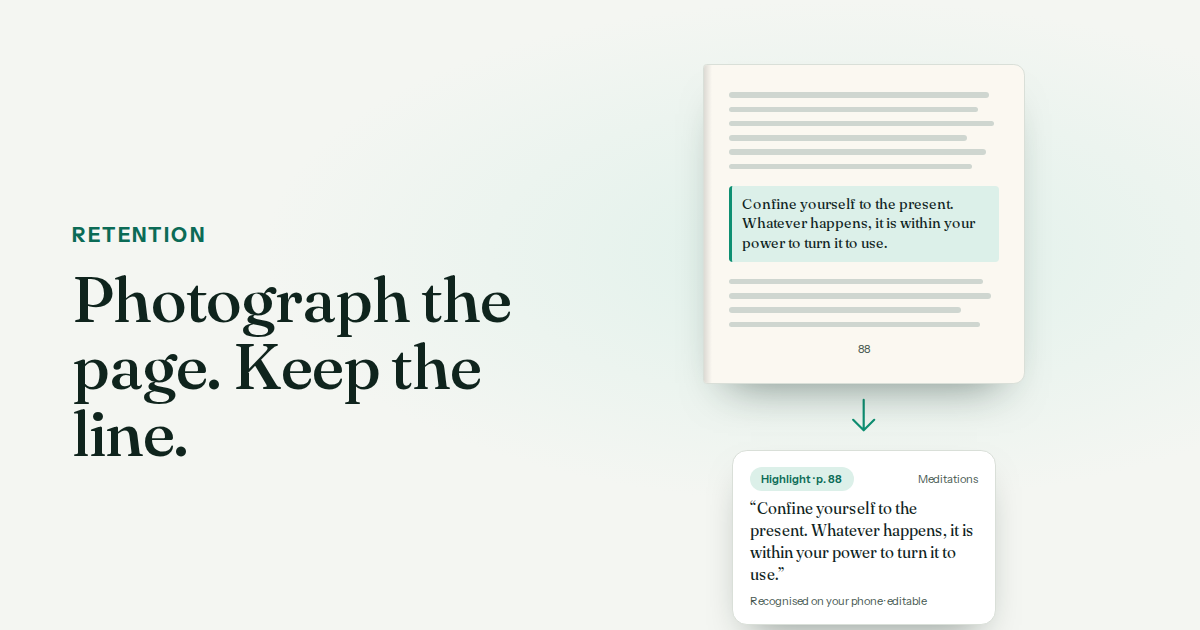
| Capture | Copy by hand — slow, but the slowness is part of the attention | Photograph the page; the passage becomes text in seconds |
| Source and page | If you remember to write it | Attached automatically when captured from a book's page |
| Finding a passage | Locke's index, or leafing through | Search by word, book, author or tag |
| Rereading | A pleasure; the object invites it | Needs a schedule or a resurfacing feature |
| Loss | One spilled drink | Backups, but also the risk of the app disappearing — export matters |
Many readers keep both: capture digitally because it is fast and findable, then copy the best dozen a year into a paper book by hand, because the slowness is the point of that copy.
How to start one in an afternoon
What should go in?
What stopped you. Not what seemed important, not what you think you should remember — what made you pause, reread, look up. A commonplace book with three hundred entries a year is a highlighter reel; one with forty is a portrait of a year's attention. When in doubt, wait a page and see if it is still with you.
How do you keep it from becoming a graveyard?
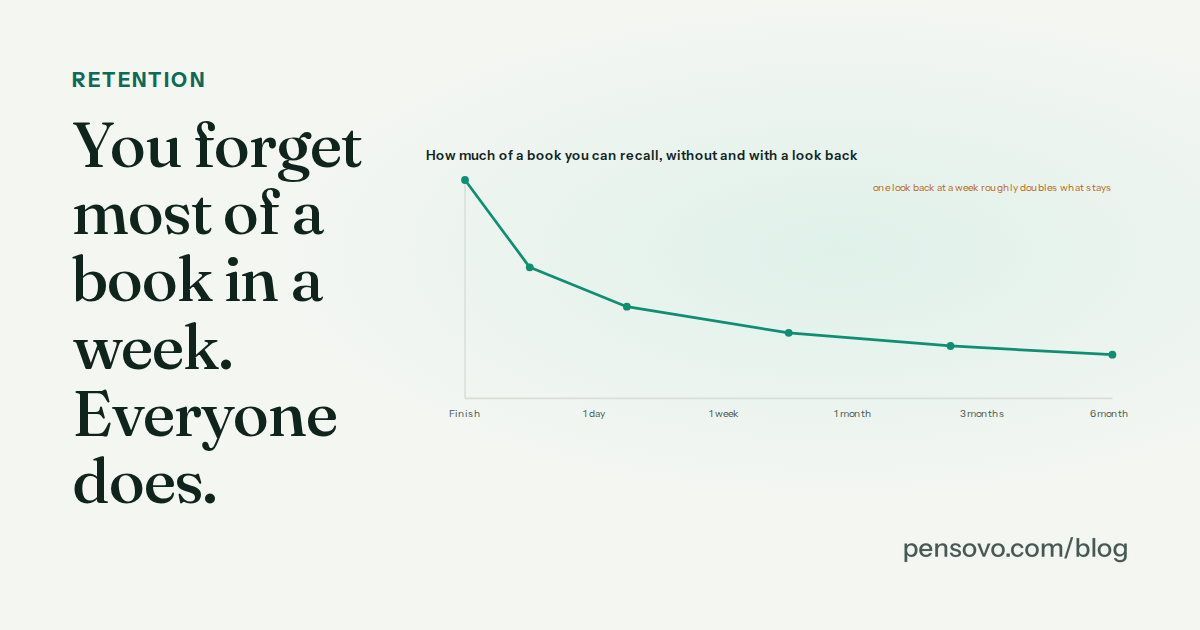
Reread it. Set a monthly reminder, open ten entries at random, and read them. Most will be pleasant; one or two will connect to something you are reading now, and that connection is the whole value of the exercise. Some apps resurface old highlights automatically, which is the same habit with the reminder built in.
Common questions
What is the difference between a commonplace book and a journal?
A journal records your days and thoughts; a commonplace book records other people's words that you wanted to keep, with the source. Many people keep both in one place, in separate sections.
Do I have to copy passages by hand?
No. Photographing the page and letting text recognition do the copying is faster and keeps the page number. Copy the best few by hand later if you enjoy it.
How do I organise a commonplace book?
Lightly. Source and page on every entry, and three or four theme tags at most. Search does the rest; a heavy taxonomy is a project that replaces reading.
How often should I reread it?
Monthly, ten entries at random. Rereading is what turns a collection of quotes into memory.
What did famous people keep in commonplace books?
Jefferson copied legal and literary passages; Woolf kept reading notes; Locke published an indexing method in 1706. The habit is older than the printed book.
Which app is best for a commonplace book?
Any that records the source and page, lets you capture from a photo, and exports your data. A reading tracker with highlights does it with the book already attached.