Amol B
Why annotate at all?
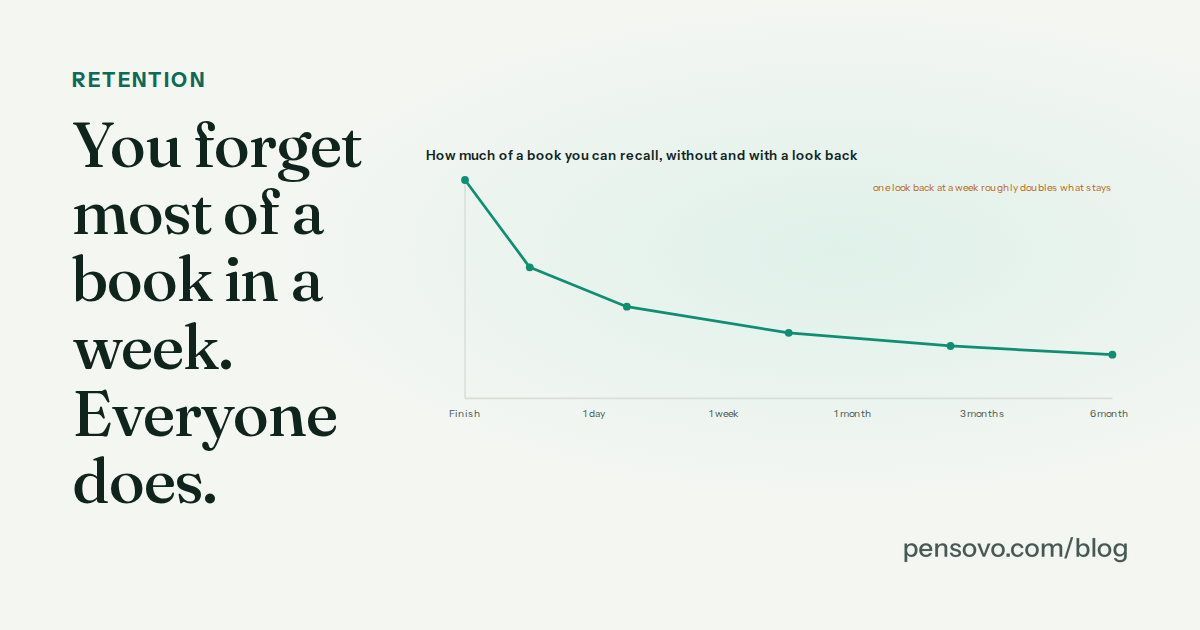
Two reasons, and neither is the exam. Marking a passage forces you to decide whether it is worth marking, and that decision is attention — the thing wandering minds lack. And a book you have marked is a book you can return to: the underlines are a map of your own reading, and rereading them a week later is the cheapest known way to remember what a book said.
What should you mark?
What stops you. A sentence you reread because it was beautiful. A claim you disagree with. A passage that explains something you had half-understood. A word you want to look up. The moment you laughed. Do not mark what seems important in an abstract way — "the thesis", "a key theme" — unless it also stopped you. Importance is for the exam; stopping is for you.
A rule of thumb: if you are marking more than one passage every three or four pages, you are highlighting, not annotating, and the marks will mean nothing later.
A four-colour tab key
| Colour | Meaning | Example margin note |
|---|---|---|
| Yellow | A line worth quoting | the sentence itself, underlined |
| Green | An idea or argument to think about | 'cf. Kahneman', 'is this true?' |
| Blue | A question, a word, something to look up | '?', 'lookup', a name |
| Pink | Loved it — the scene, the joke, the turn | '!', a heart if you must |
Write the key inside the front cover of every book you annotate, even if it is the same key every time. In two years you will not remember, and the book should explain itself.
Pencil, pen or highlighter?
Pencil. It erases, it does not bleed through thin paper, and a pencilled margin reads as a conversation with the book rather than a verdict on it. Highlighters are for textbooks and look shouty in a novel; if you love the look, use one colour, lightly. Pen is for people who are certain, and rereading your own certainties from five years ago is a humbling experience.
What goes in the margin?
Words, not sentences. "Yes." "No." "Cf. chapter 3." "Who?" A question mark. An arrow to the sentence above. The margin is for reactions, not essays; the essays go in the journal, with the page number. If you find yourself writing a paragraph in a margin, you have found something worth a real note — stop, write it properly, and put a tab on the page.
How do you annotate a book you can't write in?
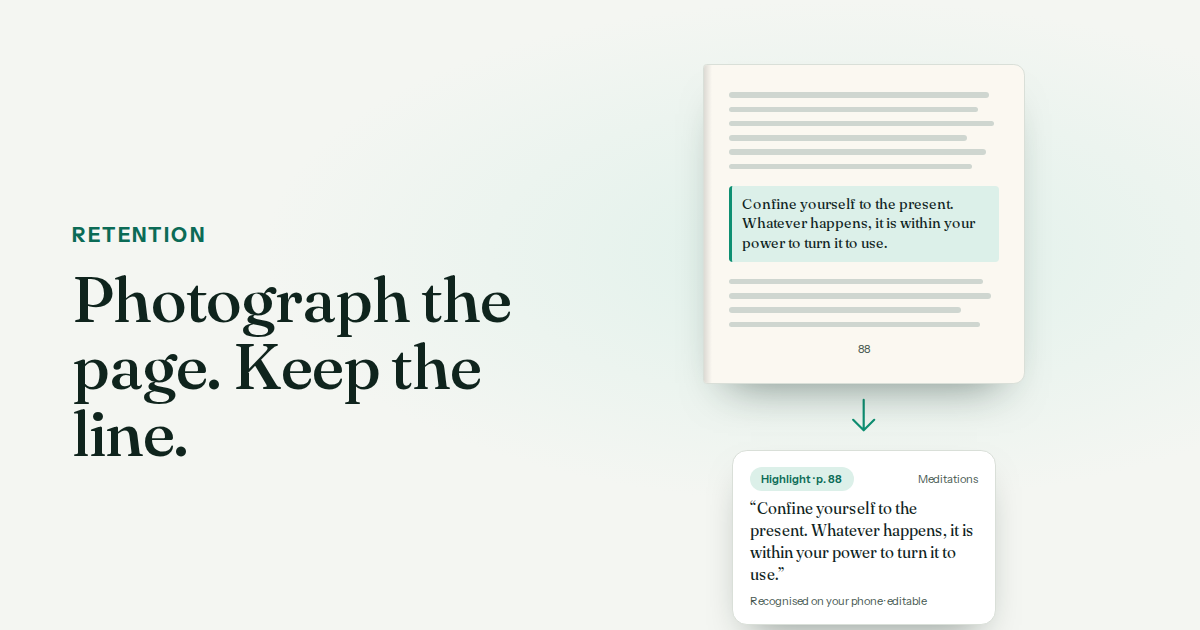
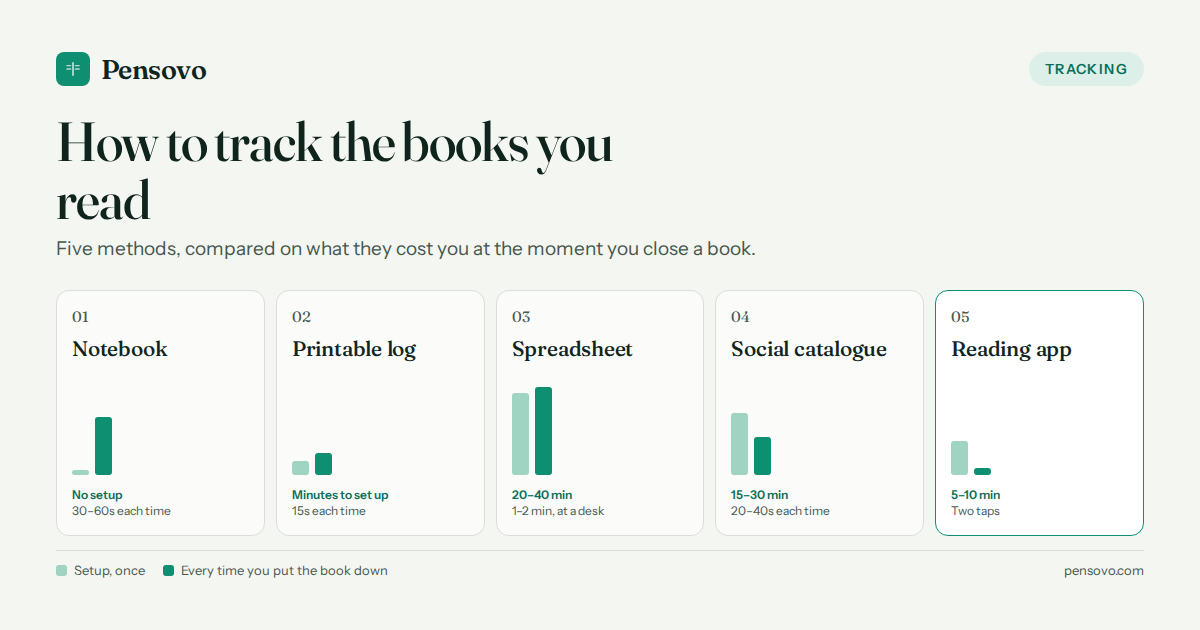
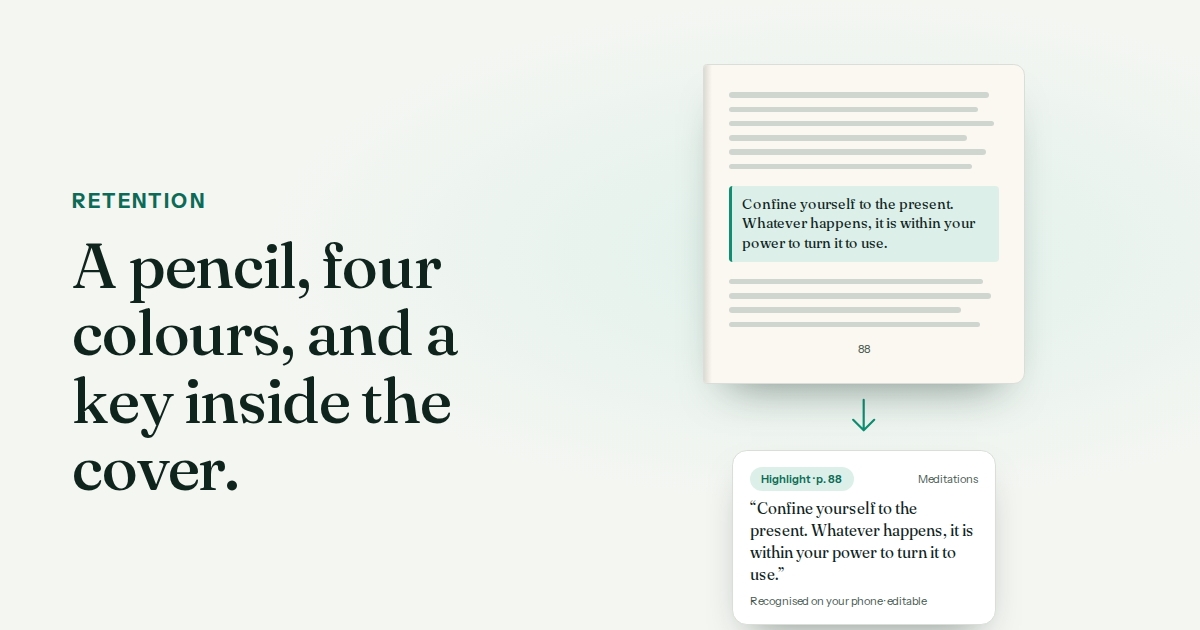
Removable tabs while reading, then photograph the tabbed pages before the book leaves your hands. On-device text recognition turns the photo into the passage, attached to the book and the page, and you trim it to the lines you meant. It is faster than copying by hand and, unlike a pencil mark, searchable. The separate guide to notes without writing in books covers the five methods.
How do you keep annotations findable?
Marks stay in the book, and the book goes back on the shelf, and that is the end of them unless you do one thing: copy the best few out when you finish, with page numbers. Five quotes and one line per book, in one place, is a searchable record of everything you have read. Photographing the tabbed pages does this in a minute; typing them takes ten and is still worth it.
Common questions
Is it okay to write in books?
In your own, yes. Annotating is a way of reading, not vandalism. Use pencil if you want to keep the option of erasing, and never write in a book you borrowed.
What do the tab colours mean?
Whatever you decide, as long as you write the key inside the cover. A common scheme is yellow for quotes, green for ideas, blue for questions or words to look up, pink for moments you loved.
Should I annotate fiction?
Lightly. Underline the sentences that stop you, tab the scene you will want to reread, and write one line at the end. Heavy annotation kills a novel.
How do I annotate without ruining the book?
Pencil, lightly, and removable tabs rather than sticky notes with strong glue. Or leave the book clean and photograph the pages you would have marked.
What supplies do I need to annotate?
A pencil and a pack of four-colour removable tabs. Everything else is decoration.
How do I remember what I annotated?
Copy the best five marks out when you finish, with page numbers, and read them once a week later. Marks left in the book are marks you will never see again.