Amol B
What do the studies actually say?
The most-cited experiment (Rogowsky, Calhoun and Tallal, 2016) gave adults the same non-fiction book by listening, reading on a screen, or both, and tested comprehension immediately and two weeks later. There was no significant difference between the groups. Earlier work on children and adults comparing listening to reading of stories points the same way: for narrative text, the two routes land in the same place.
The exception is important. When text is dense — an argument you need to hold in your head, a passage you would naturally re-read — print has an advantage, because you slow down without noticing and look back without effort. Listeners rarely rewind. So: novels and narrative non-fiction, count them without a second thought; a difficult book you want to study, read it, or listen and then read the parts that mattered.
Why do people say audiobooks don't count?
Partly history: reading was the skill schools tested, so reading became the thing that counted. Partly a real intuition about attention — it is easier to zone out during an audiobook on a run than during a page on a sofa, and a chapter you did not hear is a chapter you did not read. The fix for that is honesty, not a rule: if you missed twenty minutes, rewind or mark the book as skimmed. The format is not the problem; drifting is, and it happens on the page too.
Three ways to log audiobooks toward a goal
| Your goal | How to log audiobooks | Note |
|---|---|---|
| Books a year | Count the book when the narration ends | Record the format. 40 books with 15 on audio is a fair and interesting year |
| Minutes a day | Log the minutes listened | The fairest unit across formats; a listening day is a reading day |
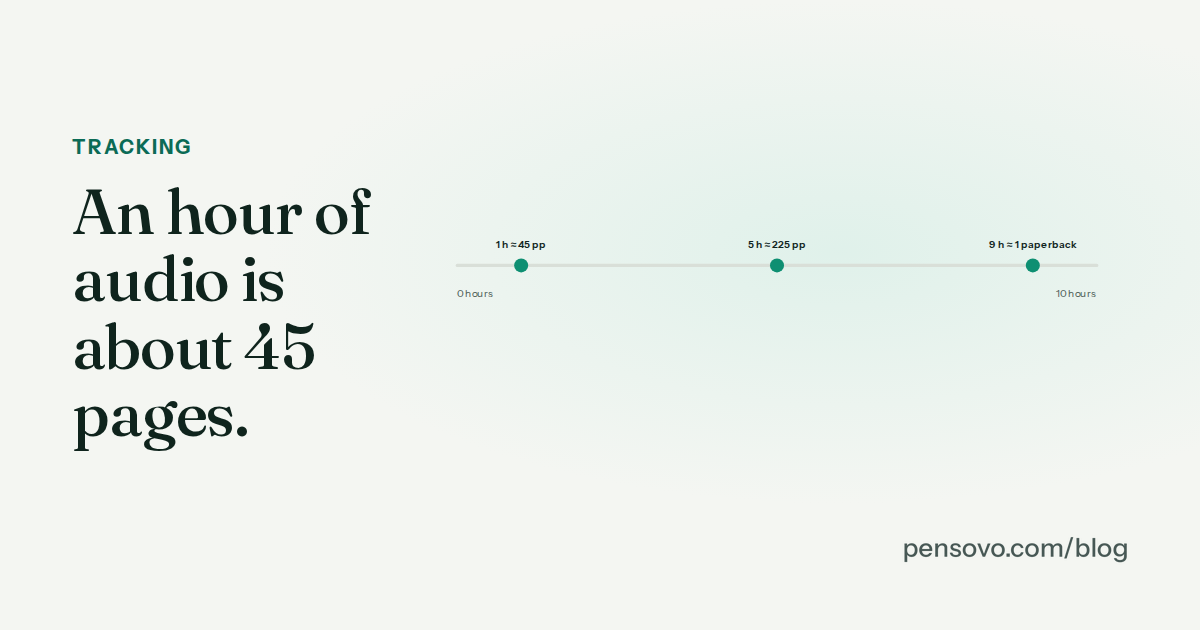
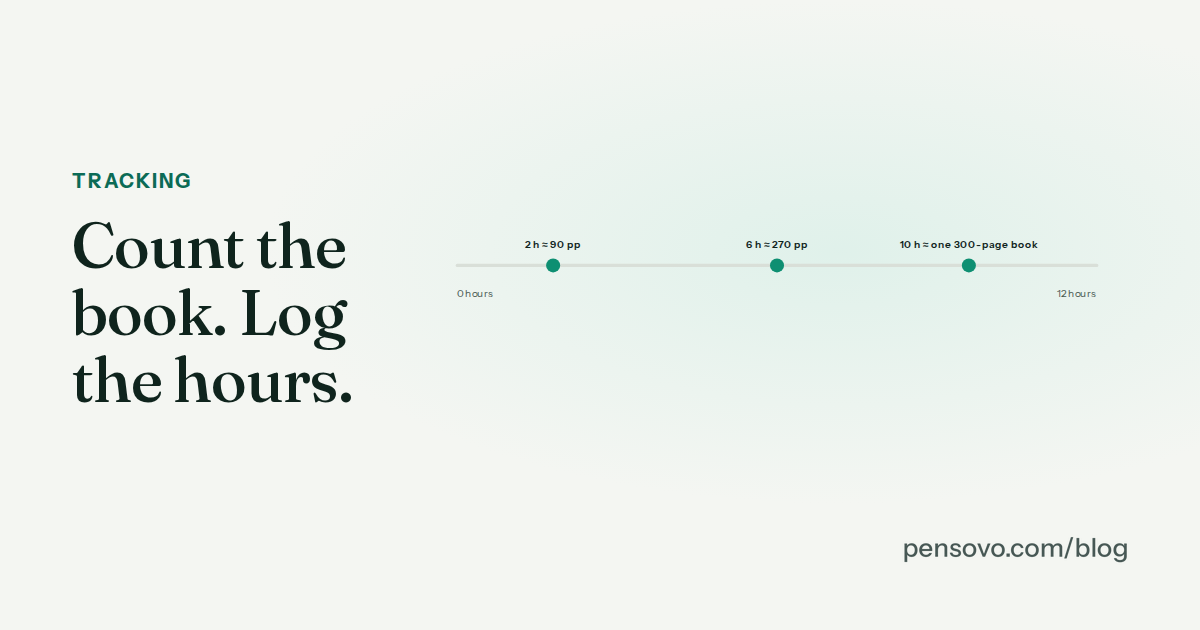
| Pages a day | Convert: about 1 page per minute of narration, or percent × the print page count | A fiction, but a consistent one; switch the goal to minutes if it bothers you |
Should I keep audiobooks on a separate list?
Keep them in the same library and mark the format. A separate list is how audiobooks fall out of your yearly count and how the year looks smaller than it was. Many books are mixed anyway — started on paper, finished on a walk — and one entry with "print and audio" is more truthful than two.
Does listening speed matter?
For the count, no. A book at 1.5x is the same book. For comprehension, most listeners handle up to about 1.5x on narrative without loss and notice strain past 2x; dense material wants normal speed. Log the minutes you actually spent, not the running time of the file.
Common questions
Do audiobooks count as reading?
For a reading habit or a books-a-year goal, yes. Comprehension of narrative text is similar whether heard or read; the difference shows up with dense material you would re-read.
Is listening to a book cheating?
No. It is a different route to the same text. The only 'cheating' is counting a book you did not actually attend to, which is as possible on paper as on audio.
How do I count an audiobook toward a pages-per-day goal?
Convert at about a page per minute of narration, or use percent complete times the print edition's page count. Or switch the goal to minutes a day, which is fairer across formats.
Do I remember less from audiobooks?
For stories and narrative non-fiction, about the same. For dense arguments, somewhat less, because listeners rarely rewind. Take a note when something matters, or read those chapters.
Should I speed up audiobooks?
Up to about 1.5x most people lose nothing on narrative. Past 2x comprehension drops. Dense material wants normal speed.
How do I log a book I started in print and finished on audio?
One entry, format 'mixed'. Log pages when you read and minutes when you listen; the finish date is the finish date.