Amol B
What the surveys actually measure
| Survey | Question | Finding | Note |
|---|---|---|---|
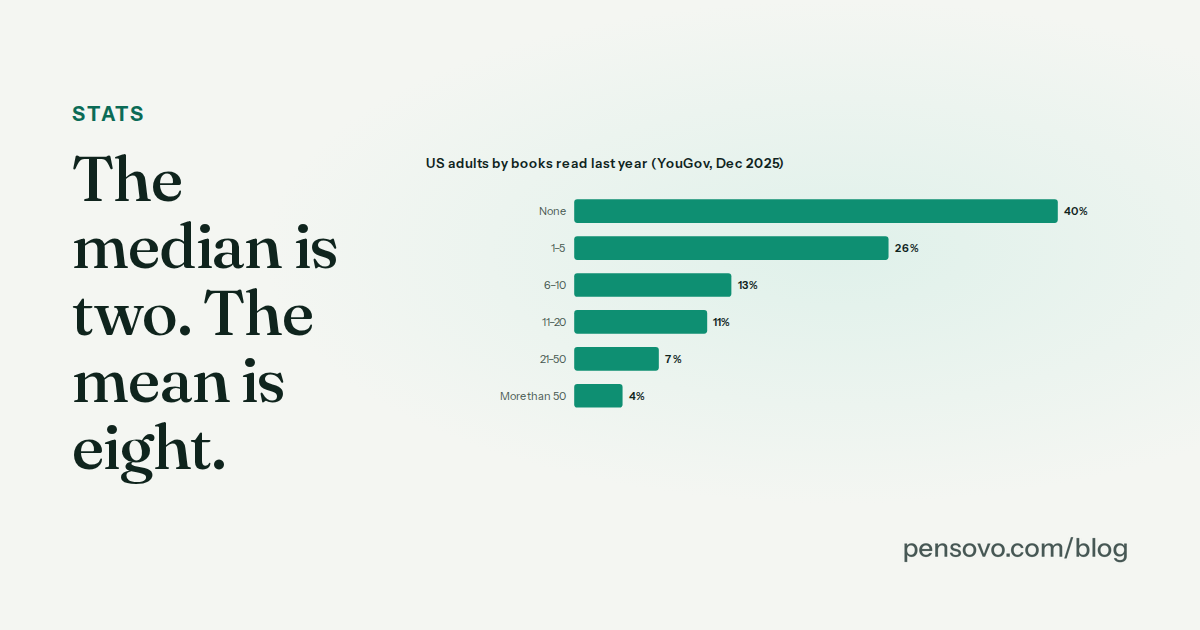
| YouGov, Dec 2025 (n=2,203) | Books read in 2025 | 40% none; median 2; mean 8; top 19% read 82% of books | Strict 'finished a book' framing |
| Pew, Oct 2025 (n=8,046) | Read all or part of a book in past 12 months | 75% yes; 38% read 1–5; 14% read 20+; 25% none | Includes partly-read books |
| Gallup, 2025 | How many books did you read? | 14.6 books average | Self-report; historically overstated; was 12.6 in 2021 |
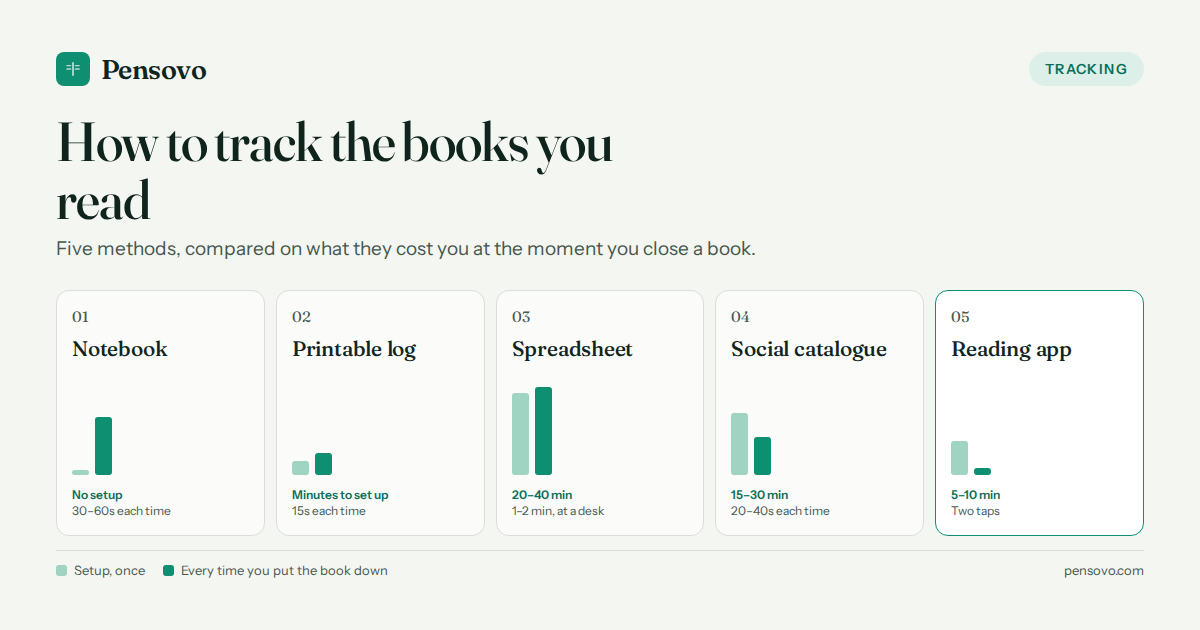
| Written Word Media, 2026 (n=3,589) | Engaged readers | 50% actively track their reading | Heavy-reader sample, not the general public |
The gap between YouGov's two and Gallup's fourteen is not a contradiction; it is a difference in questions. Ask people how many books they read and they estimate generously. Ask which books, or whether they finished, and the number falls. The median from a strict question is the honest picture of a typical adult.
Is 12 books a year a lot?
More than most people read, by a distance. Twelve a year — one a month — puts you past about three quarters of American adults. Twenty-five puts you in roughly the top ten percent; fifty in the top four. Among people who describe themselves as readers, twelve is ordinary and fifty is respectable; among adults generally, twelve is a lot.
Who reads the most?
Education is the strongest predictor: 88% of US college graduates read at least part of a book last year against 60% of those with high school or less (Pew). Women read more than men, and more fiction; older adults read more print; younger adults more audio. Seven percent of Americans are in a book club. Reading is also heavily concentrated: the 4% who read more than fifty books account for nearly half of all books read.
How does it compare elsewhere?
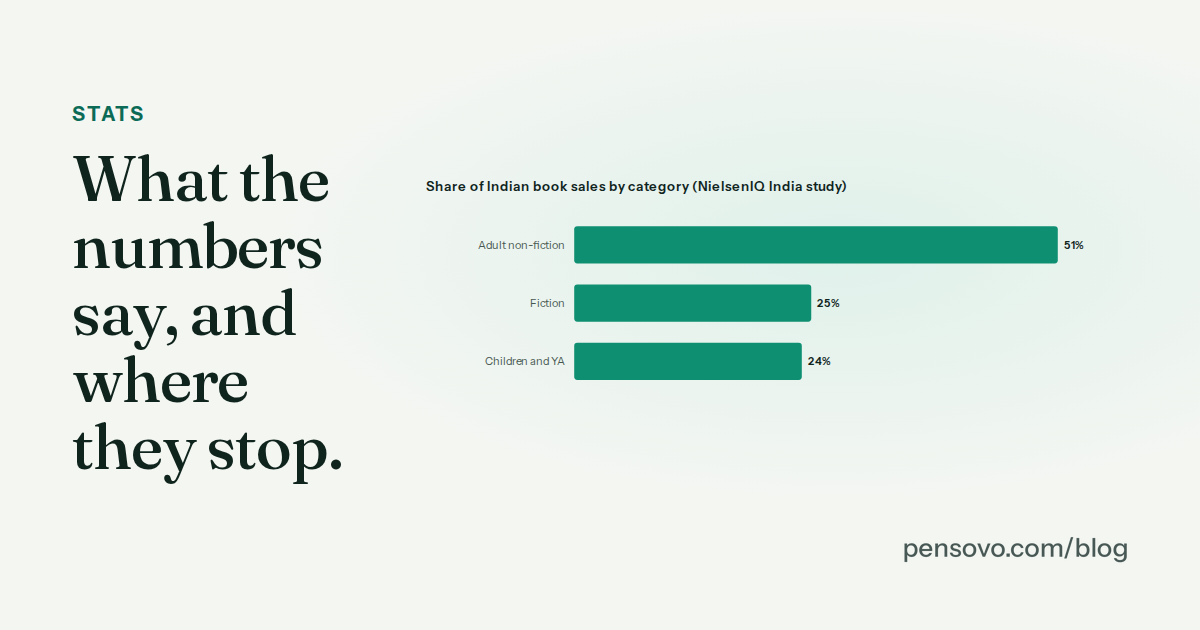
In the UK, 53% of adults describe themselves as regular readers (Reading Agency, 2025), up from 50% the year before, with the largest rise among 25–34s. Reliable national figures for India do not exist; the market data is covered in the India statistics guide. Cross-country "hours per week" rankings that circulate online trace to a 2005 survey of urban internet users and should be ignored.
What number should you aim for?
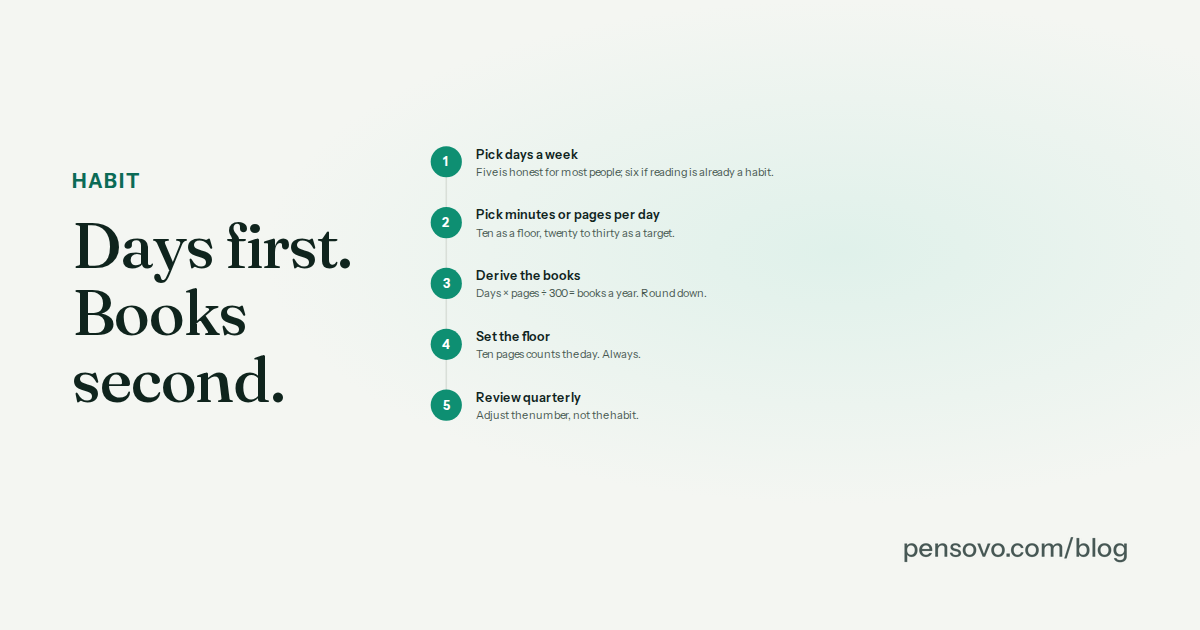
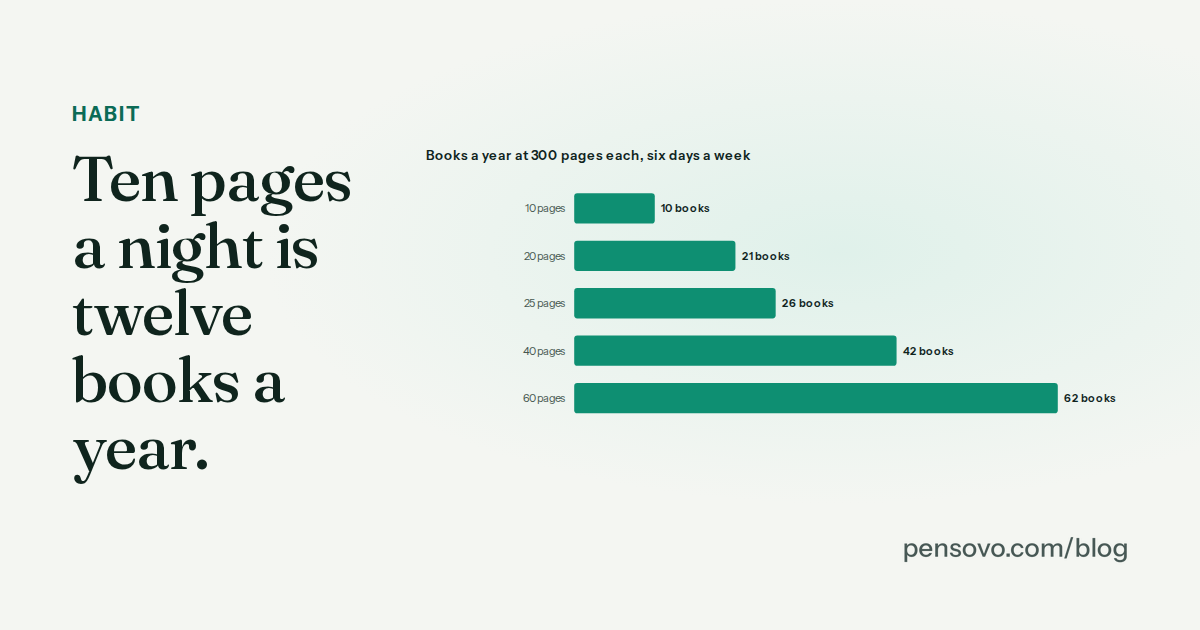
Not the average, which describes a group almost nobody is in. Aim at the habit — five days a week, ten pages minimum — and let the count fall out. Ten pages a night is about twelve books a year, which is already the top quarter. The realistic-goal guide does the arithmetic for whatever number you have in mind.
Common questions
How many books does the average American read?
About eight a year on average, but the median is two: 40% read none and a fifth of adults read four fifths of all books (YouGov, 2025). Pew finds 75% read at least part of a book.
Is reading 12 books a year good?
Yes — one a month puts you past roughly three quarters of US adults. Among self-described readers it is ordinary; among adults generally it is a lot.
How many books a year is considered a lot?
Twenty-five is roughly the top ten percent of adults; fifty is the top four percent. Past that you are in territory measured in the low single digits.
Why do surveys disagree about books per year?
Question wording. 'How many books did you read?' produces high self-reports (Gallup: 14.6). 'Did you finish a book, and how many?' produces the honest median of two (YouGov).
Who reads the most books?
College graduates, women, and older adults for print; younger adults lead on audio. The top 4% of readers account for nearly half of all books read.
How many books should I read a year?
Pick a habit, not the average: five days a week, ten pages minimum, is about twelve books a year and already unusual. Raise it with real data next January.