Amol B
Why do most reading goals fail?
Because they are set in the wrong unit. "Thirty books this year" is a fine ambition and a useless instruction: nothing you do tonight visibly moves it, and by March it has become a running deficit ("I should be at seven, I'm at four"). Deficit goals produce guilt, guilt produces avoidance, and avoidance produces a reading slump with a number attached. The Goodreads Reading Challenge, for all its charm, is a machine for this.
A goal set in days — "read on five days this week" — is different in kind. You can meet it tonight. It resets every week, so a bad week is a bad week and not a hole in the year. And it measures the thing that actually builds a habit, which is showing up.
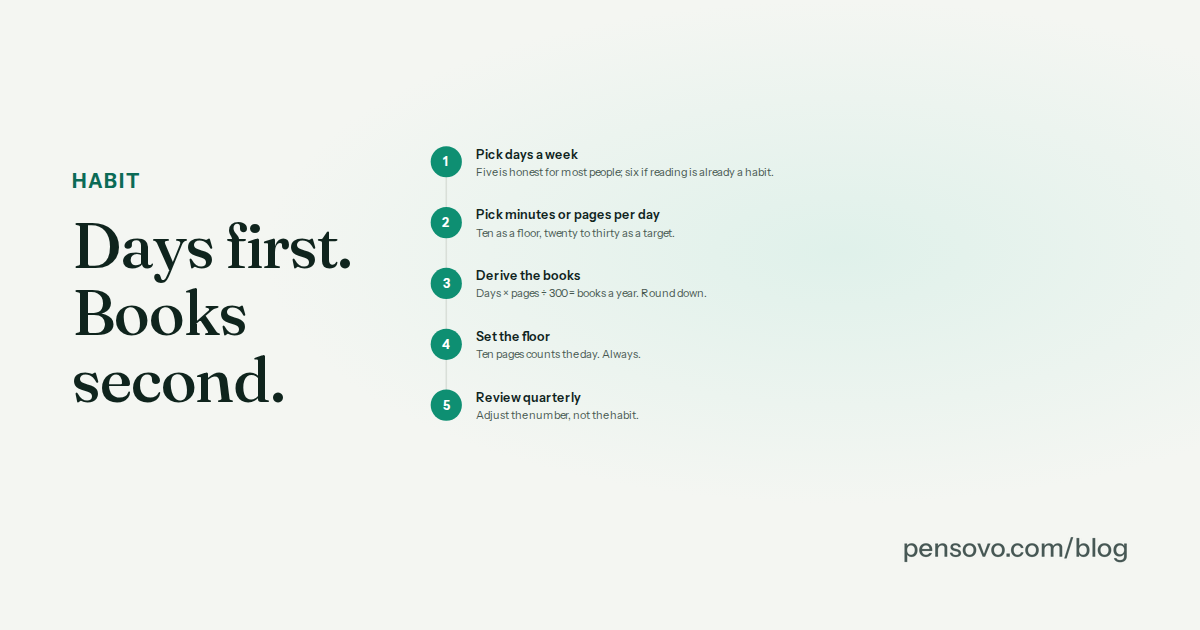
Set the goal in five steps
- Days a week. Be honest, not aspirational. Five is right for most people with jobs and families; six if reading is already a habit; seven is a trap, because the first missed day breaks it.
- Minutes or pages per day. Ten pages (or ten minutes) as the floor that counts the day; twenty to thirty as the target you hit most nights.
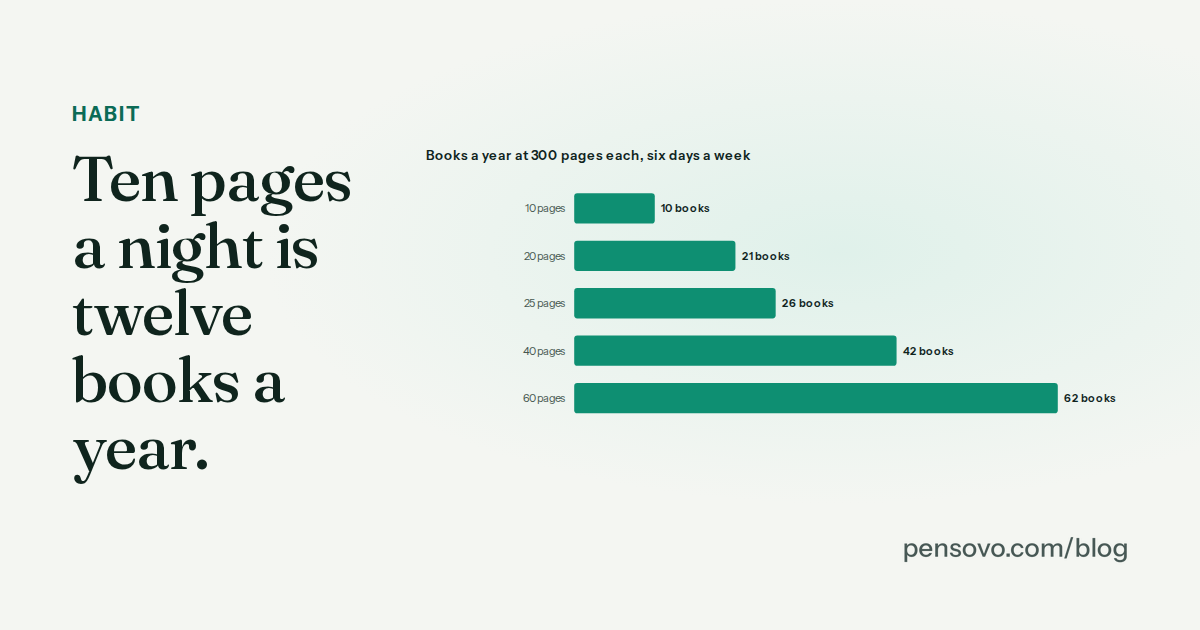
- Derive the books. Days × pages per day × 52 ÷ your average book length. Round down. This number is a forecast.
- Write the floor down. "Ten pages counts." It is the rule you will need in February.
- Diary a quarterly review. Adjust the numbers, not the habit. If you are far ahead, raise the target; if behind, lower the books forecast and leave the days alone.
| Days a week | Pages per reading day | Pages a year | Books a year (300 pp) | Minutes a day, roughly |
|---|---|---|---|---|
| 4 | 20 | 4,160 | about 14 | 25 |
| 5 | 20 | 5,200 | about 17 | 25 |
| 5 | 30 | 7,800 | about 26 | 35 |
| 6 | 25 | 7,800 | about 26 | 30 |
| 6 | 40 | 12,480 | about 42 | 50 |
| 7 | 50 | 18,200 | about 60 | 60 |
How many books should I aim for?
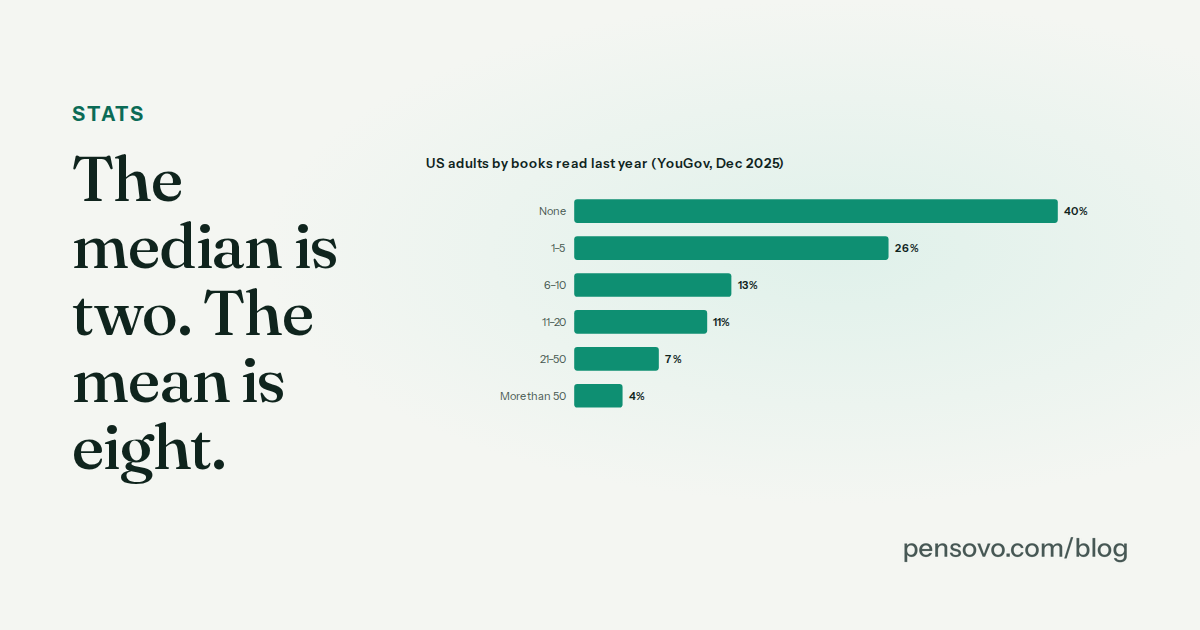
Fewer than you think, especially the first year. The median American reader finished two books last year; twelve a year — one a month — puts you well into the top third of adults, and it is what ten pages a night delivers with room to spare. If you have never tracked before, set the books forecast at twelve, meet it, and raise it in January with real data. The how-many-books-per-year guide has the distributions.
What should count toward the goal?
Everything with a book in it. Audiobooks, rereads, graphic novels, the 500-page book that took two months and the novella that took an evening, and — your call — the book you stopped at page 200 after a fair trial. The purpose of the goal is to make you read more; a definition that makes you feel you are cheating makes you read less.
How do you keep a goal from turning into guilt?
Three rules. The day-goal resets every night, so yesterday is finished business. The books number is a forecast you are allowed to revise at the quarterly review, in either direction. And a missed week is data about the week, not about you: look at what changed (travel, illness, a dull book) and fix that, not the goal.
Common questions
What is a realistic reading goal for a beginner?
Five days a week, ten pages minimum. That is about twelve 300-page books a year — more than most adults read — from a habit small enough to keep.
How many books a year is a good goal?
Twelve is a strong first-year goal; twenty-five is a serious reader; fifty needs about an hour a day. Set the first year low, meet it, and raise it with real data.
Should I use the Goodreads Reading Challenge?
If a books count motivates you, yes — but set it from your real pace and treat it as a forecast. Its weakness is that it shows a deficit, and deficits produce avoidance.
Do audiobooks count toward a reading goal?
Yes. So do rereads and graphic novels. The goal exists to make you read more, and a strict definition does the opposite.
What if I fall behind my reading goal?
Lower the books forecast at your next review and leave the daily habit alone. A bad month is a bad month; the day-goal resets tonight.
Should my goal be in pages, minutes or books?
Days a week first, then pages or minutes per day. Books a year is derived from those, not chosen first.