Amol B
Why do most reading lists fail?
Three ways. They are too long — a list of fifty is a wish, and progress on a wish is invisible. They are built from other people's lists — "100 books to read before you die" — so every book is an obligation rather than a curiosity. And they have no plan for the stall: the fourth book is slow, the list stops, and the whole thing acquires the smell of unfinished homework.
Start from a question, not a canon
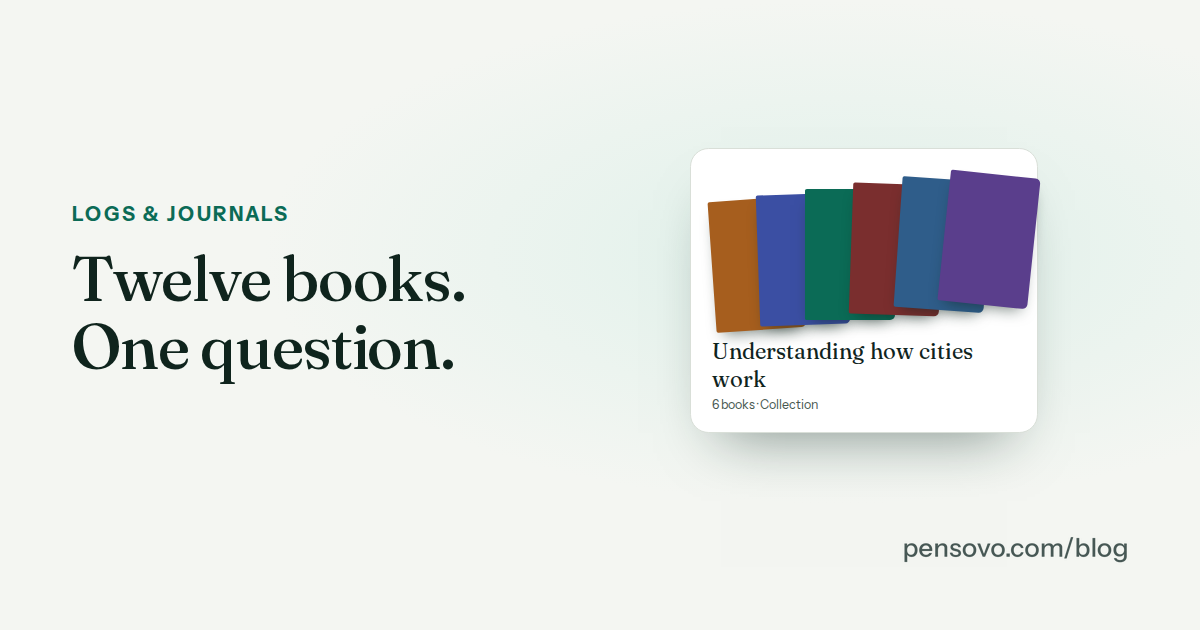
The lists people finish are projects. "Everything by one author, in order." "Enough to understand the Roman Republic." "Twelve novels from countries I have never read." "The five books my grandmother kept mentioning." A question gives each book a job and gives the list a finish line; a canon gives you a column of titles and a vague feeling of inadequacy.
Build it in an hour
How long should a reading list be?
| Length | Time to finish at a book a fortnight | Works for |
|---|---|---|
| 5 books | About 10 weeks | A single question; a season; a first list |
| 12 books | About 6 months | Most projects; a year at a book a month |
| 25 books | A year | A serious project or a full author |
| 50+ | Not a list | This is a TBR; sort it into someday, soon and next |
What do I do when a book on the list stalls?
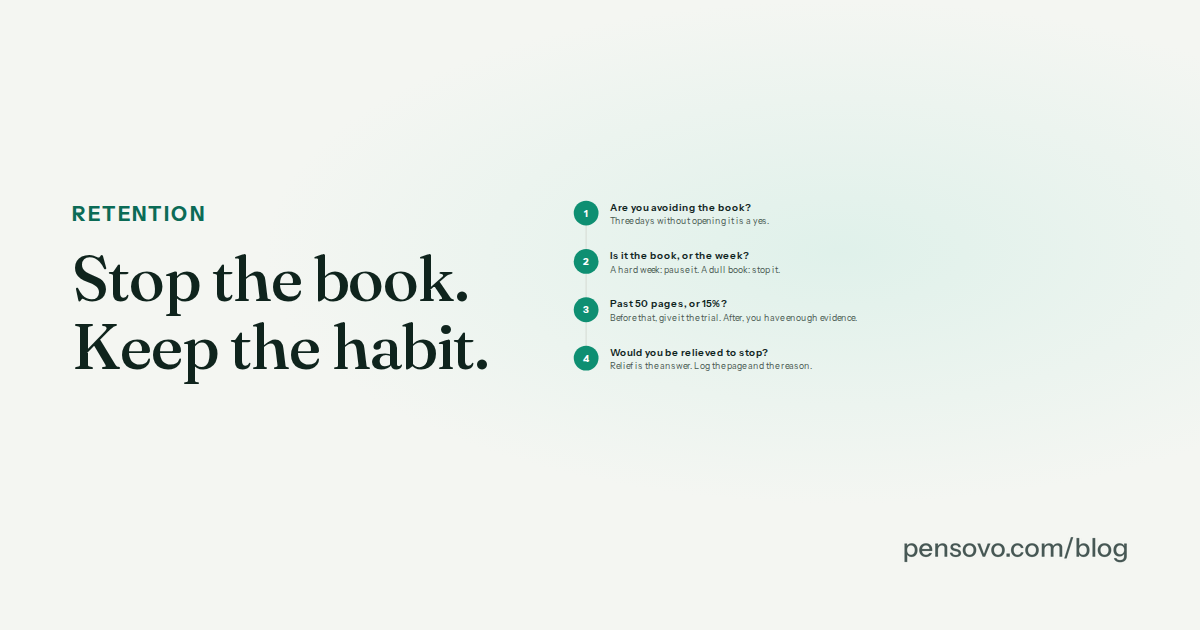
Swap it. Fifty pages is a fair trial; if you are rereading paragraphs and avoiding the book, it goes back to the candidates and one of the books you cut comes in. Write the swap down — "stalled at p.52, too slow for August" — because the note is what stops you buying it again in a year. The list is a tool for reading, not a contract, and a list that cannot change is a list that stops.
How do I keep track of a reading list?
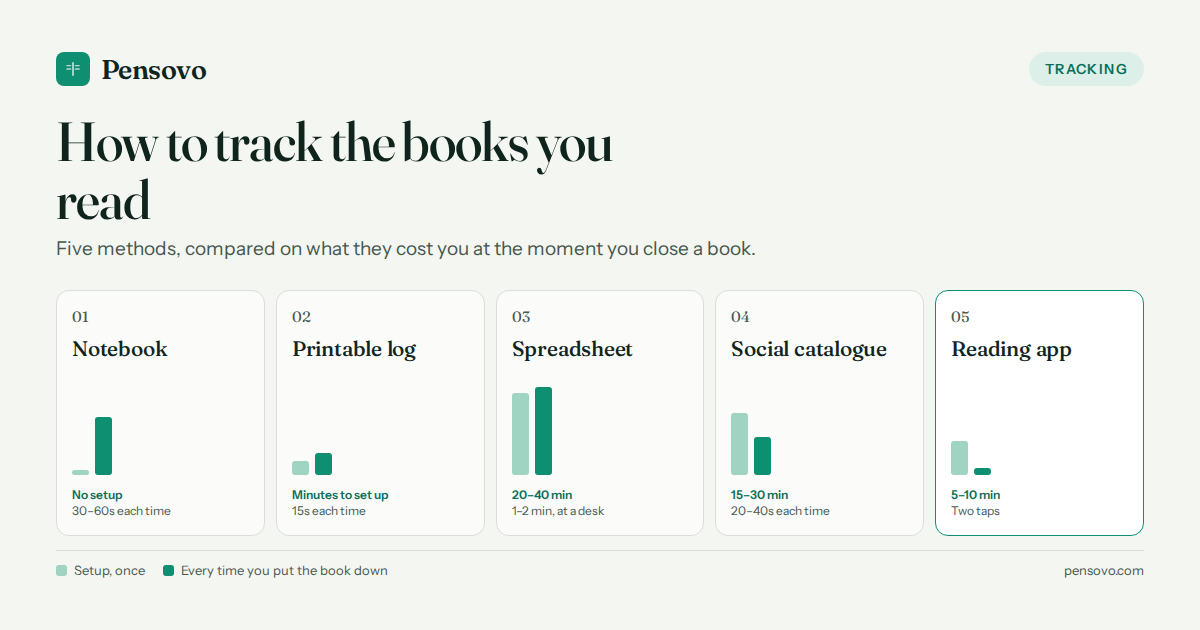
Where your reading already lives. A collection in your tracker with the question as its name, the twelve books in it, and the ones you have finished falling off the shelf as you go. The pleasure of a good list is watching the collection thin out; a spreadsheet gives you that too, at the cost of opening a spreadsheet.
Common questions
How many books should be on a reading list?
Twelve or fewer. Five for a season, twelve for a year at one a month, twenty-five for a serious project. Anything longer is a TBR and needs sorting instead.
Should my reading list be in order?
Order the first three and leave the rest. You will know more after three books than you do now, and a fully ordered list breaks the first time a book stalls.
What if I don't finish a book on the list?
Swap it after fifty pages and write down why. The list is for reading, not for finishing every entry.
How do I choose books for a reading list?
Start from a question you have, gather twenty candidates from bibliographies, recommendations and your own long list, and cut to twelve — dropping anything you are including out of obligation.
Should I mix fiction and non-fiction?
If the question allows it, yes. Alternating a demanding book with an easier one — whatever the genre — is what keeps a list moving through a bad week.
What is the difference between a reading list and a TBR?
A TBR is everything you might read; a reading list is a short, ordered set built to answer a question or finish a project. Keep both, and keep them separate.