Amol B
Why does finishing every book hurt your reading?
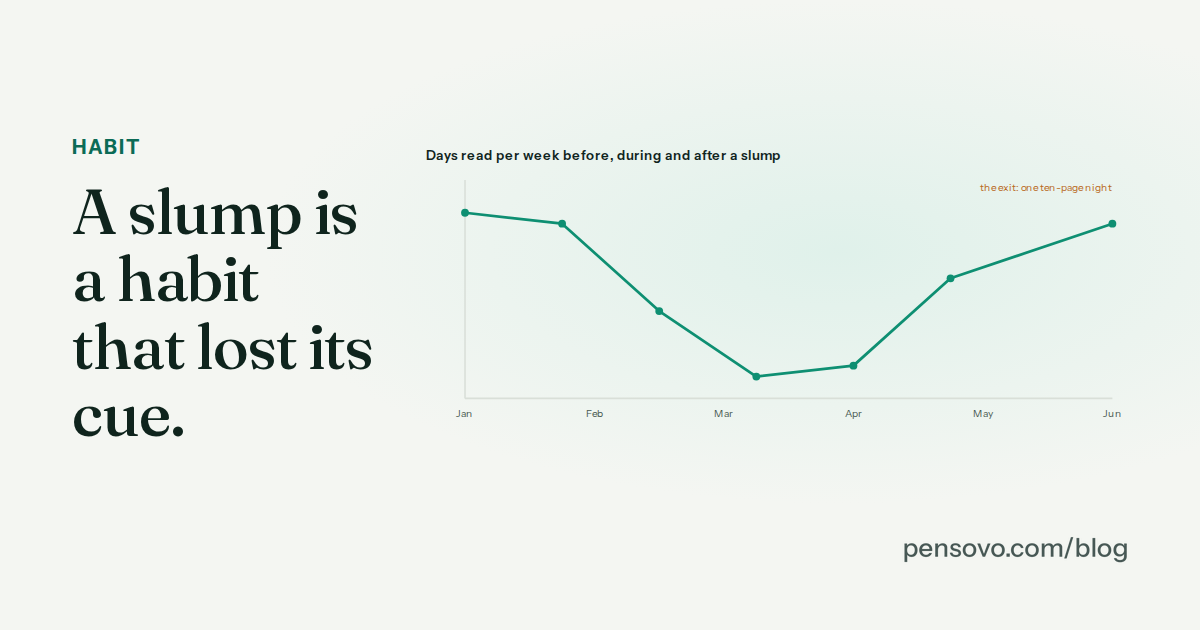
Because the alternative to a book you are avoiding is not a better book; it is no book. The half-read novel sits on the table for three weeks, you do not open it, and you do not open anything else either, because starting something new feels like admitting defeat. That three weeks is a reading slump with a specific cause, and the cause is a rule you inherited from school.
There is also the arithmetic. A reader who finishes forty books a year and abandons ten reads more, and enjoys more, than one who grimly finishes thirty.
When should you stop reading a book?
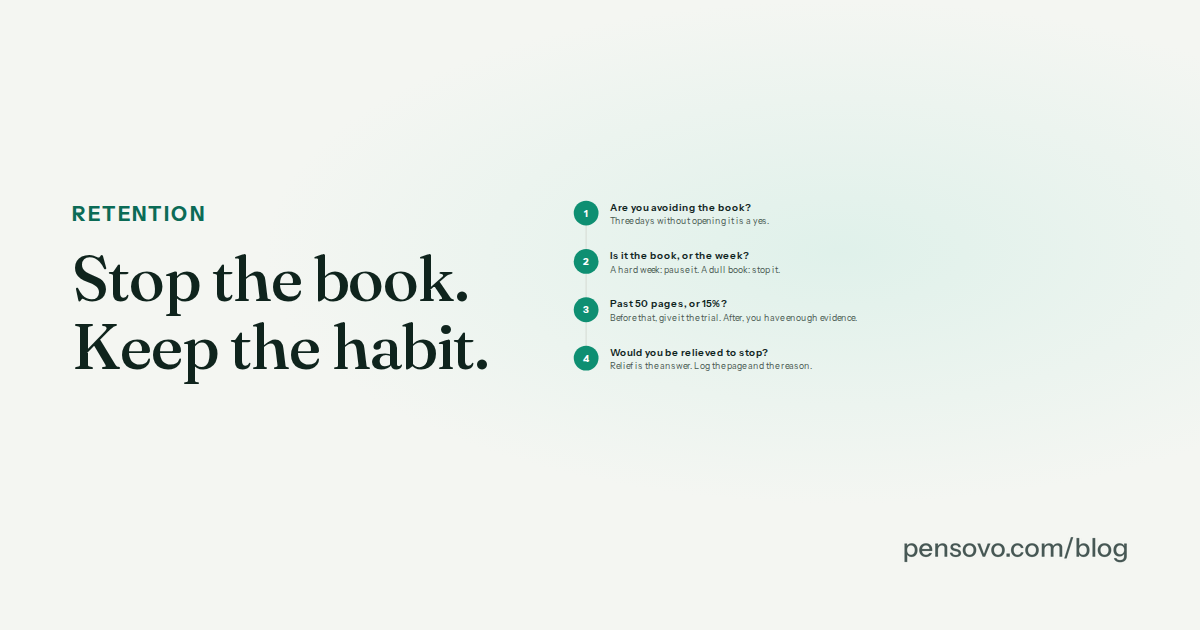
Four questions, in order.
- Are you avoiding it? Three days without opening a book you are supposedly reading is a yes. So is choosing to scroll instead.
- Is it the book or the week? A demanding book in a hard week is a scheduling problem: pause it, read something easy, come back. A dull book in an ordinary week is a book problem.
- Have you given it a fair trial? Fifty pages, or roughly fifteen percent. Before that, some books have not started yet. After that, you have the evidence you need.
- Would you be relieved to stop? Not "should I", which invites the school voice. Would you be relieved. Relief is permission.
When should you push through?
- You are past the fair trial and curious, but not enjoying it. Curiosity counts. Set a second checkpoint — the end of part one — and decide there.
- Someone you trust promises it turns. Give it the specific page they name, not "it gets better".
- It is hard rather than dull. Difficulty is a different feeling from boredom; if you are working and getting something, keep going in shorter sessions.
- You are reading it for a group. Then the finish is a social commitment, and skimming the middle is allowed.
| Signal | Stop | Pause | Push on |
|---|---|---|---|
| Avoiding the book for three days | ✓ | ||
| Hard week, demanding book | ✓ | ||
| Past 50 pages, no curiosity | ✓ | ||
| Past 50 pages, curious but not enjoying | ✓ to a checkpoint | ||
| Difficult but rewarding | ✓ shorter sessions | ||
| A trusted reader names the page it turns | ✓ to that page |
How do you record a book you didn't finish?
Mark it stopped — not finished, not deleted. Record the page you reached and one line on why. The line is the useful part: "too slow for a tired month" is a book to try again in winter; "dislike the narrator's voice" is a book to release. Without the note you will pick it up again in two years, reach the same page and stop again.
Whether a DNF counts toward your yearly total is your call. Most readers count it if they passed the halfway mark, and many keep a separate stopped shelf so the year's list is honest in both directions.
Does abandoning books make you a worse reader?
It makes you a reader with taste and a full evening. The books you finish should be the ones that earned it; the stopped shelf is not a record of failure but of experiments, and a reader with a stopped shelf of twenty is a reader who tried twenty things. The only bad outcome is the book that sits half-read and stops you reading anything else.
Common questions
Is it okay to not finish a book?
Yes. Stopping a book you dislike is how you protect the evenings for books you love, and it is the most common cure for a reading slump.
How many pages should I give a book before giving up?
Fifty, or about fifteen percent, is a fair trial for most books. A hundred for a long one you were excited about. Before that, some books have not started yet.
Should a DNF count toward my reading goal?
Your call. Many readers count it past the halfway mark and keep a separate stopped shelf so the year's list stays honest either way.
How do I know if it's the book or me?
Ask whether it is a hard week or a dull book. If an easy book would be welcome right now, pause this one. If nothing about this book pulls you back, stop it.
What should I write when I abandon a book?
The page you reached and one line on why. The line decides whether the book gets another chance in a different season.
Does stopping books mean I have a short attention span?
No. It means you have a finite number of evenings and a preference about how to spend them. The habit is reading, not finishing.