Amol B

Why summarise a book at all?
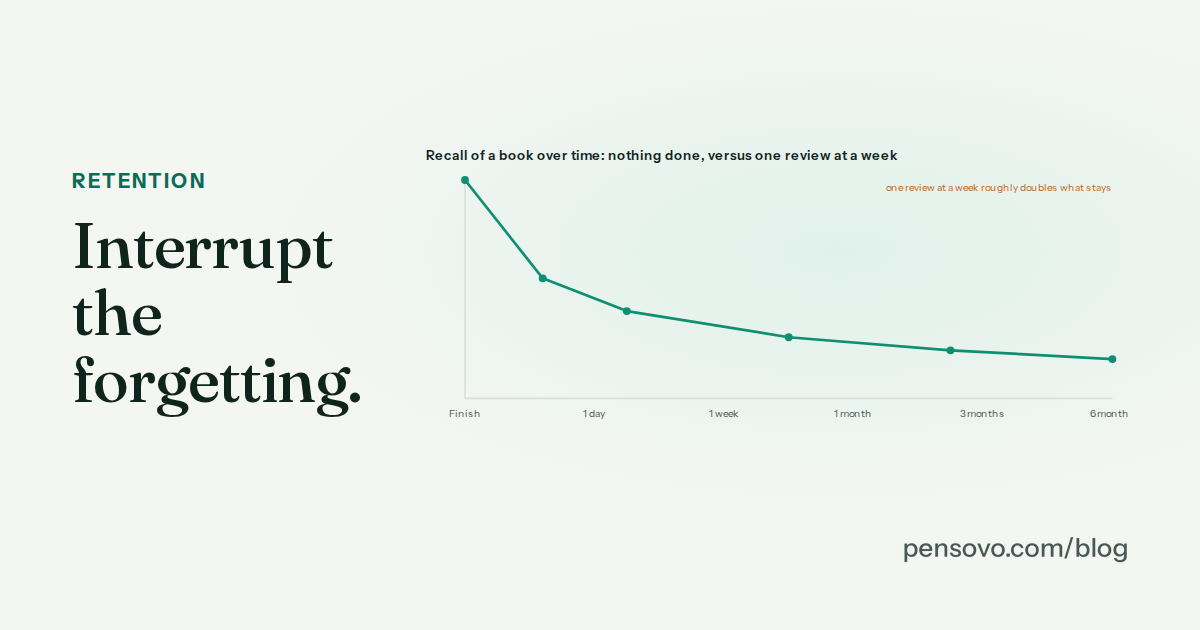
Not to have a summary. To have understood the book, which is what writing a summary forces. Memory research is unambiguous that retrieval — producing something from memory — beats re-reading for retention (Roediger and Karpicke, 2006), and a summary written from memory is retrieval at its most demanding. The page you end up with is useful in two years; the ten minutes spent producing it are useful now.
The one-sentence test
Close the book. Say what it argues in one sentence, out loud or in writing. If you need two, or if the sentence is a description ("it's about habits") rather than a claim ("small habits compound because identity follows behaviour"), you have not finished. Try again. This is the hardest and most valuable step, and it usually takes three attempts. For fiction, the sentence is what the book is about underneath the plot — not "a man is trapped in a house" but "wonder is a choice, and so is knowing".
The one-page structure
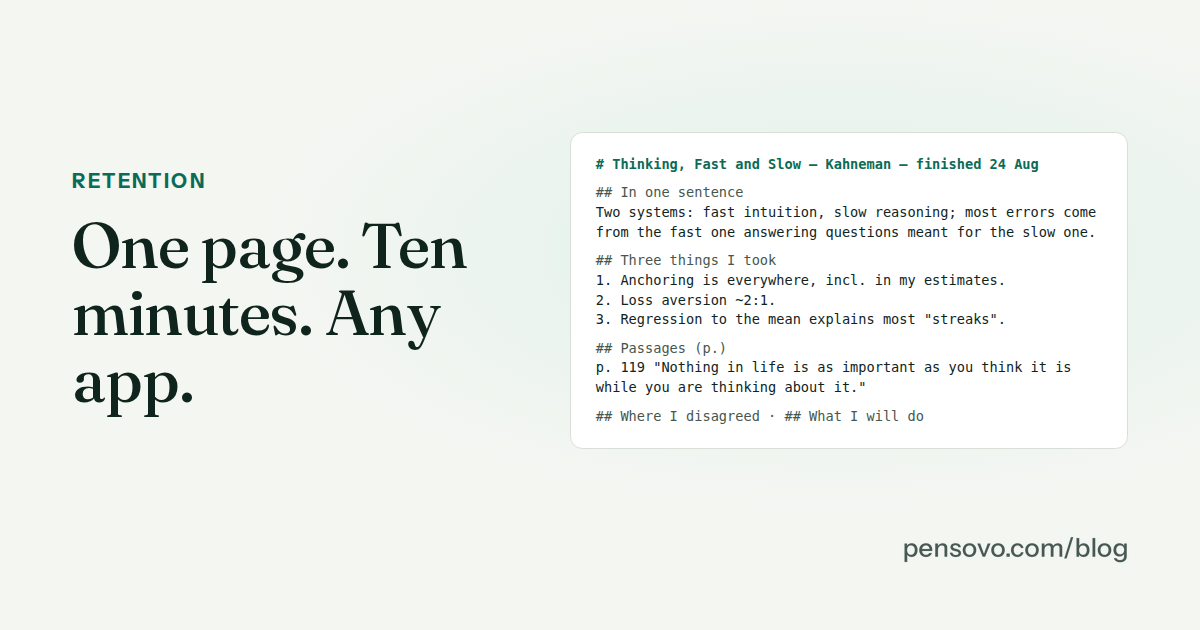
| Section | Length | How to write it |
|---|---|---|
| In one sentence | One sentence | From memory. Then check. Revise until it is a claim, not a topic. |
| Three things I took | Three lines | What you would tell a friend. Not the chapter titles. |
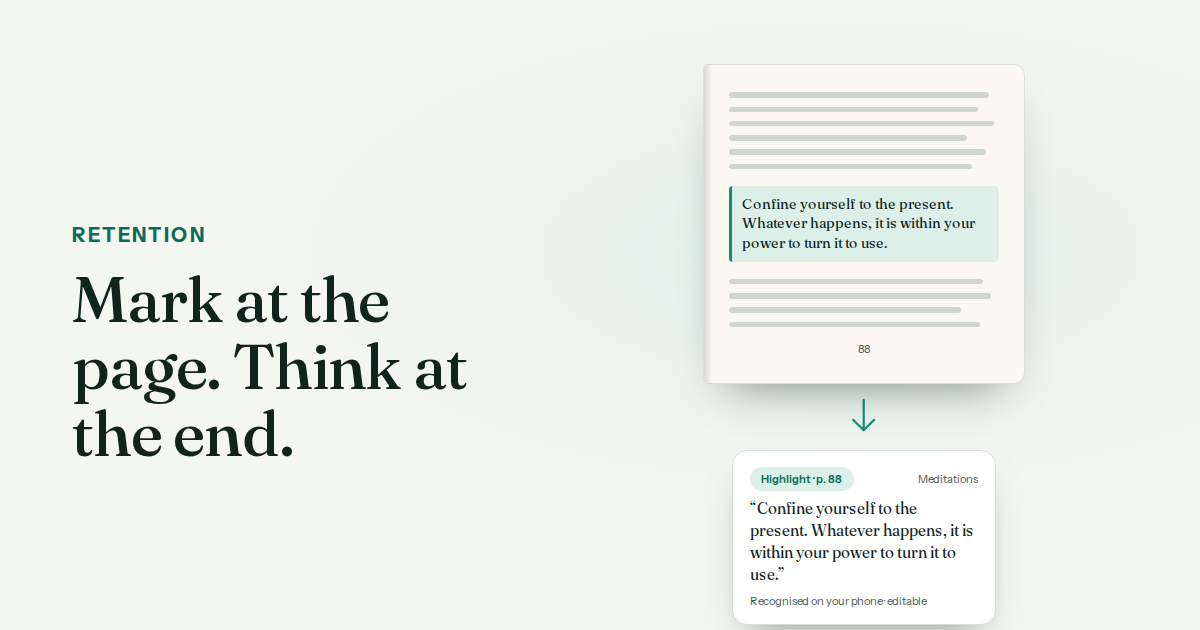
| Passages worth keeping | Three to six, with pages | From your marks or page photos. The book's words, not yours. |
| Where I disagreed | Two or three lines | Even for a book you loved. Thinking lives here. |
| What I will do | One line | An action, a person to lend it to, or 'nothing — it was a pleasure'. |
The book notes template on this site is this structure as plain text; copy it into whatever holds your reading.
Fiction versus non-fiction
Non-fiction summarises to an argument and its evidence; fiction summarises to what it is about and how it made that felt. For a novel, replace the argument with the theme in one sentence, keep the passages, and swap "what I will do" for "who I would give it to and what I would say". Skip the plot entirely; the jacket has the plot.
How is this different from a school summary?
A school summary retells the book, in order, for a reader who has not read it and a teacher who has. It proves you read it. A summary for yourself assumes you read it and asks what survived — which is a different question with a different answer. The school version is longer and rereads worse; the personal version is a page you will actually open.
What about AI summaries and summary apps?
A summary you read after the book is a review, and reviews help; a summary read instead of the book gives you the outline and nothing for memory to attach to. Writing your own is the exercise; reading someone else's — human or machine — is a check on it. Use a generated summary to see what you missed, not to skip the ten minutes.
Common questions
How do you summarise a book in one sentence?
Close it, say what it argues — a claim, not a topic — and revise until it fits. For fiction, say what it is about underneath the plot. Three attempts is normal.
How long should a book summary be?
One page for your own use: a sentence, three takeaways, a few passages, a disagreement, an action. Longer summaries are shorter books, and you will not reread them.
Should I summarise fiction?
Lightly. What it is about in one sentence, the passages that stopped you, one disagreement, and who you would give it to. Skip the plot.
When should I write the summary?
Within a day of finishing — long enough to know what mattered, soon enough to still have the edges.
Is it better to write a summary or read one?
Write it. Writing from memory is retrieval, which is what makes the book stick. Read someone else's afterwards to see what you missed.
Can I use an AI summary instead of reading the book?
You can, and you will know the outline. You will not have read the book, and there will be nothing for memory to attach to. Use summaries to choose books and to check your own page.