Amol B
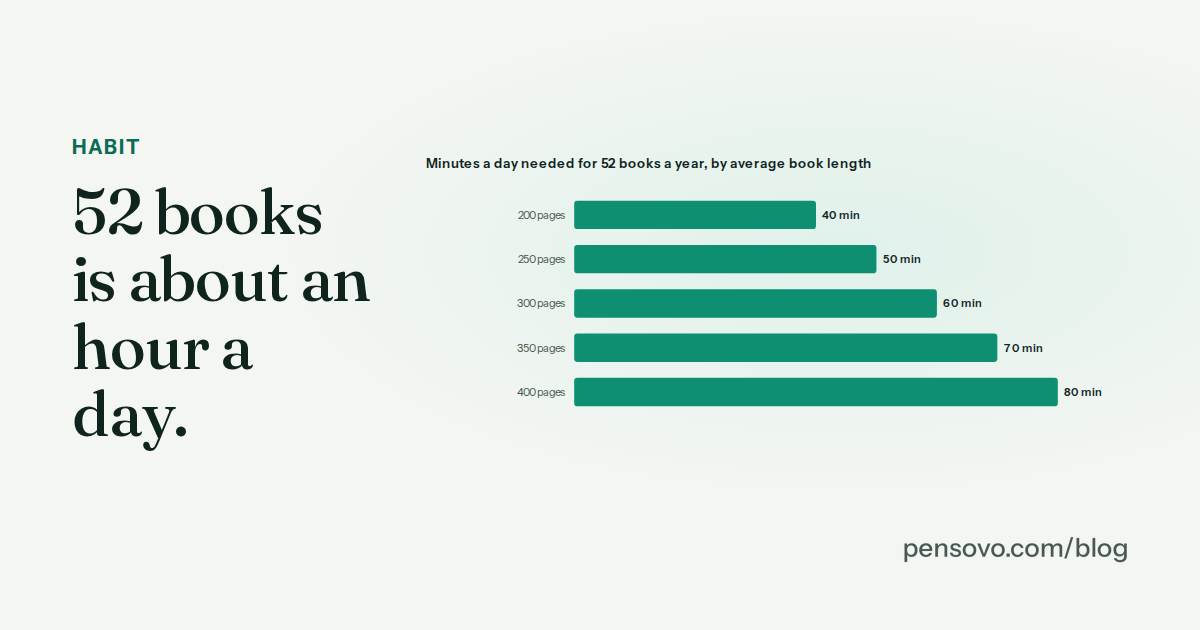
The arithmetic
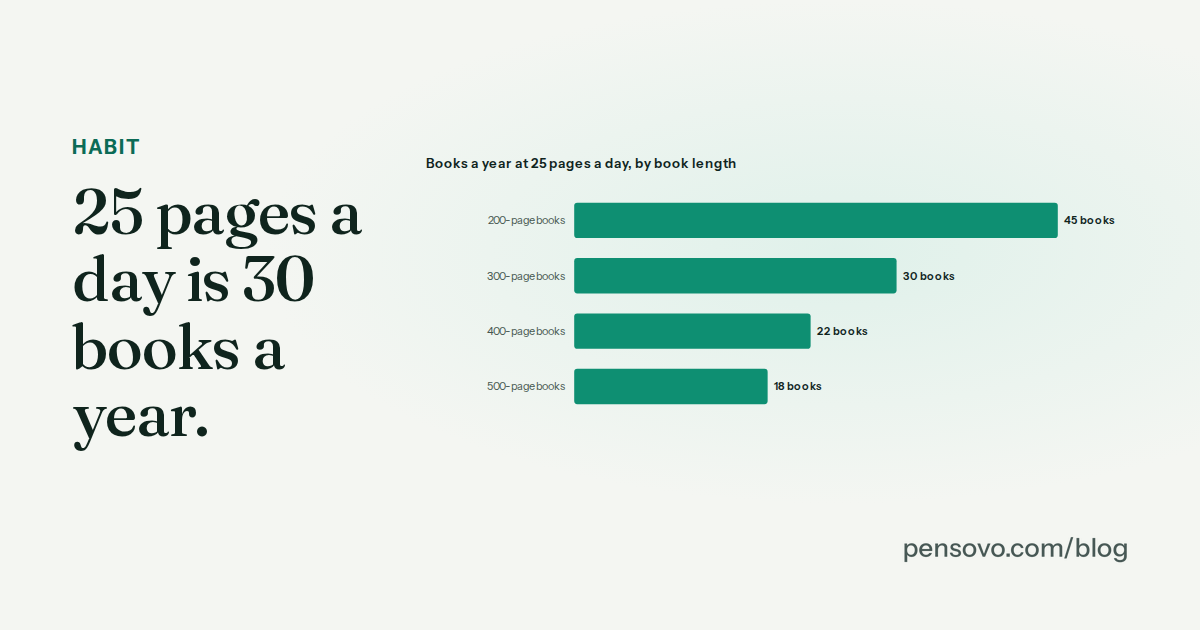
| Average book length | Pages a year | Pages a day (6 days/wk) | Minutes a day (typical pace) |
|---|---|---|---|
| 200 | 10,400 | 33 | about 40 |
| 250 | 13,000 | 42 | about 50 |
| 300 | 15,600 | 50 | about 60 |
| 350 | 18,200 | 58 | about 70 |
| 400 | 20,800 | 67 | about 80 |
The typical adult reads about 238 words a minute (Brysbaert, 2019), which is roughly a page a minute of an ordinary book. So 52 books of 300 pages is about an hour a day, six days a week. Shorter books bring it under 45 minutes; long ones push it toward an hour and a half. The lever most people miss is the average length: a year mixing novellas, essays and graphic novels with the doorstops is a very different year from fifty-two 400-page hardbacks.
Where does the hour come from?
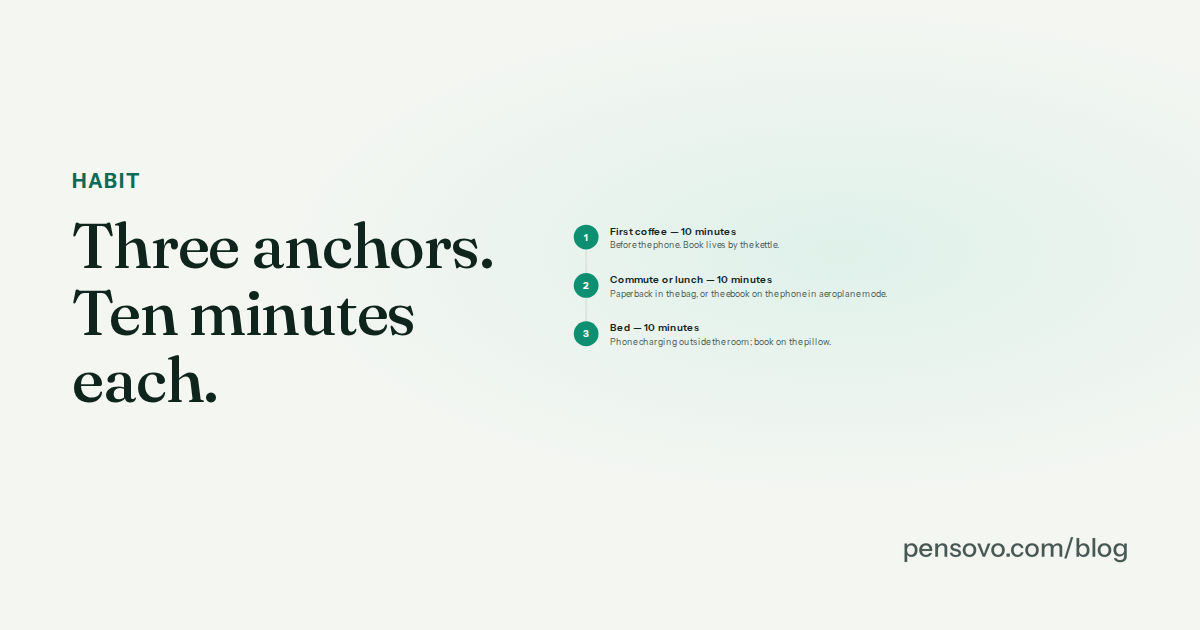
Not from a new block in the calendar. From three slots that already exist and currently hold a phone: the first coffee (15 minutes), the commute or lunch (20), and the half hour before sleep (25). That is an hour and ten minutes without finding anything, provided a book is physically in each place — one by the kettle, one in the bag, one on the pillow. The guide to making time to read goes through the anchors; the short version is that the hour is there and the book is not.
Three habits that make a book a week ordinary
1. Mix the lengths
The week you start a 700-page biography is not the week you finish a book. Plan for it: follow every long book with two short ones, keep a shelf of under-200-page books for catch-up weeks, and count the year, not the week. A reader who alternates a doorstop with a novella and an essay collection finishes more books, with more pleasure, than one who grimly averages.
2. Keep the floor at ten pages
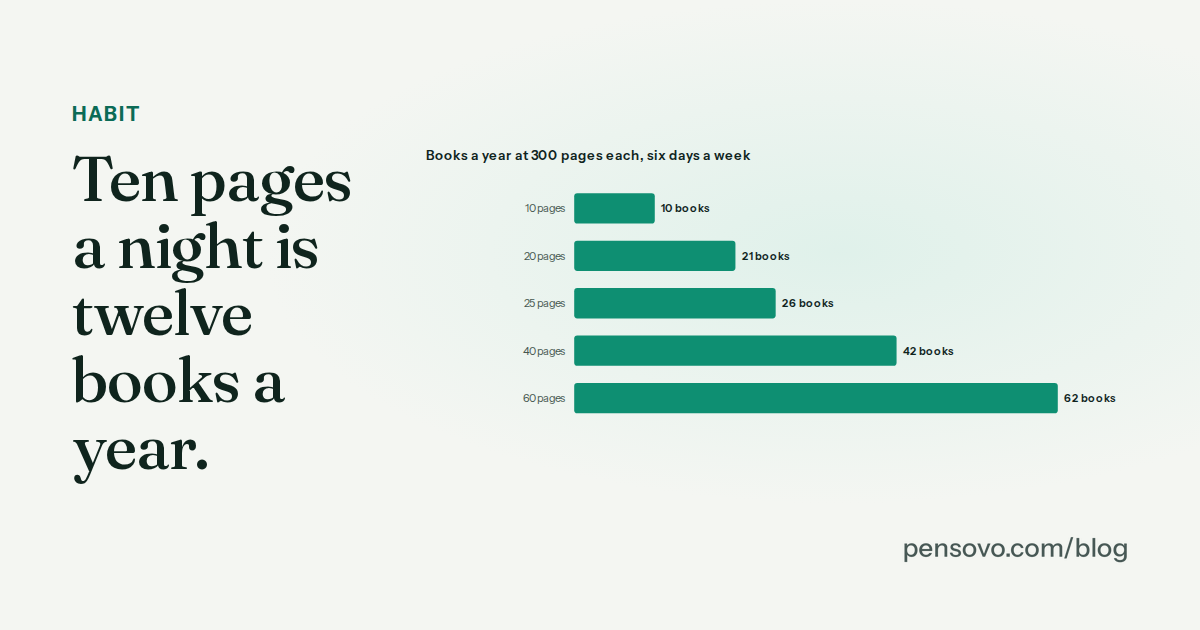
The hour will not exist on some days. On those days ten pages counts, the streak survives, and tomorrow you read for an hour again. Readers who hit 52 almost always describe a floor, not a target; the target is what the good days do on their own.
3. Abandon without ceremony
At a book a week there is no room for a book you resent. Fifty pages is a fair trial; after that, if you are avoiding it, mark it stopped, note why, and start the next one the same night. The abandoned book is not a failure of the goal; finishing it would have been.
Do audiobooks count?
Yes, and they are how most people who read 52 books actually do it. A nine-hour audiobook is a 300-page book, and the kitchen, the laundry and the walk are reading time when your ears are free. Log the format; a year with fifteen audiobooks in it is a real and interesting year.
How to track it without it becoming a spreadsheet
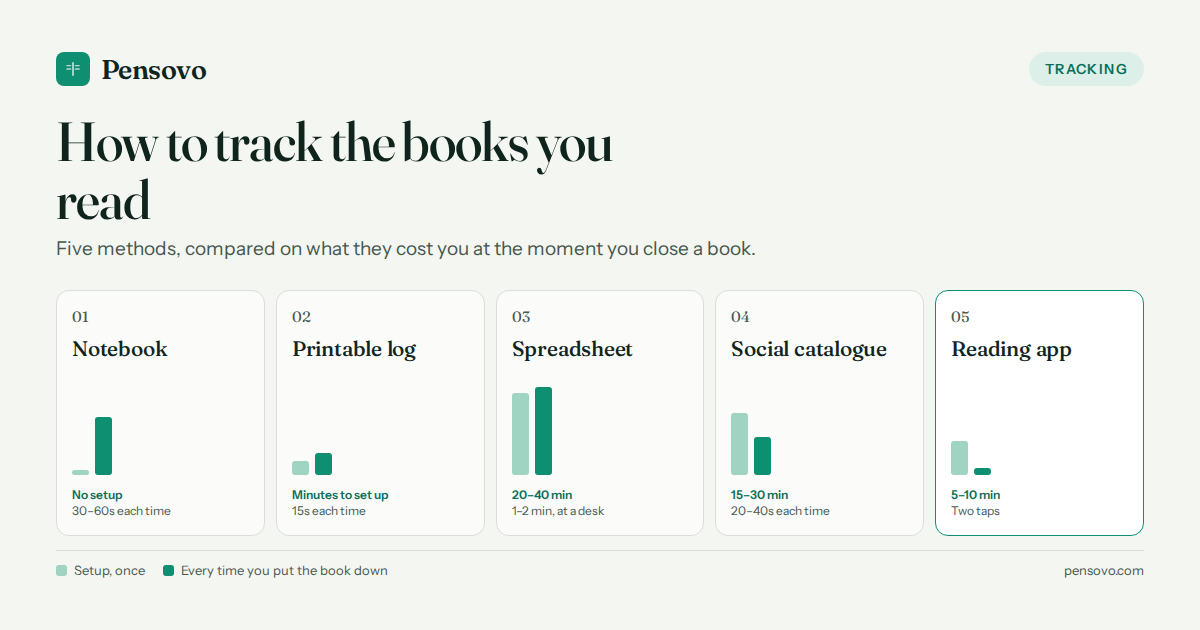
Track days, not books: the streak and the calendar. Books finished falls out of that; by June you will know your real pace and whether 52 is a stretch or a stroll. A weekly count is a source of anxiety; a daily habit is a source of books.
When to start
Not in January, with the resolutions. Start in a month with some slack — a quiet stretch at work, a holiday — so the habit has three weeks to set before life tests it. Research on habit formation puts the median at about 66 days for a daily behaviour to feel automatic; give it that before you judge.
Common questions
How many pages a day to read 52 books a year?
About 50 pages a day on six days a week at 300 pages a book — roughly an hour. Shorter books bring it under 45 minutes.
Is reading 52 books a year a lot?
Yes — roughly the top four percent of adults. It is also ordinary among people who read every day, because an hour a day is what it takes.
How do people read a book a week?
Two or three daily anchors with a book in each place, mixed lengths so long books do not sink the month, audiobooks for hands-busy time, and a willingness to abandon.
Do audiobooks count toward 52 books?
Yes. A nine-hour audiobook is a 300-page book, and listening time is how most book-a-week readers find their hour.
What if I fall behind?
Count the year, not the week. Follow a long book with two short ones and keep the ten-page floor. A behind week is a week, not a verdict.
Should I read faster to hit 52 books?
No. Read more often and pick shorter books for catch-up weeks. Speed-reading trades comprehension for pages.