Amol B

Why reading faster is the wrong lever
The typical adult reads about 238 words a minute (Brysbaert, 2019); the range across normal readers is roughly 175 to 300. Speed-reading courses promise three or four times that, and the research on them is consistent: past about 400 words a minute comprehension falls sharply, and the dramatic claims do not survive testing (Rayner and colleagues, 2016). You can learn to skim well. You cannot read a novel at a thousand words a minute and have read it.
Frequency has no such ceiling. A reader who adds ten minutes a day adds about 3,600 pages a year — a dozen books — and remembers all of them.
The arithmetic of frequency
| Change | Extra minutes a day | Extra pages a year (6 days/wk) | Extra books a year (300 pp) |
|---|---|---|---|
| Ten pages with the first coffee | 10 | 3,120 | about 10 |
| A paperback in the bag for the commute | 20 | 6,240 | about 21 |
| Book on the pillow, phone in the kitchen | 20 | 6,240 | about 21 |
| An audiobook for the kitchen and the walk | 30 | 9,360 | about 31 |
| Abandoning books after 50 pages | — | Reclaims the weeks a stalled book costs | 5–10, for most people |
Six things that work
1. Three anchors
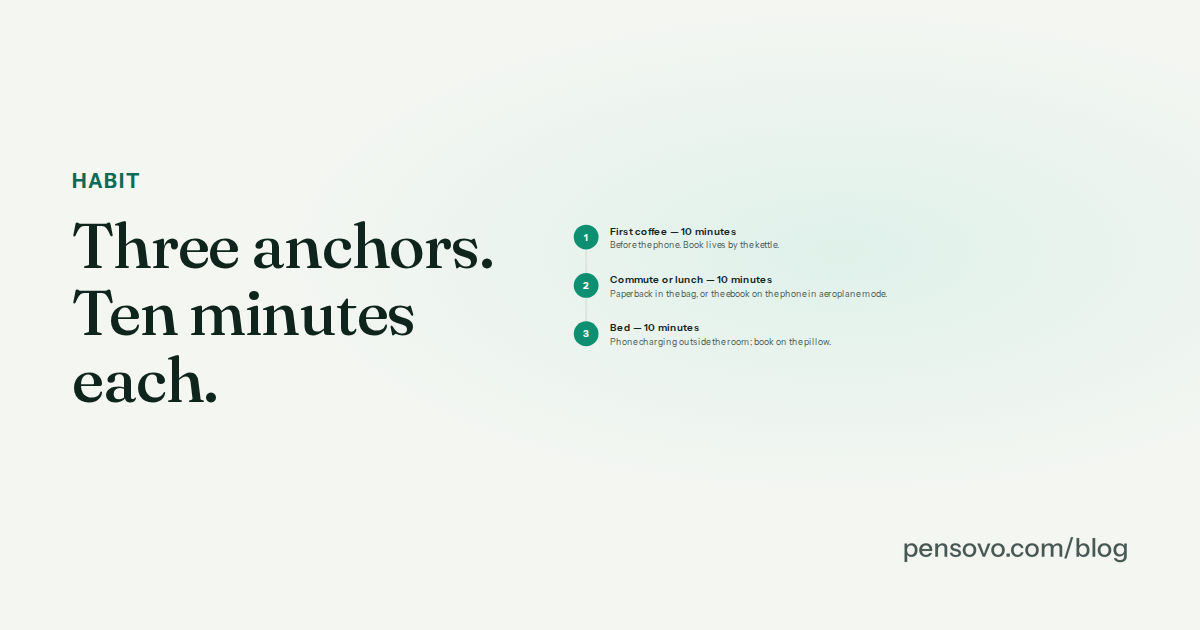
Attach reading to things that already happen: the first coffee, the commute or lunch, the ten minutes before sleep. Two anchors survive most weeks; three survive almost anything. The guide to making time to read goes through each one.
2. A book in every place
The most common reason a slot is missed is that the book is in another room and the phone is in your hand. One by the kettle, one in the bag, one on the pillow. They can be three different books.
3. Mixed lengths
Follow every long book with two short ones. A shelf of under-200-page books — novellas, essays, graphic novels — is a reading accelerator, and every one counts.
4. Permission to abandon
Fifty pages is a fair trial. After that, a book you are avoiding is stopped, noted, and replaced the same night. The half-read book on the table is the most common cause of a reading slump, and a slump is the most expensive thing that can happen to a year's count.
5. Audiobooks for busy hands
The kitchen, the laundry, the walk, the drive. A nine-hour audiobook is a 300-page book, and comprehension for narrative text is about the same heard or read. Log the format; count the book.
6. A streak you can protect
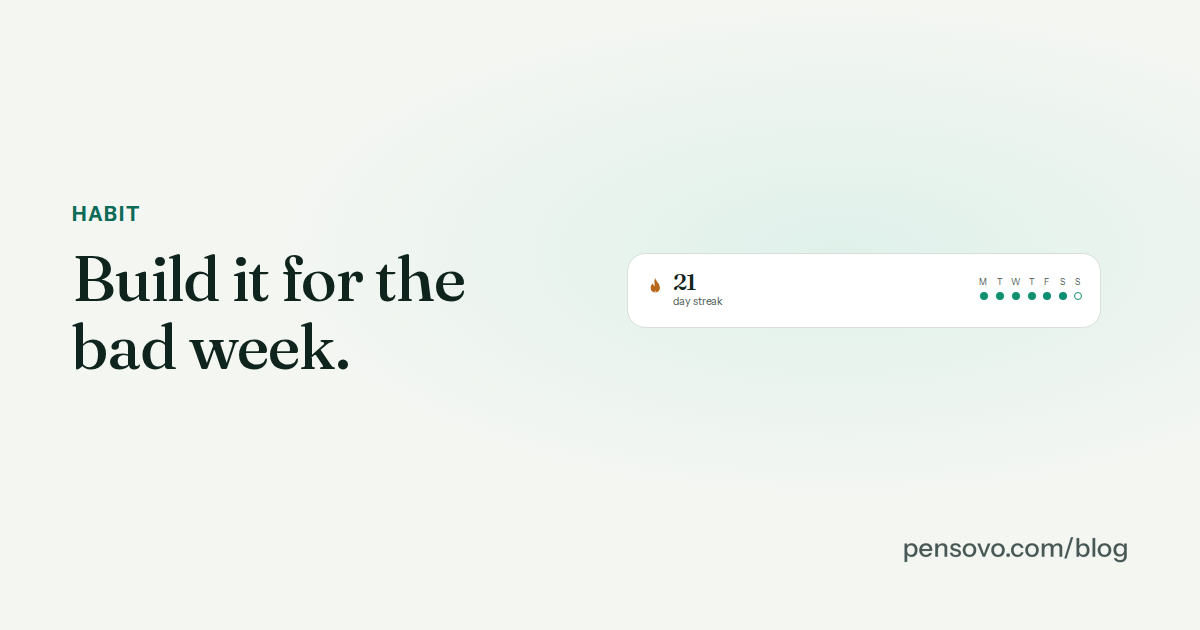
A visible row of days is the strongest daily nudge there is, and a streak that resets to zero after one bad day is the fastest way to lose it. Use a system with saves or a days-per-week count, keep the floor at ten pages, and apply "never miss twice".
What about reading on a phone?
It is the device you already carry, which makes it the best reading device for the commute and the worst for attention. Aeroplane mode for the session, a timer, and a book app without a feed turn it into a reasonable book; the guide to reading on a phone without distraction has the settings.
How do you know it is working?
Count days, not books, for the first three months. Five reading days a week, held for twelve weeks, is a habit; the books it produced tell you your real pace, and that is the number to set a goal from. Books-a-year goals set before you know your pace are the ones abandoned in March.
Common questions
How can I read more books in a year?
Read more often: three daily anchors with a book in each place, mixed lengths, audiobooks for hands-busy time, and permission to abandon. Thirty minutes a day is about two dozen books.
Does speed reading work?
Not for books you want to have read. Comprehension falls sharply past about 400 words a minute. Skimming is a real skill; reading a novel at triple speed is not.
How do I read more when I'm busy?
Ten minutes at three moments that already exist — coffee, commute, bed — with a book physically in each place. The time is there; the book usually is not.
Should I read several books at once?
If it keeps you reading, yes. A demanding book for the good hours and an easy one for tired nights is the most common pattern among people who read a lot.
Do audiobooks count as reading more?
Yes. For narrative books comprehension is about the same heard or read, and listening fits into time reading cannot.
How many books a year is realistic?
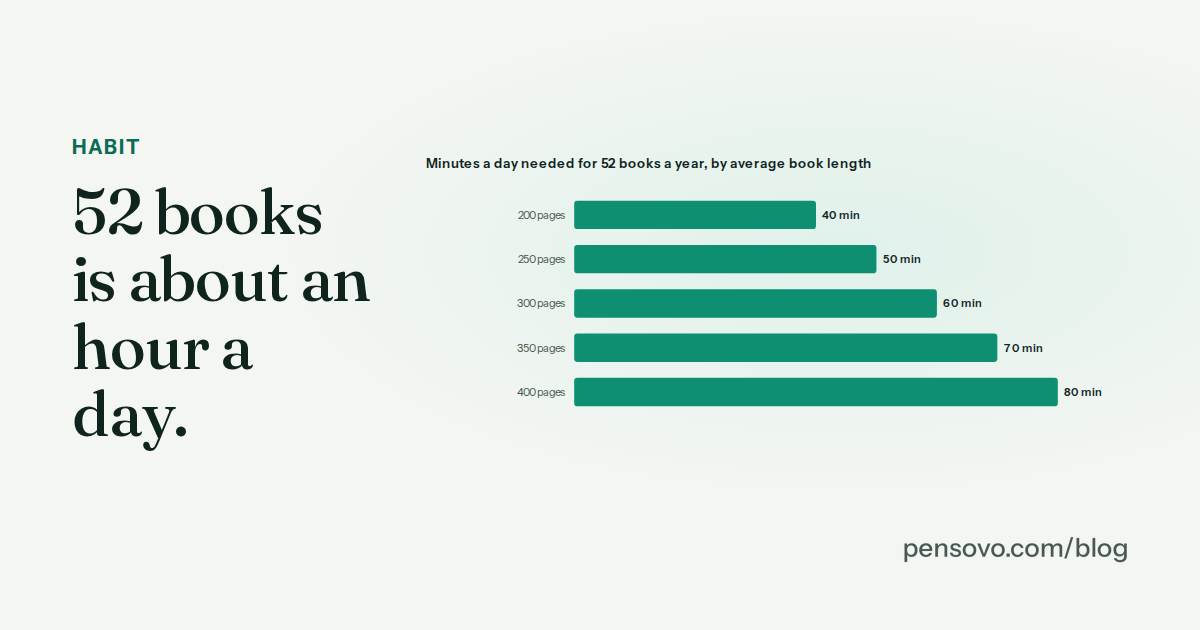
Ten pages a night is about twelve; thirty minutes a day about twenty-four; an hour a day about fifty. Pick the habit and let the number follow.