Amol B
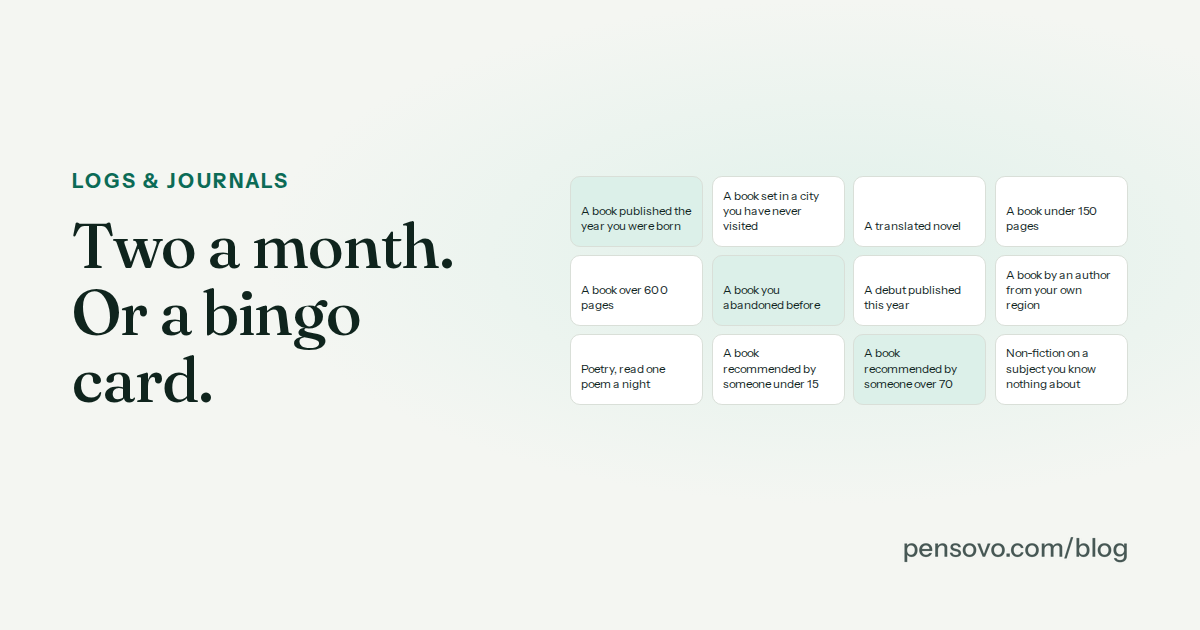
The 24 prompts
- A book published the year you were born. Easy to find, oddly moving.
- A book set in a city you have never visited. Travel without the airport.
- A translated novel. Six is a goal; one is a start.
- A book under 150 pages. The slump-breaker.
- A book over 600 pages. Once. With a plan.
- A book you abandoned before. Second chances, with a stop rule.
- A debut published this year. Bookshop staff know these.
- A book by an author from your own region. Local, in the literal sense.
- Poetry, read one poem a night. A collection lasts a month.
- A book recommended by someone under 15. Take it seriously.
- A book recommended by someone over 70. Same.
- Non-fiction on a subject you know nothing about. Not a hobby you already have.
- A book with a colour in the title. The classic bingo square.
- A book you have owned for more than five years. The shelf is the TBR.
- A biography of someone you dislike. Uncomfortable and clarifying.
- A graphic novel. Counts. Fully.
- A play, read aloud with someone. One evening, two voices.
- A book of essays. Read in any order.
- The book behind a film you liked. Then rewatch.
- A book in a genre you avoid. Romance, horror, westerns — whichever you flinched at.
- A book from a small press. Ask a bookseller.
- Reread a childhood favourite. Notice what you skipped.
- A book longer than a month of your reading. Pace it; log it.
- A book you finish in a single day. Pick a short one and clear the day.
How to run it
| Format | How | Suits |
|---|---|---|
| Two a month | Prompts 1–24 in order, one a fortnight | People who like a schedule |
| Bingo card, 4×6 | Any order; a completed row is a win | People who like choice; groups |
| Twelve plus spares | Pick twelve; the other twelve are swaps | Most people, honestly |
| Group challenge | Everyone uses the same card; compare rows monthly | Book clubs, families, offices |
Why do reading challenges get abandoned?
Too many prompts, no swap rule, and the challenge replacing the reading. A 52-prompt card is a year of homework; by March you are reading a book you dislike because it has a colour in the title. Twelve prompts with spares, permission to swap, and a free square for the book you actually want fix all three.
Should a challenge count toward a reading goal?
Yes — the challenge is a shape for the year's books, not a separate pile. Each challenge book counts toward whatever number you set, and a book that fits two prompts counts for one, or the card is done by February.
Common questions
What is a good reading challenge for 2027?
Twelve prompts you are curious about, a swap rule, and a floor of ten pages a day. The 24 above give you the twelve and the spares.
How many books should a reading challenge include?
Twelve for most people, twenty-four for serious readers. Fifty-two is a year of homework unless you already read a book a week.
What is the 52 Book Club challenge?
A popular annual challenge of 52 prompts, one per week. It suits readers who already read a book a week; for everyone else, take twelve of its prompts.
Can one book count for two prompts?
Count it once, or the card is finished by February with three books. The point is to widen the year.
How do I make my own reading challenge?
Start from a question or a gap in your reading, write twelve prompts that address it, add a swap rule and a free square, and track it as a named list or collection.
What if I fall behind on a reading challenge?
Swap or drop the prompt that is blocking you, and keep the daily floor. A challenge is a shape for the year, not a debt.