Amol B
Goals about how you read
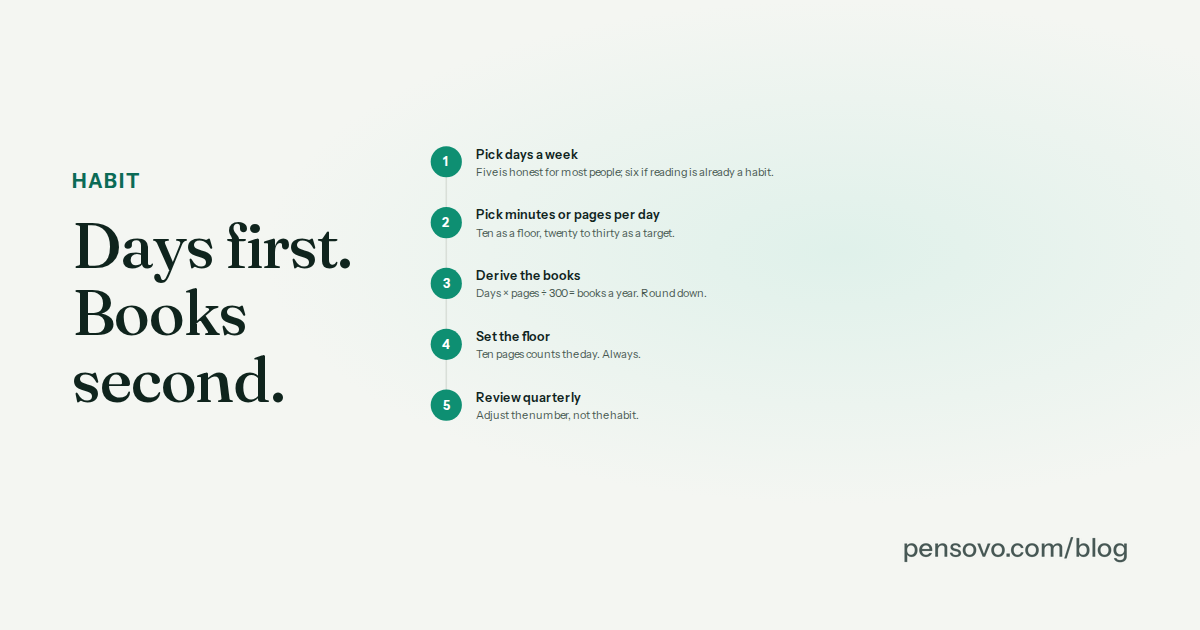
- Read on five days a week, every week, and count the weeks rather than the books.
- Ten pages before the phone, every morning, for ninety days.
- Read one book a month with a pencil in hand.
- Finish a book in a single day, once.
- Read one book entirely on paper, one entirely on audio, and one on a screen — and notice the difference.
- Keep a one-line note on every book you finish.
Goals about what you read
- One book from every decade of the twentieth century.
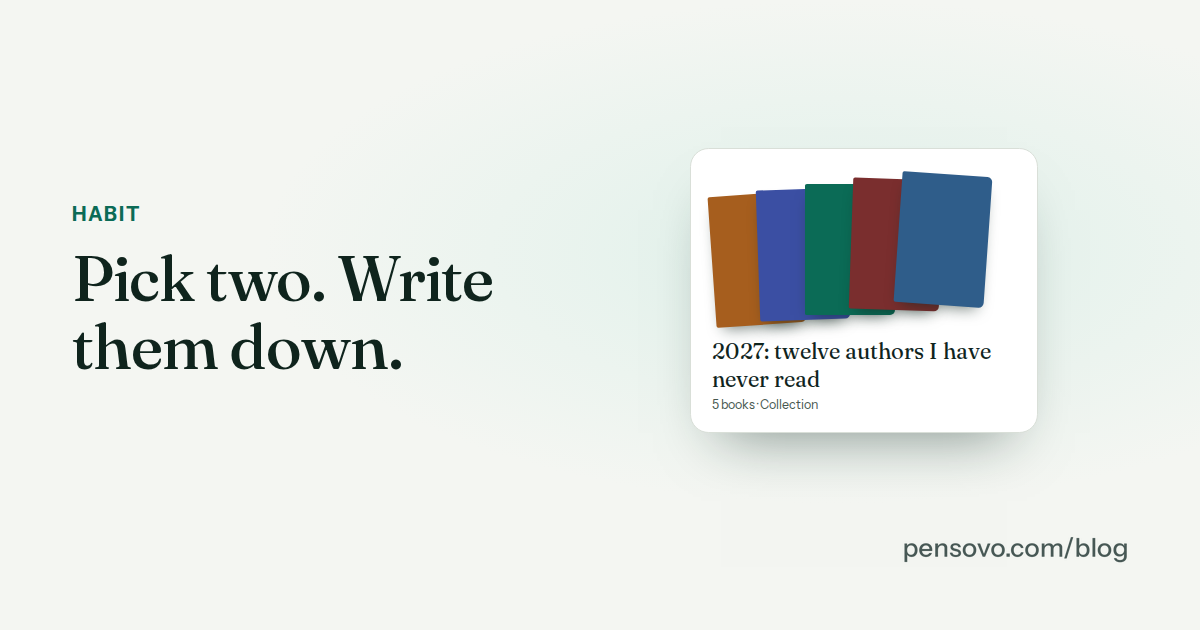
- Twelve authors you have never read, one a month.
- A book set in every country you have visited.
- Read the book before the film, three times.
- Six books in translation.
- The complete works of one author you love, in order.
- Three books recommended by people who know you well.
- One book published before 1900 each quarter.
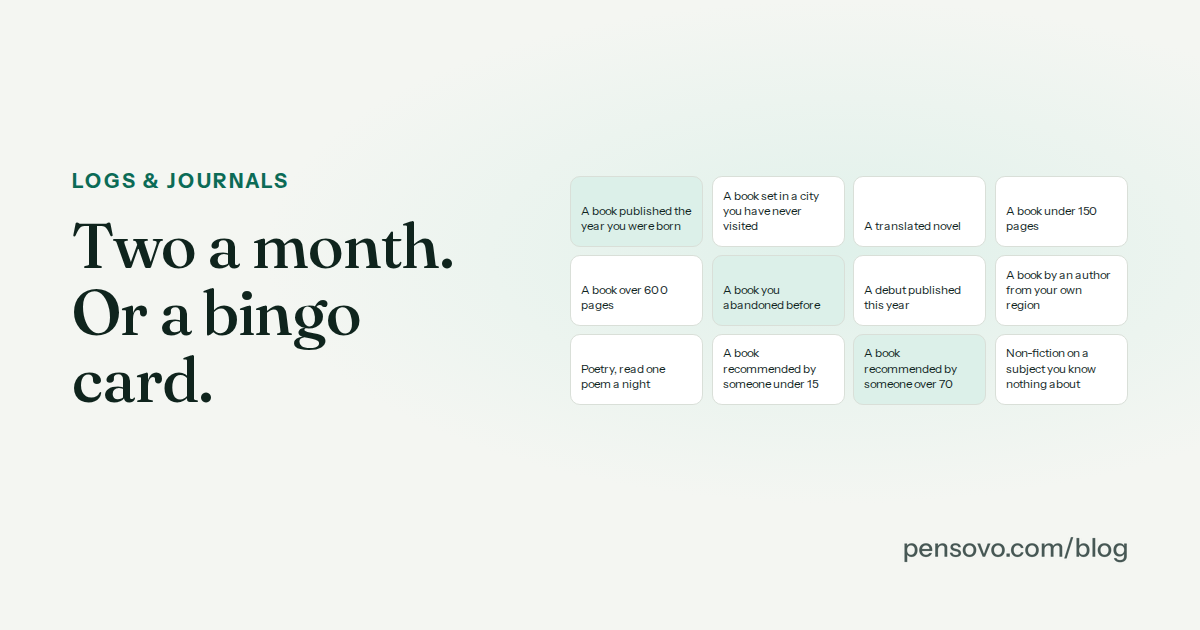
- Read a book from the year you were born, and one from the year each parent was born.
Goals about depth
- Reread a book you loved at twenty and see what changed.
- Read two books on the same subject that disagree.
- Take proper notes on one non-fiction book and write a one-page summary for yourself.
- Read a poetry collection slowly — one poem a night.
- Finish a long book you have started twice.
Goals about the shelf
- Read ten books you already own before buying any.
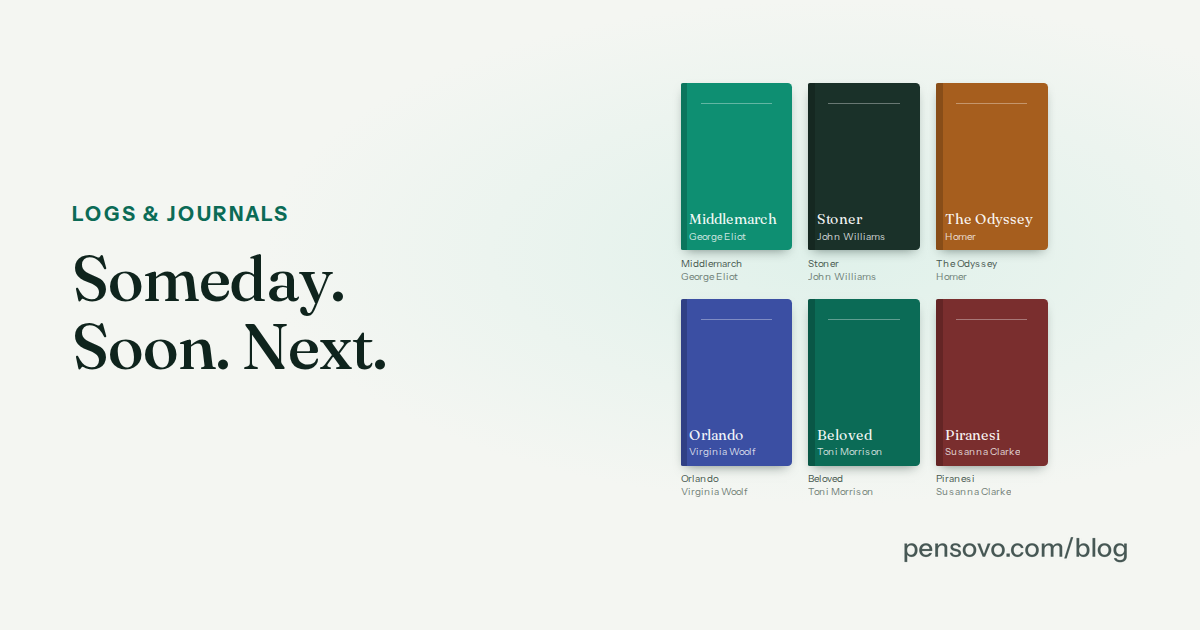
- Clear your TBR to a next-five list and keep it there.
- Give away a book for every book you finish.
- Read the oldest unread book on your shelf.
Goals about other people
- Read one book a friend chooses, no vetoes.
- Read aloud to someone for ten minutes a week.
- Join a silent reading club, or a book club, for one season.
- Send one book to one person with a note about why.
Goals about the year
- Beat last year's total by one book — no more.
- Read the same number of books as your age.
- Have no month with zero books finished.
How to choose
One goal about the habit — from the first group — and one about the books, from any other. The habit goal protects the year; the book goal gives it a shape. Goals from the same group compete with each other, and more than two compete with reading.
| If you want to… | Habit goal | Book goal |
|---|---|---|
| Read more than last year | Five days a week, ten-page floor | Beat last year by one |
| Read better | A pencil in hand, one book a month | Two books that disagree |
| Shrink the pile | Ten pages before the phone | Ten owned books before buying |
| Widen your reading | One-line note on every book | Twelve authors you have never read |
| Read with people | Ten minutes aloud a week | One book a friend chooses |
How to keep the goal past March
Write it down where you will see it — inside the cover of the current book, or as a named collection in your tracker so the shelf fills as you go. Keep the daily floor under it: ten pages counts, always, whatever the goal says about volume. And review in April: a goal that is clearly wrong by spring should be changed in spring, not carried as a failure to December.
Common questions
How many reading goals should I set?
Two: one about the habit (days a week, a daily floor) and one about the books (a theme, a count, a shelf). More than two compete with reading.
What is a good reading goal for 2027?
Five days a week with a ten-page floor, paired with one book goal that gives the year a shape — twelve new authors, six translations, ten owned books first.
Should my reading goal be a number of books?
It can include one, derived from your real pace. But a goal that is only a number turns reading into a count; pair it with a goal about what or how.
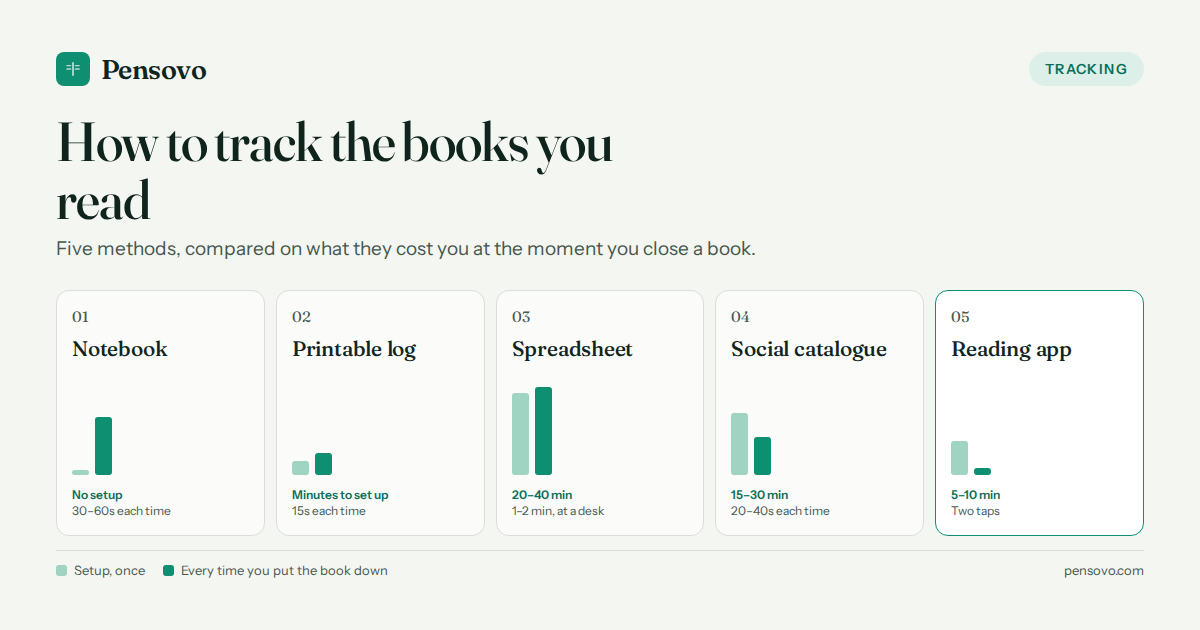
How do I track a themed reading goal?
A named collection in your tracker, or a list inside the front cover of your current book. Watching the shelf fill is most of the motivation.
What if I don't meet my reading goal?
Review in April and change it. A goal is a forecast, not a contract, and a wrong one should be fixed in spring rather than carried to December.
Can a reading goal be about rereading?
Yes — rereading a book you loved at twenty is one of the most rewarding goals on the list, and it counts.