Amol B
Fifteen formats that take under a minute
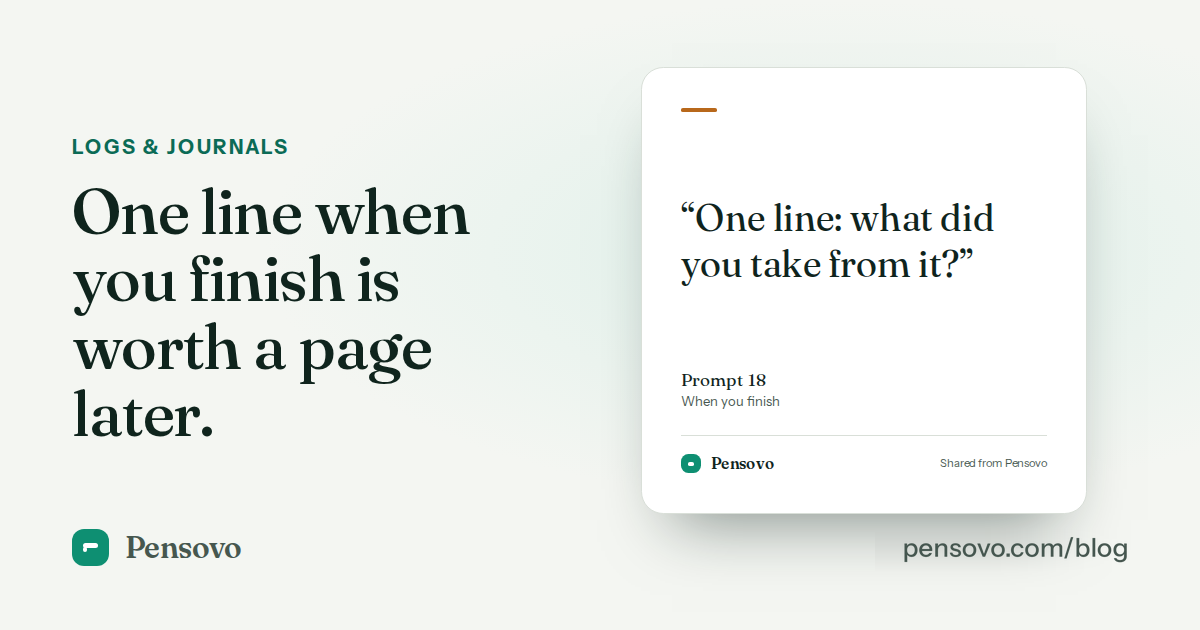
- One line when you finish. What it was about, or what you took. The non-negotiable one.
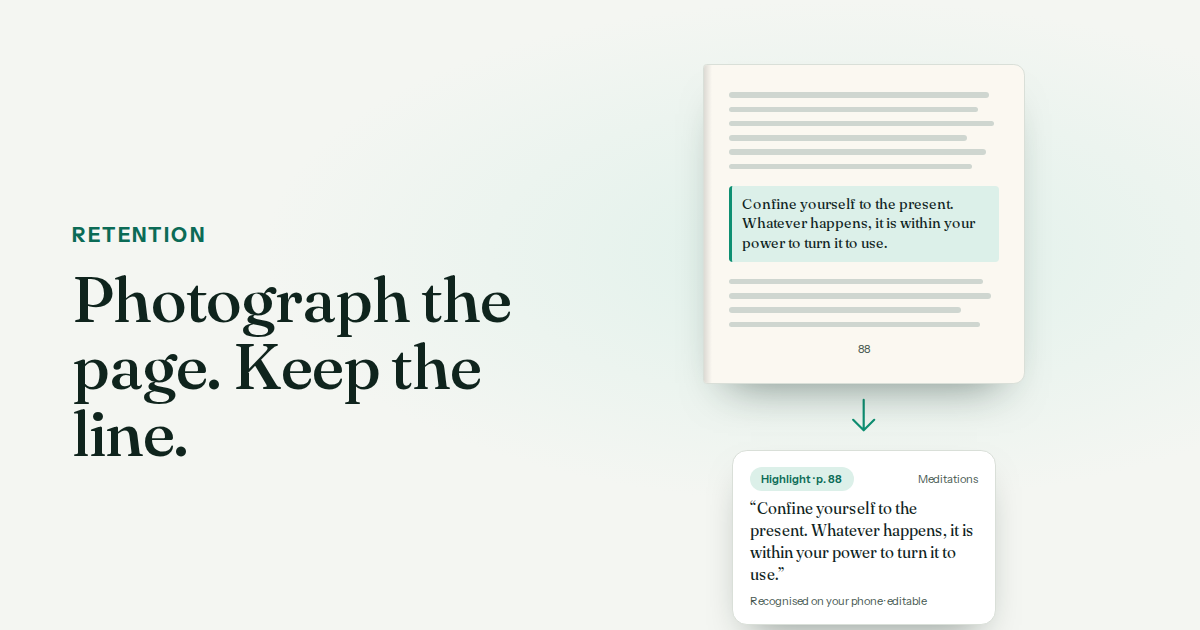
- Photograph the best page. The passage you would have underlined, kept as text with its page.
- A two-word mood at the end of a session: "tense, slow", "warm, funny".
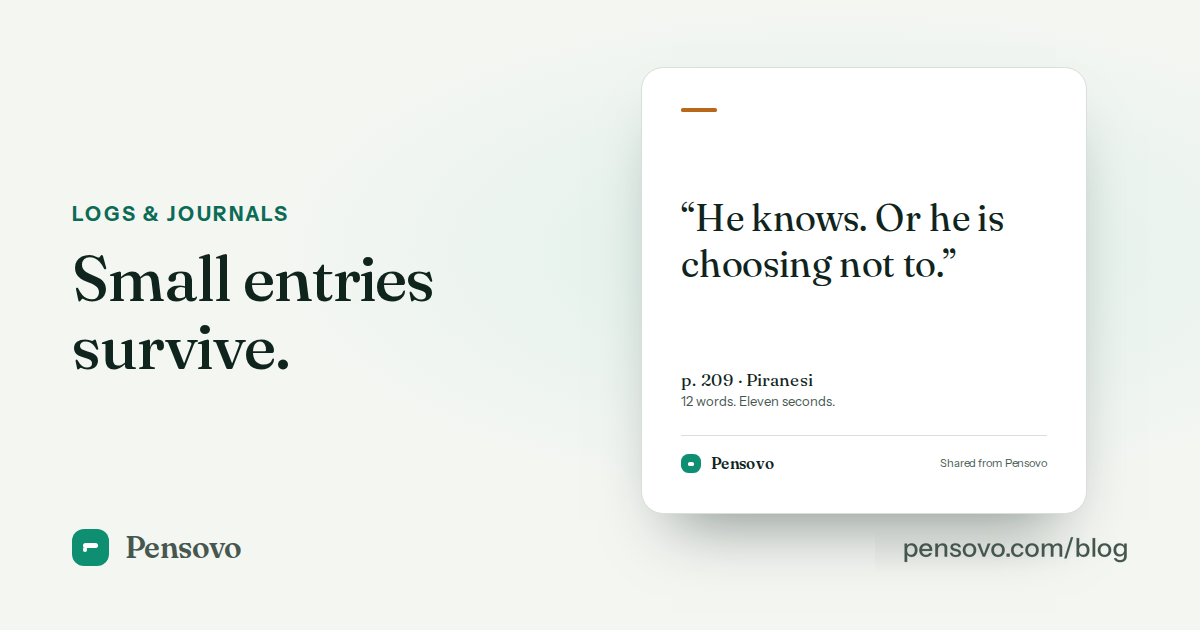
- The sentence you would steal. One per book, copied exactly, page attached.
- A question for the book before you start, and the answer when you finish.
- A reread flag. Yes, no, or "in ten years". Nothing else.
- Who to give it to, and the one sentence you would say handing it over.
- Where you read it. Train, garden, hospital waiting room. Oddly the most evocative field later.
- The page you stopped at and why, for books you did not finish.
- A rating in halves, the moment you close the book, before it softens.
- One word for the ending. Earned, rushed, ambiguous, cheap.
- A character you would avoid at a party, and why, in a clause.
- What it made you want to read next. The most useful field for the TBR.
- A tally mark per session on the inside cover. The paper version of a streak.
- Ten words about tonight's pages. When you want to write and have no time.
| Format | Seconds | Rereads well? | Best for |
|---|---|---|---|
| One line on finishing | 30 | Very | Every book |
| Photograph the best page | 10 | Very | Paper books |
| Two-word mood | 5 | Somewhat | Nightly, in a log |
| Sentence you would steal | 40 | Very | Anything well written |
| Reread flag | 3 | Yes | Finished books |
| Where you read it | 5 | Surprisingly | Travel, hard months |
Formats to avoid (unless you love them)
- A decorated spread per book. Lovely on Instagram, and the third book never gets one.
- A review for every finish. Reviews are for other people; the journal is for you. One line does the job.
- A colour-coded rating system with six axes. You will rate everything green.
- Copying every highlight by hand. Photograph the page instead and copy the best one.
- Monthly wrap-up essays. If you want a monthly picture, let the log's calendar draw it.
The test is whether you would do the format on a Tuesday in February with a cold. If not, it is a project, and projects are fine as long as you do not mistake them for the habit.
Where should the journal live?
With the book. Whatever holds your reading — a notebook with a page per book, a tracker with notes attached to each title — the journal entry should be findable from the book's name, not from the date you wrote it. A note you cannot find in a year is a note you did not keep.
How is this different from a reading log?
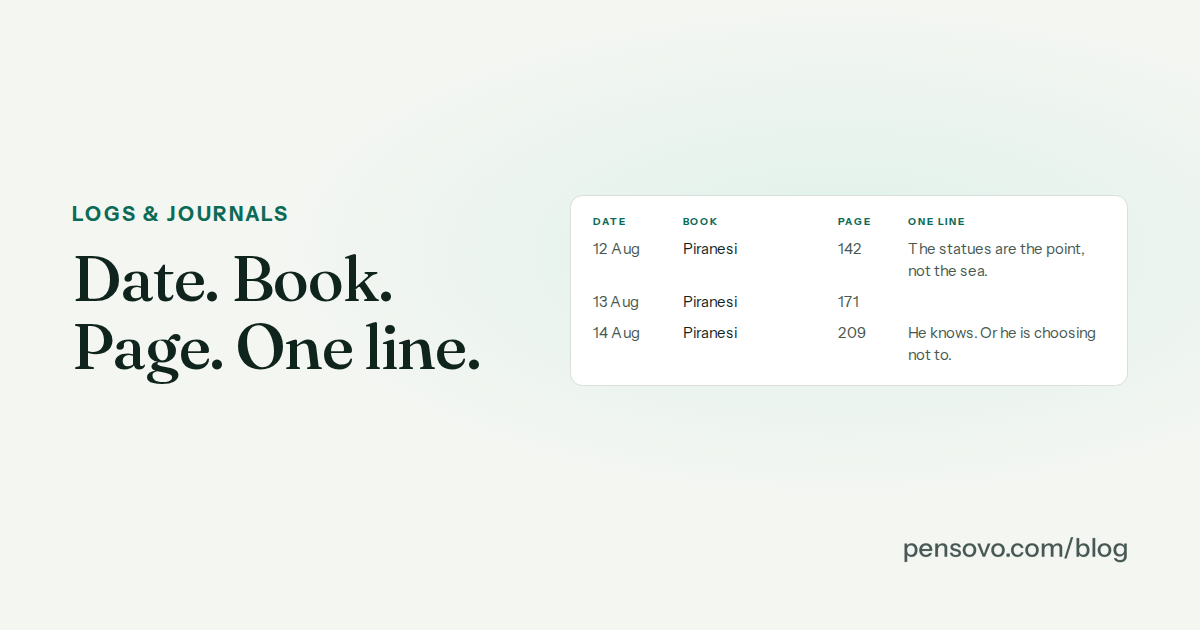
The log is date, book, page: behaviour, ten seconds, every night. The journal is thought: a minute, on the nights you have something. Keep them separate. The log template covers the first; this page is the second.
Common questions
What should I write in a reading journal?
One line when you finish, the passage that struck you with its page, and one or two small formats that suit you — a mood, a reread flag, who to give it to. Keep the page log separate.
How do I start a reading journal?
Pick one format from the list — one line on finishing is the best first choice — and use it on the next book you finish. Add a second format only when the first is automatic.
Do I need a special notebook?
No. Any notebook with a page per book, or a tracker with notes attached to each title. Findability matters more than the paper.
How often should I write in it?
When you have something to say, and always once per finished book. Forcing a daily entry is how journals die.
Is a reading journal the same as a reading log?
No. The log records behaviour (date, book, page) in ten seconds a night; the journal records thought, occasionally. Keep both, separately.
Can I keep a reading journal for audiobooks?
Yes — one line on finishing, a mood, a reread flag. For the passage you would steal, note the chapter and timestamp instead of a page.