Amol B
Before you start
- Why this book, and why now?
- What do you already think this book will say?
- Who recommended it, or where did it find you?
- What would make you stop reading it?
While you read (fiction)
- Which character would you not want to be stuck in a lift with, and why?
- Where did the author make you slow down?
- What is the book quietly about, underneath the plot?
- Which scene do you expect to remember in a year?
- What does the narrator not know?
- Where would you have made a different choice than the protagonist?
- What is the weather doing in this book, and does it matter?
- Copy one sentence you wish you had written.
While you read (non-fiction)
- State the argument in one sentence. Now in one word.
- What would change in your week if this were true?
- Where does the author reach beyond the evidence?
- Which example did you find least convincing?
- What question is the book not asking?
- Who disagrees with this, and what would they say?
- Which chapter could have been a paragraph?
- What did you already believe that this confirmed too easily?
When you finish
- One line: what was it about?
- One line: what did you take from it?
- Who would you give it to, and what would you say as you handed it over?
- What did the ending owe you that it did or did not pay?
- Rate it now, before the opinion settles into something polite.
- What will you do differently because of it, if anything?
- Which passage would you reread aloud?
- Did it deserve its length?
The book you did not finish
- Where exactly did you stop, and what was on the page?
- Was it the book, the week, or you?
- What would have kept you reading?
- Is this a book to return to, or to release?
Looking back
- Which book this year changed a habit?
- Which one did you talk about most?
- What did you read that you would not have chosen a year ago?
- Which book do you remember least, and does that matter?
- What are you avoiding reading, and why?
- If your shelf this year were a person, who would they be?
- What pattern do your highlights show?
- What will you read next, and what does that say about this year?
Quick, any day
- Ten words about today's pages.
- One word for how the book made you feel tonight.
- The page number and nothing else — you read, and that counts.
How do you keep a reading journal without it becoming a chore?
Separate the log from the journal. The log is four fields — date, book, page, one line — and takes ten seconds a night. The journal is optional and generous: a prompt when you have something to say. People who merge them end up with a journal they feel guilty about and no log. Keep the log daily and tiny; open the journal when a prompt above catches.
Common questions
What should I write in a reading journal?
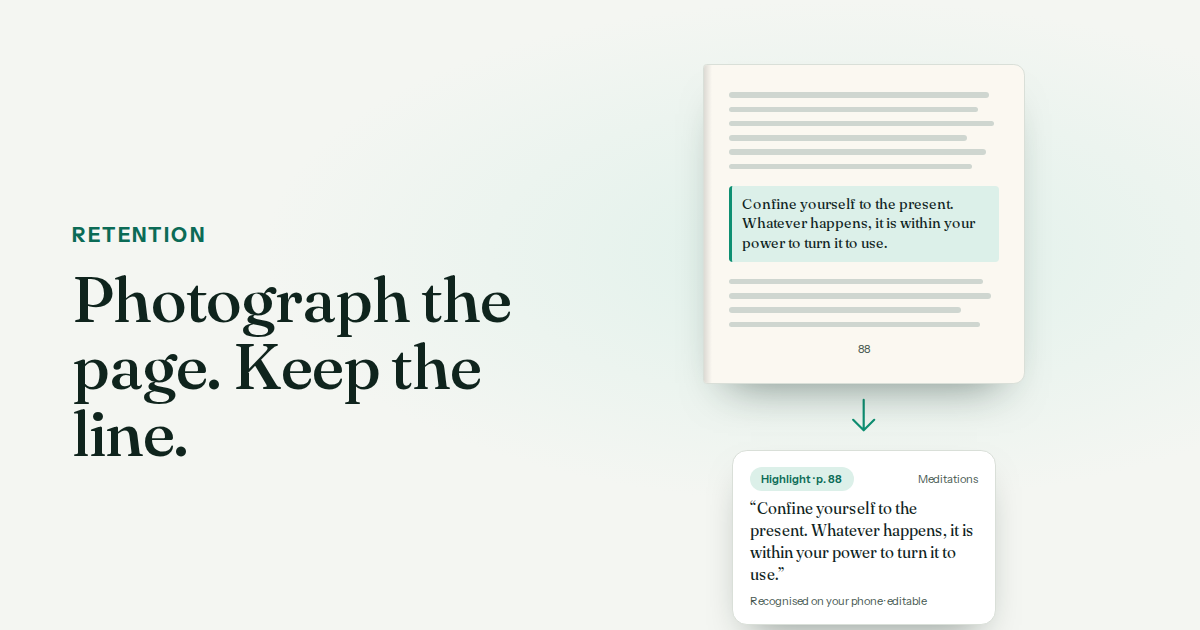
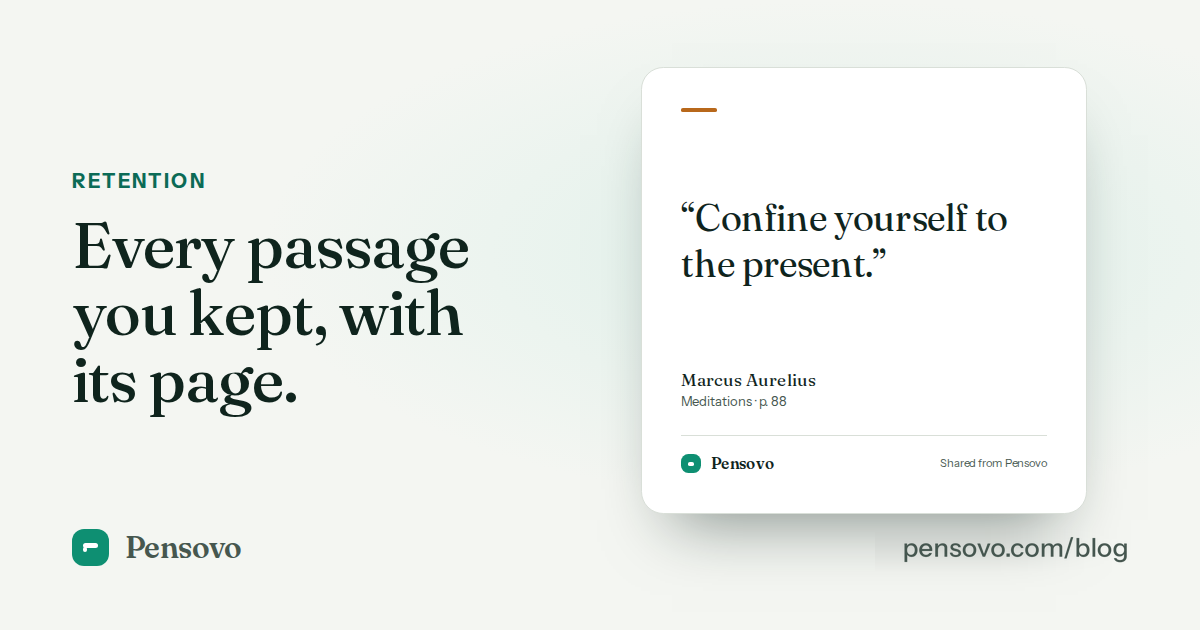
One line when you finish a book, the passages that struck you with their page numbers, and answers to one or two prompts that catch. The page log is separate and takes ten seconds.
How often should I write in a reading journal?
Log the page every night; write in the journal when you have something to say. Forcing a daily journal entry is how journals die.
Do reading journal prompts work for non-fiction?
Yes — the non-fiction set above is built for it. The most useful is 'state the argument in one sentence, then one word'.
Should I journal about books I didn't finish?
Yes, briefly. Where you stopped and whether it was the book, the week or you. It stops you starting the same book again in two years.
Is a digital or paper reading journal better?
Paper if you love the object. Digital if you want to find a note again, attach it to a page, or search across books. Many readers do both.
How long should a journal entry be?
A sentence is the requirement; a paragraph is a bonus. The habit is writing at all, and short entries survive.