Amol B
What should a reading log include?
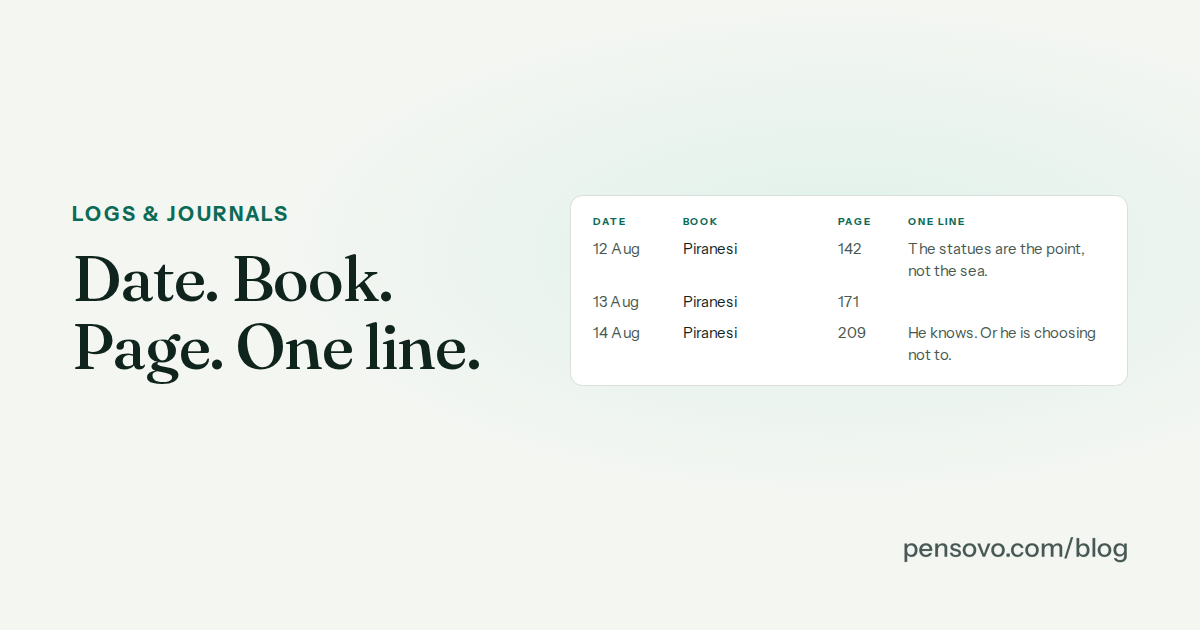
| Field | Why | Example |
|---|---|---|
| Date | Turns the log into a habit record and a calendar | 13 Aug |
| Book | Write the full title the first time so you can find it later | Piranesi |
| Page (or minutes, for audio) | Progress and pace; what makes streaks and finish estimates possible | p. 142 |
| One line | The thing you will be glad you wrote next year | “The statues are the point, not the sea.” |
Optional, and only if you will fill them in: a rating on finishing, the format, where the book came from. Skip separate start and finish dates; they fall out of the daily entries.
What is the difference between a reading log and a reading journal?
A log is a record of behaviour: days, pages, books. It takes ten seconds and you fill it in every night. A journal is a record of thought: quotes you want to keep, arguments with the author, what a book made you think about. It takes ten minutes and you fill it in when you have something to say. People who try to combine them end up with a journal they feel guilty about and no log. Keep the log daily and tiny; keep the journal optional and generous.
Four ways to keep a reading log
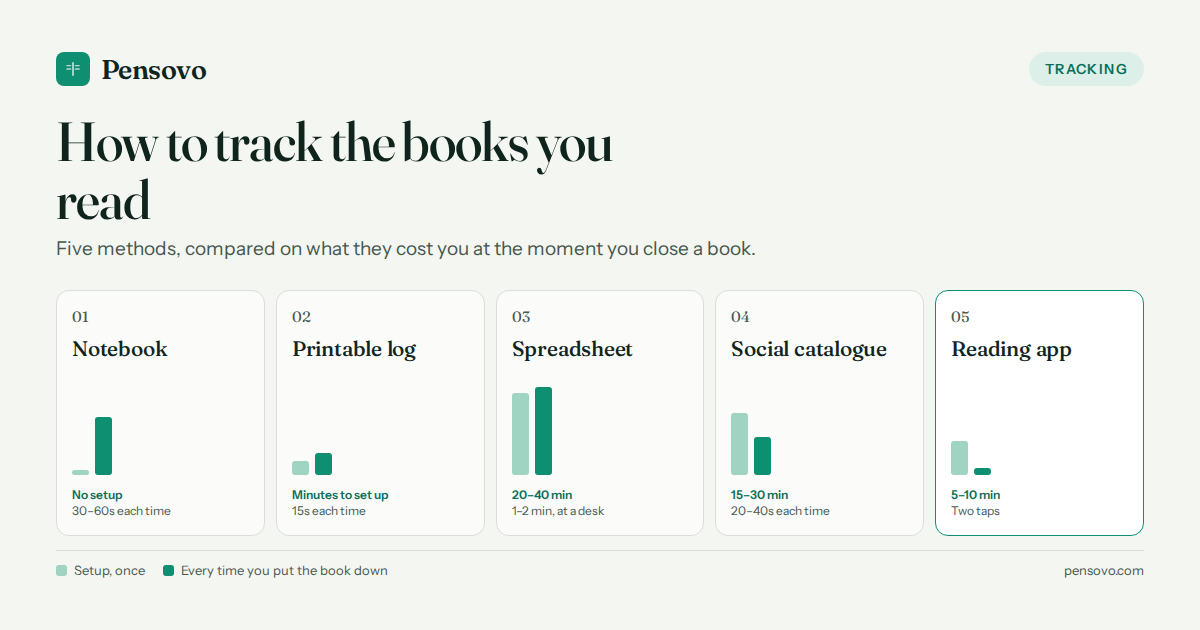
| Method | Setup | Per night | Strength | Weakness |
|---|---|---|---|---|
| Printable page | Print it | 15 seconds | Visible, free, no phone in bed | No search; sheets go missing; a page holds ten books |
| Notebook | Buy one | 30 seconds | Pleasant, durable, an object | Never where the book is; cannot be counted |
| Spreadsheet | 20 minutes | 1–2 minutes at a computer | Totals, charts, answers questions nothing else can | Nobody opens a spreadsheet in bed |
| App | 5 minutes | 2 taps | Calendar, streak, shelf and pace appear for free | Another app; check it can export |
1. A printable page
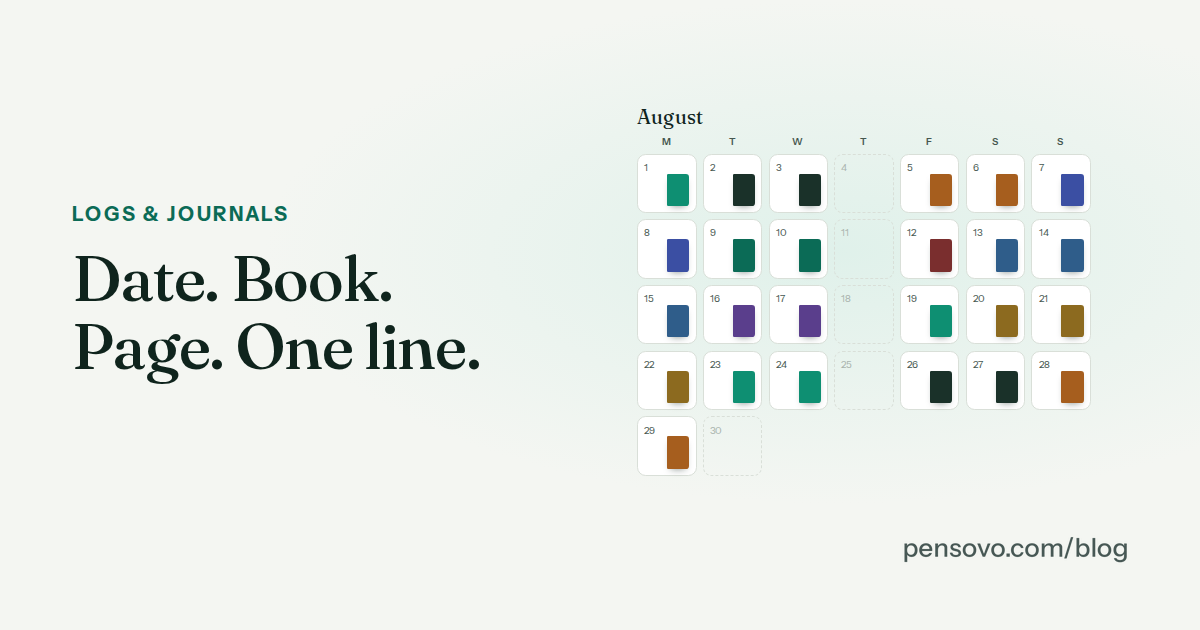
One sheet per month, a row per day. Pin it where you read. The printable tracker on this site is exactly this: 31 day boxes, a ten-row book log, one-line column, month totals. Good for the first few months of a new habit and for children.
2. A notebook
A dedicated notebook, one line per night, a page per book. Works for people who already carry a notebook; fails for everyone else because the notebook is never where the book is.
3. A spreadsheet
Columns for the four fields, a row per book. The spreadsheet template has six columns and three formulas. Spreadsheets are the format most often started and least often kept past February, because nobody opens one at eleven at night.
4. An app
Open, tap the book, enter the page. The calendar, the streak, the finished shelf and the pace estimate appear without extra work, on the phone that is already next to the bed. Pick one where the log itself is free, there is nothing to scroll, and your data can leave.
How do I start a reading log? (five steps)
When should I switch from paper to an app?
Three signals, any one of which is enough: you want to know what you read in a given month and cannot find out without leafing through pages; you are keeping more than one book going and the log has become a mess of arrows; or you have missed a week and the paper page makes that feel like failure rather than information. The switch is easy: type your current books into the app and start from today. Do not transcribe the old paper log; keep it as an object.
Should I log books I did not finish?
Yes. Write the page you stopped at and "stopped" in the one-line field. Do not delete it; unfinished books are data about what you do not like, and the note stops you starting the same book again in two years.
Common questions
What should a reading log include?
Date, book, page reached, and one line. Add a rating on finishing if you like. Everything else is a journal, which is optional.
Should I log audiobooks?
Yes. Log minutes or the chapter instead of pages. A day with a book in your ears is a reading day.
How do I log a book I gave up on?
Write the page you stopped at and 'stopped' in the one-line field. Keep it; it is data about your taste.
What about rereads?
Log them as a new run of entries. A book read twice is two entries on the finished list, which is correct.
Do I need to rate books in a reading log?
No. A one-line note ages better than a number. If you rate, do it the moment you finish.
How long does a reading log take each day?
Ten seconds for the four fields. If it takes longer you are keeping a journal, which is fine, but keep the log part to ten seconds or it will not survive the bad week.