Amol B

The template
| Field | Answer in | Why it earns its place | Example |
|---|---|---|---|
| What it is | One sentence, no plot | The line you will use when someone asks what it is about | A man alone in an infinite house of statues and tides, keeping a journal |
| What it does well | One or two sentences | The reason to read it | Wonder without irony; the voice |
| Where it falls short | One or two sentences | The honest field. Mandatory even for five stars | The last fifty pages over-explain |
| Who it is for | One sentence | The recommendation; the most reused field | People who liked the quiet parts of Le Guin |
| Reread? | Yes / no / when | Decides what happens to the copy | Yes, in winter |
| Rating (optional) | Halves, on the day | A quick sort key; the other fields carry the meaning | 4.5 |
Copy the field names into whatever holds your reading — a notes app, a tracker's book page, the inside back cover — and answer them in order. The whole thing should fit on an index card.
Why not just write a normal review?
Because a normal review is written for someone who has not read the book, and you have. Public reviews spend most of their words on plot and on persuading; yours can skip both. What you will want in two years is the shape of your reaction — what worked, what did not, who to hand it to — and that is what the five fields keep. If you also write for Goodreads or StoryGraph, write the template first and expand it; the template is the honest core.
How to fill it in well
- Do it the day you finish. Within twenty-four hours the specific complaint becomes "it was fine".
- Be specific in "falls short". Not "slow in the middle" but "the middle section is a hundred pages of travel with nothing at stake".
- Name a real person in "who it is for" if one comes to mind. Reviews with a name attached get acted on.
- Rate before you write, then check the rating against the fields. If they disagree, the fields are right.
- Add a page number for anything you quote or point at.
Variations
- Non-fiction: replace "what it is" with "the argument in one sentence" and add "what would change if this were true".
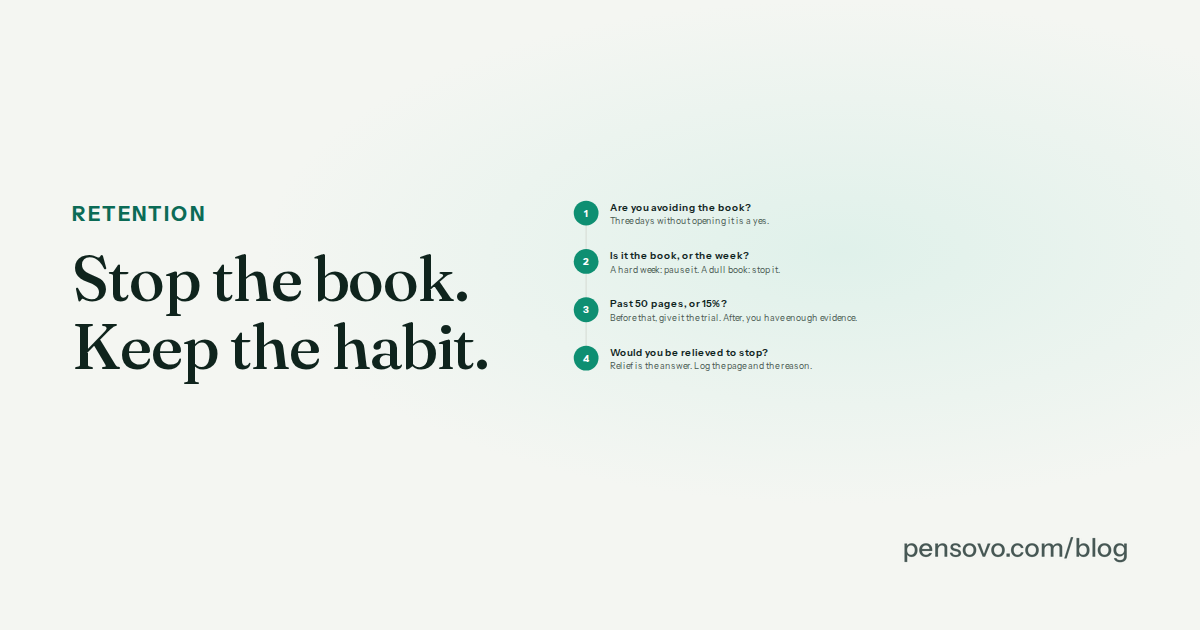
- Did not finish: "where I stopped" and "the book, the week, or me" replace the last two fields.
- Rereads: add "what changed since last time". Usually you.
- Book club: add "the question I want to ask the room".
Common questions
How do you write a short book review?
Five fields, one or two sentences each: what it is, what it does well, where it falls short, who it is for, would you reread. Skip the plot summary.
What are the parts of a book review?
For a personal record: the book in a line, its strengths, its weaknesses, its ideal reader, and a reread decision. Public reviews add plot context and a recommendation.
Should I rate books?
Optionally, in halves, on the day you finish. A rating is a sort key; the five fields carry the meaning.
How long should a personal book review be?
About a hundred words. If it fits on an index card it is the right length.
Do I need to review every book I read?
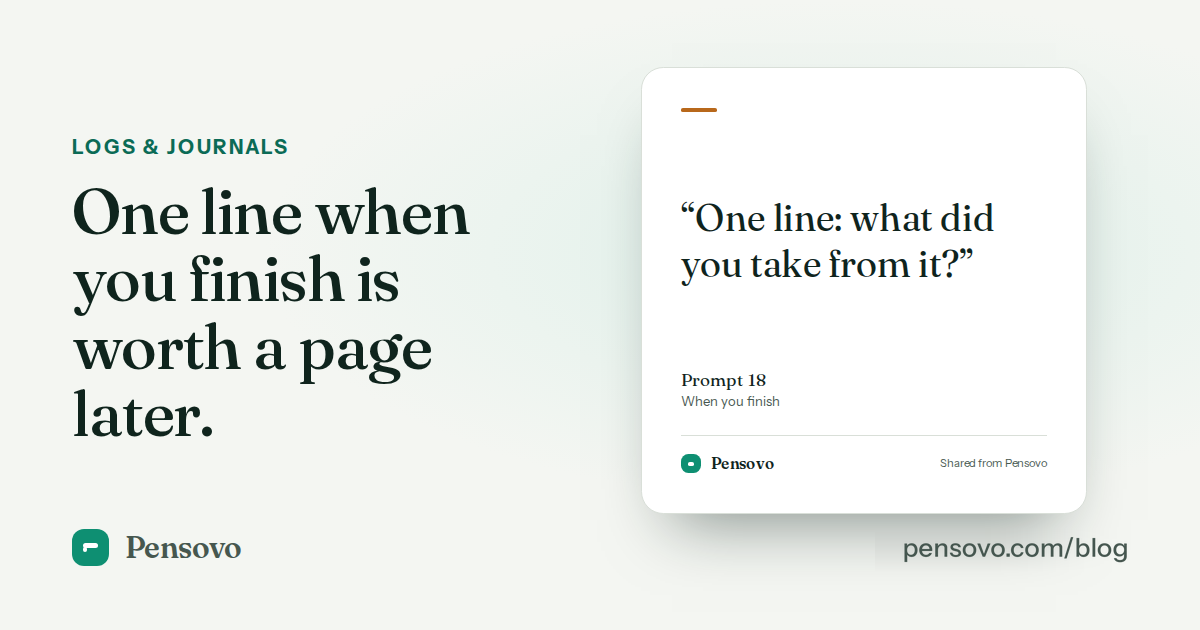
No, but one line on finishing is worth doing for every book, and the template for the ones you have opinions about.
Can I use this template for Goodreads?
Yes — write the five fields first, then expand into a public review if you want. The template is the honest core; the public version adds context for people who have not read it.